Blog
The Best Retrieval Methods for Different Lures

Table of Contents
Even if you have the most realistic fishing lures, the sharpest hooks, and the best fishing spot, if your lure retrieval method is wrong, you might as well be casting into a swimming pool. The action of the bait in the water—its speed, cadence, and pause—is the ultimate trigger to get fish to bite.
Whether your target species is active summer largemouth bass, ambush-ready northern pike, or wary trout, mastering lure retrieval techniques is the secret to consistent success.
In this guide, we will break down the best retrieval methods for different lures, helping you dial in the perfect presentation under any fishing conditions.
Why Lure Retrieval Speed and Cadence Matter
Behind every explosive strike is a biological trigger. Fish react to movement based on their metabolism, water conditions, and the perceived vulnerability of their “prey.”
Steady Retrieve vs. Erratic Cadence: When to Use Which
Both steady retrieves and erratic cadences have their place, but in a specific environment or time, only one retrieval style will match the fish’s preference.
- Erratic Cadence:
Its rhythm involves the amplitude of your fishing rod tip movement, the frequency of pauses, and how long the lure suspends or falls.
For example, a jerk bait lure retrieval method: jerk-pause-jerk.
Sometimes, tweaking the number of twitches or the duration of the pause can attract otherwise disinterested fish.
- Steady Retrieve:
Ideal for active feeding periods or imitating fleeing baitfish over long distances.
How Water Temperature and Clarity Dictate Your Retrieval Speed
According to top fisheries biologists and resources like In-Fisherman, a fish’s metabolism is heavily influenced by water temperature.
Fish in cold water typically require a much slower lure retrieval speed.
- Cold + Clear Water: Light twitches, pause for 5–15 seconds; never reel in too early.
- Cold + Stained Water: Slow retrieve, showcasing the lure’s vibration.
- Warm Water: Speed up your presentation to trigger instinctive reaction bites.
Gear Matters: The Impact of Gear Ratios and Rod Action
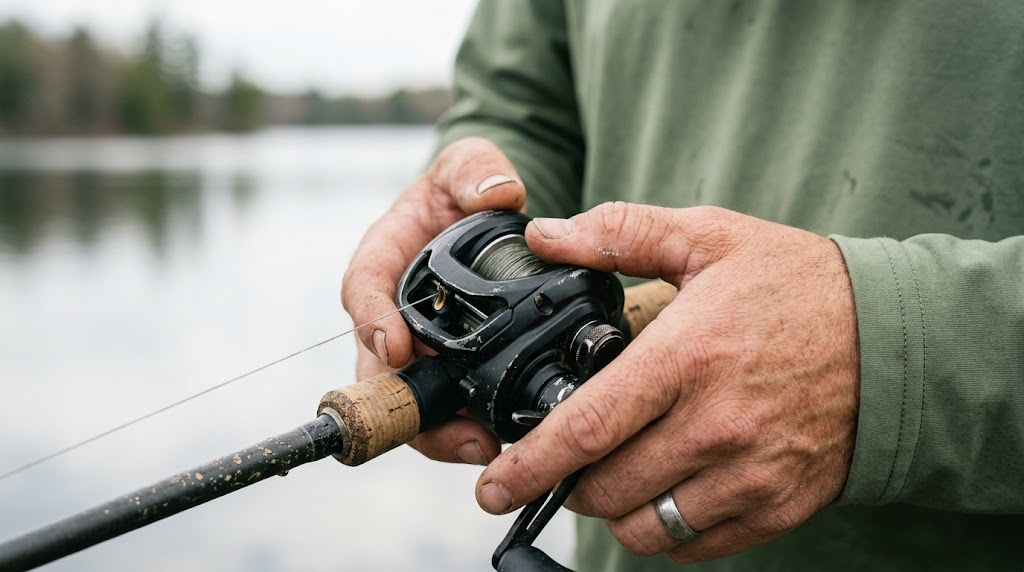
The reel’s IPT (Inches Per Turn), spool capacity, and handle rotation speed determine how fast you retrieve. Choosing the right fishing reel paired with a matching fishing rod is crucial.
Having both spinning and casting rod ensures you can master all fishing techniques.
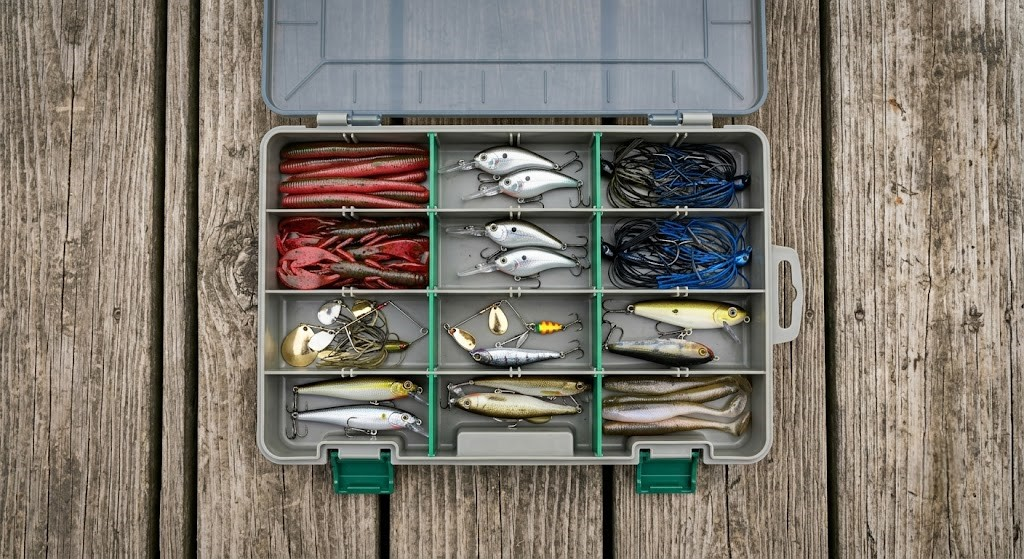
A high-speed baitcaster rod and reel combo (e.g., 7.3:1 or higher gear ratio) is perfect for quickly burning spinnerbaits for bass or rapidly taking up slack line during a jerkbait pause.
Conversely, a medium-light spinning rod paired with a low-speed spinning reel is ideal for finesse fishing, where micro-movements and line control dictate the bite.
Topwater Baits Retrieval Method: Rhythms to Trigger Explosive Surface Strikes
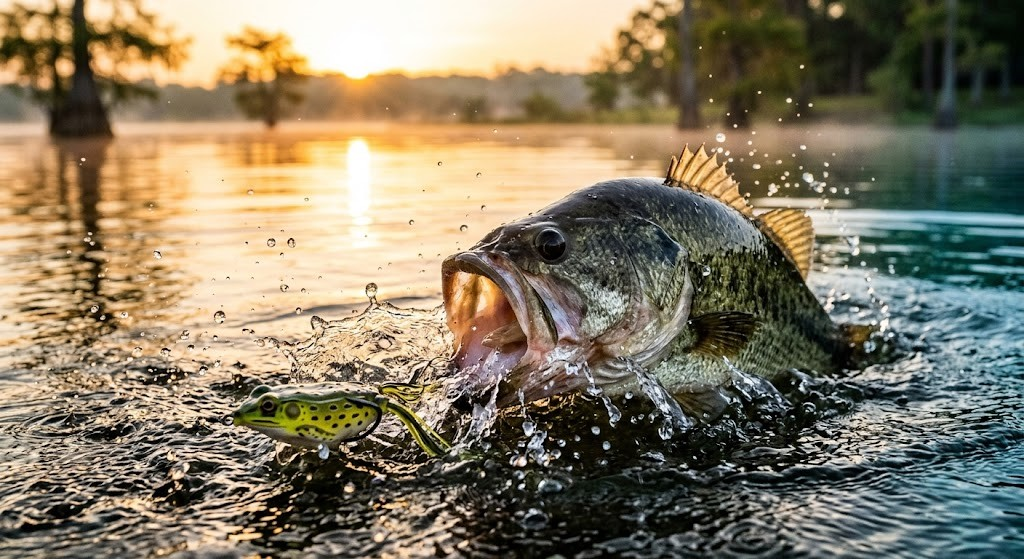
Nothing is more thrilling than a topwater strike. However, topwater fishing lures require precise rhythmic manipulation.
Walking the Dog: Perfecting the Side-to-Side Glide for Stick Baits & Spooks
Rhythmically twitch the rod tip downward → reel in a quarter turn.
The goal is to make the stick bait zigzag left and right across the surface like a wounded baitfish.
Leave a bit of slack line between each twitch so the lure can glide freely side-to-side.
Pop-and-Pause: Creating Maximum Disturbance with Fishing Poppers and Chuggers
Cast tight to heavy cover → jerk sharply downward → let it sit dead still.
For northern pike, a more aggressive, continuous popping cadence can draw more vicious strikes.
The Steady Churn: Buzz Bait and Whopper Plopper Lure Across Heavy Cover
Keep the rod tip high immediately after the lure hits the water → steady, moderate-to-fast retrieve speed.
Reaction Baits Retrieval Method: Erratic Actions that Trigger Reaction Bites
When fish are suspended in the water column or hiding near cover, mid-water reaction baits are your best choice.
Deflection & Cranking: Bouncing Squarebills and Deep-Divers off Structure
The golden rule of bass crankbait fishing is: Contact equals hookups.
- Square Bill Crankbait: Crank → Bump → Deflect → Stall
In muddy water, you can slightly speed up the retrieve to make the lure vibration more pronounced.
- Mid Depth Crankbait: Steady Retrieve → Micro Twitch → Contact → Kill → Resume
The core strategy is “steady rhythm + micro-changes.”
- Deep Diving Crankbaits: Long Pull → Dive → Slow Roll.
Keep the crankbait lure grinding along the bottom.
- Lipless Crankbait: Yo-Yo / Burn → Kill
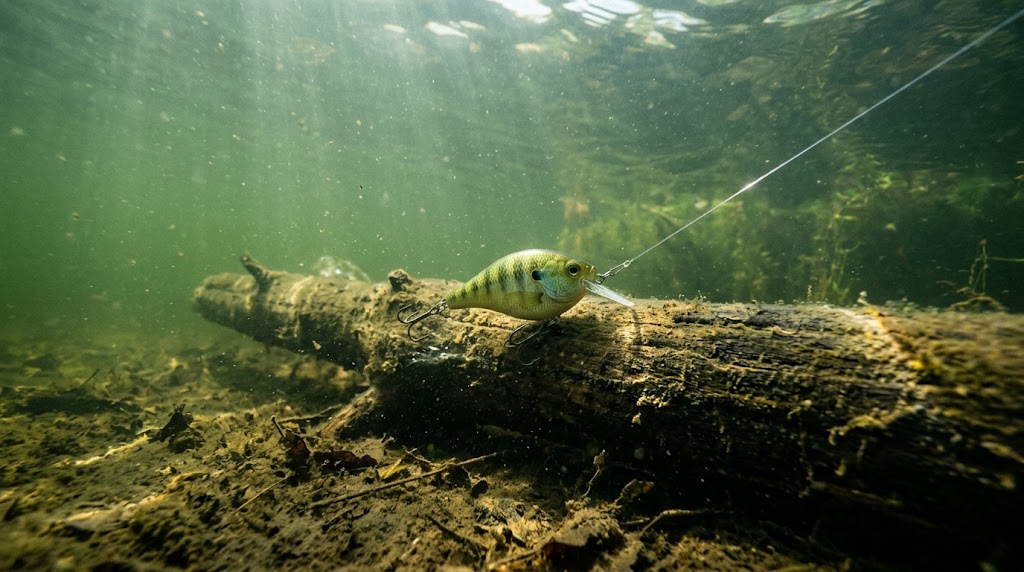
Jerk-Jerk-Pause: Dialing in Suspending Jerkbait Timing for Cold Water
- Cold & Clear → Jerk-Jerk-Pause
The key lies in the duration of the pause: hold it for five to fifteen seconds.
- Cool/Stained → Jerk and give the handle a turn → Lure moves forward
- Wind-facing point → Increase the jerking tempo
Shorten the pause duration as water turbidity increases and water temperature rises.Wind-facing point → Increase the jerking tempo
To learn how beginners can use jerkbaits, please read: How to Fish A Jerkbait for Beginners?
Slow Rolling vs. Burning: Spinnerbaits, Chatterbaits, and Swimbait Tactics
Slow Roll: Keeps the fishing lure steadily in the strike zone. Suitable for cold water, muddy water, lethargic fish, and when you need to search close to the bottom/structure.
Burn: Creates a high-speed fleeing action + reaction strike. Ideal for highly active fish, windy conditions, shad activity, and shallow weed beds.
- Spinnerbait
Cold / stained → Slow Roll
Wind / shad / active fish → Burn
Structure → Kill or Helicopter Fall
- Chatterbait
Grass → Steady → Tick → Rip
Wood → Steady → Rod-tip Pop → Kill
Active fish → Faster retrieve
Deep / bottom → Slow Roll
Grass → Burn → Kill
Just fast enough to keep the paddletail working.
Common Lure Retrieval Mistakes (And How to Fix Them)
Avoid these common pitfalls to drastically increase your hook-up ratio.
Reeling Too Fast in Cold or Heavily Pressured Water
Many anglers let adrenaline take over.
If the water temperature is below 50°F (10°C) or the lake is heavily pressured, you must force yourself to slow down. If necessary, count to ten during your retrieval pauses.
Forgetting to “Set the Cadence” on Reaction Strikes
If a fish strikes right after the bait bumps a rock, or exactly during a 3-second pause, mentally record that cadence and replicate it on your next cast. Let the fish tell you what they want.
Want to know the best power rod? Read: What is The Best Power Rod for Fishing?
Neglecting Line Slack and Rod Tip Positioning
Having too much fishing line slack means you will miss the bite when the bait falls; having too little slack will kill the erratic action of lures like suspending jerkbaits.
Always be mindful of your fishing rod angle—keep the rod tip pointed toward the water during a steady retrieve to maximize your hookset leverage.
Conclusion
The essence of fishing lies in adaptability. While there is no “magic lure” that catches fish 100% of the time, pairing the right bait with the perfect retrieval method gets you incredibly close. The next time you hit the water, pay attention to the water temperature, read the underwater structure, and experiment with your retrieval cadences.
Ready to upgrade your gear? Check out HELMTACKLE’s premium selection of high-quality spinning and baitcasting combos, designed to provide you with the perfect gear ratio and rod action for every retrieval technique.
FAQ
What is the absolute best bass lure?
The Texas-rigged soft plastic worm or a skirted jig, due to their unmatched versatility in almost any fishing condition.
What’s the best time of year for bass lures?
Spring (pre-spawn) and Fall, when bass are actively roaming and feeding aggressively in shallower waters.