

Blog
How to Fish a Lipless Crankbait for Trophy Bass?

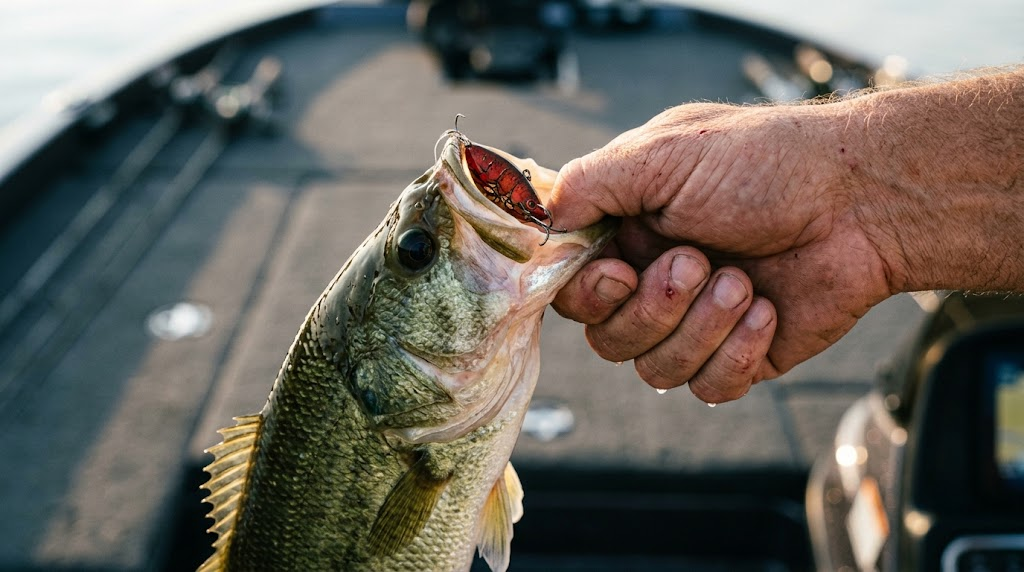
Table of Contents
If you want to quickly cover vast expanses of water and trigger aggressive reaction strikes from trophy bass, almost no other lure rivals the lipless crankbait. Whether you are facing the frigid water temperatures of the early spring pre-spawn or targeting schooling fish on the feed in the fall, mastering how to fish a lipless crankbait will completely transform your angling experience.
Over the years, having tested a variety of fishing setups across diverse water conditions, I’ve found that the key to success with this lure lies in understanding bass behavior, pairing it with the right fishing rod and reel combo, and dialing in your retrieve.
In this ultimate guide, we will break down everything you need to know to effectively fish a lipless crankbait and help you land your next personal best (PB)!
Every Angler Needs to Know About Lipless Crankbait
What Is a Lipless Crankbait
A lipless crankbait, sometimes called a vibe bait, is a flat-sided lure that produces a tight, high-frequency wobble during the retrieve. It typically features two treble hooks and a split ring.
Most lipless lures contain internal metal or glass rattles. According to biological research on the bass lateral line system by Wired2Fish, a largemouth bass’s lateral line is incredibly sensitive to changes in water pressure and high-frequency sound waves.
In muddy water or low-light conditions, the high-frequency vibrations emitted by a lipless crank bait accurately mimic the frantic struggle of a dying baitfish. This forces the bass to rely on its lateral line nerves to deliver a “reaction strike,” rather than just feeding out of hunger.
When to Use a Lipless Crankbait
Early spring (pre-spawn) and fall are the best times to throw a lipless crankbait, and muddy water is its absolute home turf.
First, the tight wobbling swimming action of a lipless crankbait makes it far more effective at triggering bites in extremely cold or chilly water conditions (45 to 60 degrees Fahrenheit) than other baits.
Why? Because when the water is cold, bass prefer a tight vibrating sound that perfectly mimics the shivering of a dying baitfish.
I often see tournament pros relying on it during early spring and late fall, with red crawfish patterned lipless crankbaits being an absolute must-have pre-spawn weapon for most professional anglers.
Second, the reason lipless crankbaits for bass excel in stained or muddy water is that their loud rattles and rapid vibrations heavily stimulate the bass’s lateral line reaction.
In clear water, however, you need to avoid overwhelmingly loud rattles. Because bass in clear lakes rely more on sight than sound to hunt, you are better off choosing a silent lipless crankbait in a natural color pattern.
How Deep Do Lipless Crankbaits Go
Unlike traditional lipped crankbaits that rely on a plastic lip to dive to a predetermined depth, the sinking nature of a lipless crankbait allows it to be fished effectively at almost any depth in the water column. For more about how to fish a crankbait, please read: How To Fish A Crankbait For Bass?
Furthermore, because there is no diving lip to create water drag, lipless crankbaits are incredibly well-suited for vertical jigging.
Dropping them straight down into 20 to 30 feet of water during the dog days of summer or the dead of winter is a highly effective, yet often overlooked, deep-water bass fishing tactic.
The Best Gear Setup for Lipless Crankbaits
Choosing the Right Rod: Spinning vs. Baitcasting Options
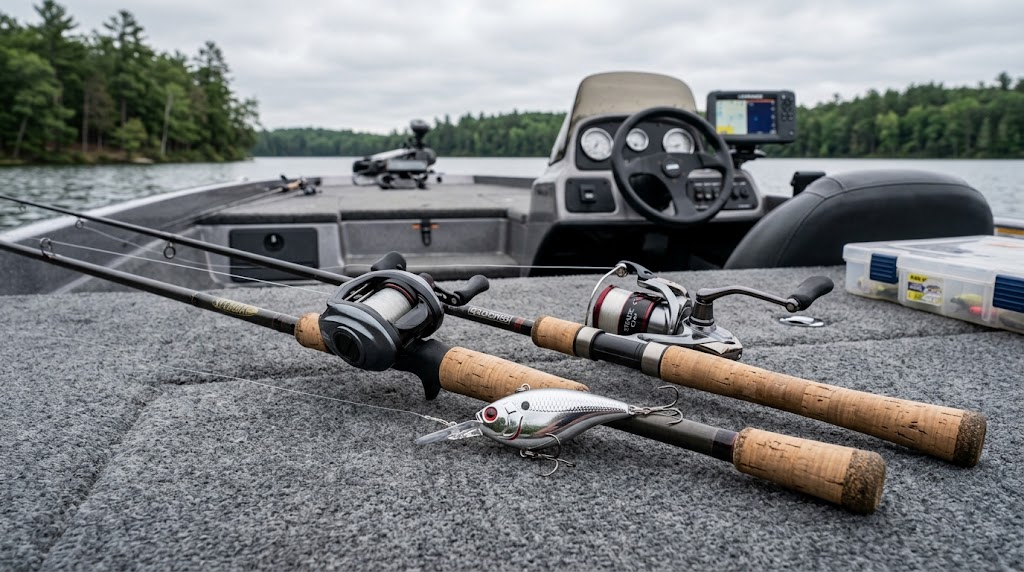
Many beginners fall into the myth that you can only fish lipless crankbaits with heavy duty baitcasting reels. In reality, the perfect fishing tackle arsenal should include both spinning rod and casting rod options to tackle diverse fishing environments:
Baitcast Combos:
When you are fishing in heavy aquatic vegetation or throwing heavier 1/2 oz to 3/4 oz lipless crankbaits, a baitcasting combo is the premier choice. You will need a Medium-Heavy power, Moderate action casting rod.
A moderate action fishing rod tip provides enough parabolic bend and cushion to absorb the shock when a bass jumps and shakes its head, preventing the treble hooks from tearing out of its mouth.
If you are fishing 1/4 oz or even lighter micro lipless crankbaits in deep water, or facing heavy headwinds that demand pinpoint casting accuracy, a high-quality spinning combo often performs better.
Spinning reels allow for smoother casting of light lures. Plus, when fishing clear water that requires a finesse approach in deep zones, a spinning rod delivers unmatched sensitivity and control. For finesse fishing techniques, please refer to: Finesse vs. Power Fishing
Selecting the Ideal Reel Gear Ratio
Choosing the right reel gear ratio largely comes down to angler preference and the specific fishing scenario. Generally speaking, medium to high gear ratios offer better control over your retrieve speed and bite detection. A high-speed fishing reel helps you impart those erratic actions needed to catch trophy bass.
Low Gear Ratios (5.4:1 – 6.1:1):
Ideal for slow-rolling during cold water periods. It forces you to slow down, keeping the lipless crankbait fishing lure in the bass’s strike zone for a longer period of time.
High Gear Ratios (7.3:1 and up):
Perfect for burning the bait back after a long cast or fishing around grass. By quickly turning the handle the moment the lure hits the water, a high gear ratio helps you instantly pick up slack line, ensuring a solid hookset.
Fluorocarbon vs. Braid: Which Fishing Line Wins?
Fluorocarbon Line (12-15lb):
Fluorocarbon sinks, is virtually invisible underwater, and has very little stretch.
This makes it the perfect choice for fishing over hard bottoms (like rock piles), open water, or crystal-clear lakes.
Braided Fishing Line (30-40lb):
Braid has zero stretch and cuts through vegetation like a knife. In dense grass beds, braided line is a proven winner.
It allows you to cleanly snap and rip the lure free when it hangs up, rather than dragging a clump of weeds back like a bungee cord.
3 Deadly Techniques: How to Fish a Lipless Crankbait Effectively
While deep diving crankbaits are generally best fished with a steady retrieve, lipless crankbaits are far more versatile.
The Stop-and-go Retrieve
The stop-and-go retrieve is the most fundamental yet deadliest technique.
How to do it:
I typically bomb a long cast and start with a normal or medium-speed retrieve. Then, I pause briefly before resuming the retrieve.
Note that the pause doesn’t need to be long.
Just retrieve, pause, retrieve. That split-second pause in the middle of a fast retrieve is often the crucial trigger for a violent reaction strike.
Ripping Through Grass and Aquatic Vegetation
This method is tailored for fishing the heavy grass beds common in the American South (like Florida and Texas), especially when hydrilla is present. Similar to swimbaits for bass or spinner baits for bass fishing, a lipless crankbait can be reeled just above or along the edges of the grass.
How to do it:
I cast the lipless crankbait over the grass flat, letting the lure sink as I retrieve until it just ticks and hangs up on the edge of the vegetation.
Then, I give the rod a hard, sharp pop—just like setting the hook—to rip it free (ripping), simulating a panicked baitfish. Bass will absolutely smash it right then!
However, this technique does not work well around milfoil, which acts more like Velcro and is incredibly difficult to rip cleanly through.
The “Yo-Yo” Retrieve for Deep Water Bass
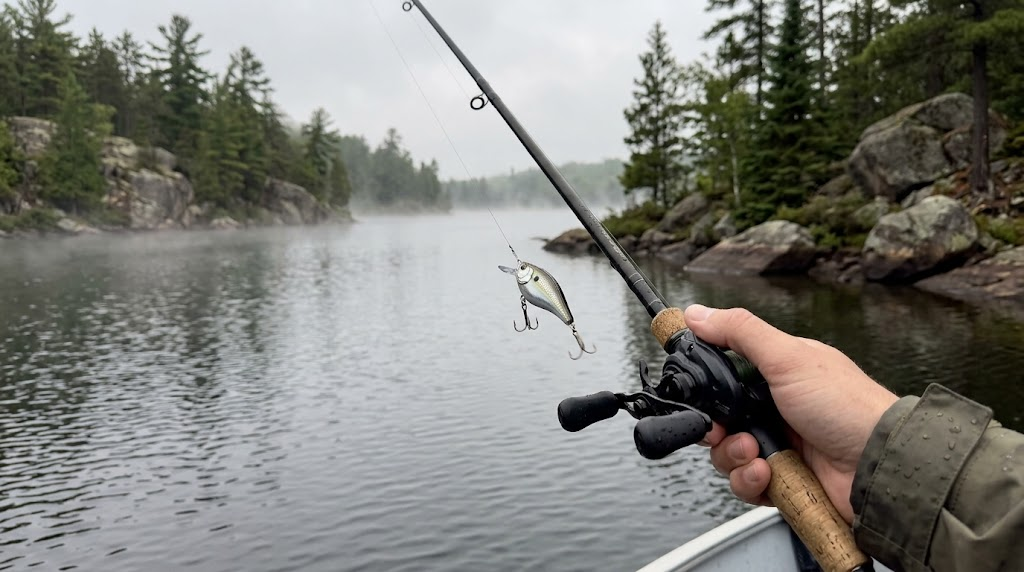
When targeting deep water zones or steep drop-offs, I frequently rely on the “Yo-Yo” retrieve, a method highly recommended in Reddit under threads like: Tips on fishing a lipless crankbait?
How to do it:
Cast the lipless crankbait and let it sink all the way to the bottom. Reel up the slack line, then sweep your rod tip upward, before following the bait back down with your rod tip as it sinks.
Lower the rod tip while reeling to let the lure briefly pause and flutter. Then, sweep the rod up again while picking up slack.
Repeating this process creates an erratic, fluttering action that is absolute key to drawing strikes from bass.
Years of tournament fishing have proven that this method catches kicker bass. I’ve personally landed quite a few solid fish using this exact technique.
Top Mistakes to Avoid When Throwing a Lipless Crankbait
Fishing Too Slow in Cold Water
This is the most common mistake beginners make. Many assume that because the water is cold, you have to drag the bait slowly along the bottom.
Remember: The core of fishing a lipless crankbait is speed and reaction.
Even in the early spring, you still need to maintain a retrieve speed fast enough to make the lure vibrate, or switch to the Yo-Yo method.
You are not “feeding” the fish; you are invading their territory to aggravate them into biting.
Ignoring Hard Cover (Rocks and Wood)
Many anglers avoid rock piles out of fear of snagging, but this is a massive missed opportunity.
The exact moment a lipless crankbait suddenly crashes into a submerged rock and bounces off to the side (deflection) is often the strongest trigger for a vicious strike from a giant bass.
As long as you are using a moderate action rod and heavy fluorocarbon line, be bold and let that bait bounce off the hard cover!
For more about fishing spot, please read: How to Find A Good Fishing Spots Before You Cast?
Ready to Break Your Personal Best?
Mastering the techniques of fishing a lipless crankbait is only half the battle; having the right fishing gear setup to execute those techniques is what actually puts fish in the boat. Whether you are ripping through Texas grass with a heavy-duty casting rod setup or finessing a micro lure in deep, clear water with an ultra-sensitive spinning combo, balancing your tackle is absolutely critical.
Don’t let the wrong fishing rod action cost you a monster bass. Equip yourself with high-quality rod and reel combos, tie on your favorite lipless crankbait, and get ready for some of the most violent strikes you’ll ever experience on the water!
FAQ
What is the best depth to fish lipless crankbaits?
2 to 10 feet for standard retrieves, or 15 to 30+ feet when using a yo-yo retrieve in deep water.
Where to throw a lipless crankbait?
Submerged grass beds, shallow flats, rocky points, and hard covers (like gravel or wood) where you can bounce the lure to trigger strikes.
One thought on “How to Fish a Lipless Crankbait for Trophy Bass?”