
Blog
What Color Fishing Lure is Best? The Ultimate Lure Color Guide

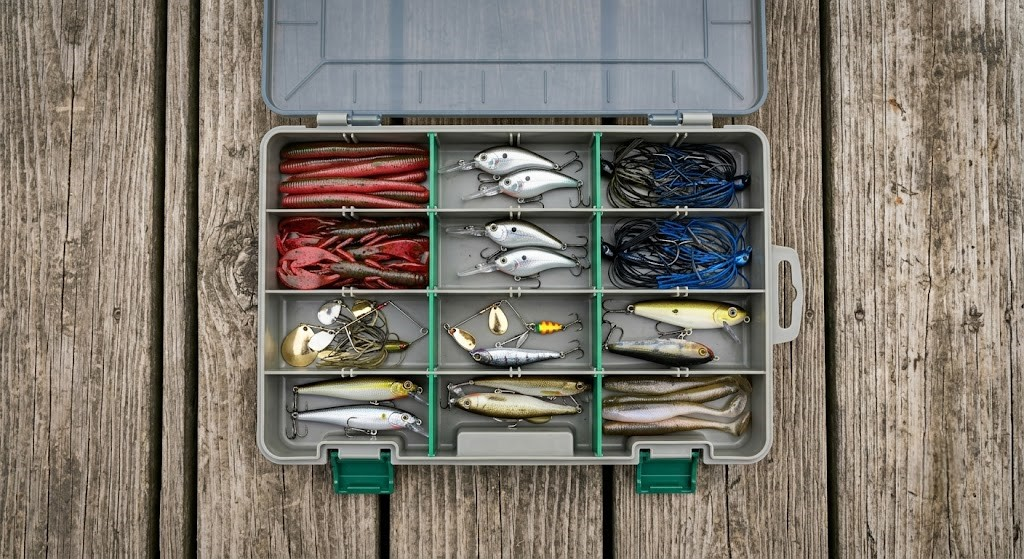
Table of Contents
Opening a tackle box stuffed with colorful lures, almost every angler asks themselves the same question: “What color lure should I use today?”
In fact, there is no absolute “best” color, only the “most suitable” color for the current water conditions. Choosing the right lure color is not a matter of guesswork; it is a science that combines optics, hydrology, and fish biology. This article will provide an in-depth analysis of how fish perceive color and guide you through how key factors like weather, water clarity, and water depth dictate which color artificial bait you should tie onto your line.
How Fish See Color: The Biological Secret Behind Lures
Just like humans, a fish’s retina contains two main types of photoreceptor cells: they have cone cells and rod cells. However, the way they operate in an underwater environment gives them unique advantages:
Cone Cells: Sensing Color and Detail
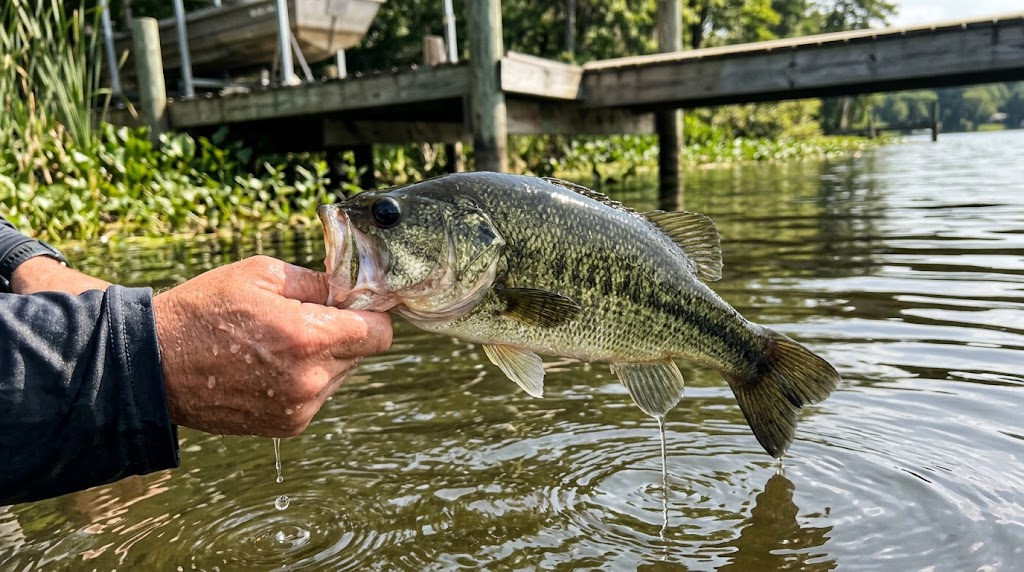
Responsible for perceiving color and details in well-lit conditions. Many reef fish and shallow-water species possess three to four different types of cone cells (humans only have three), meaning they can distinguish extremely subtle color variations and even see ultraviolet (UV) light, which is invisible to the human eye. According to National Science Foundation (NSF) research on fish vision, common target species like largemouth bass are most sensitive to red and green.
Rod Cells: High Contrast in Low Light
Responsible for detecting light intensity and movement in low-light environments. They cannot distinguish colors, but they provide extremely high black-and-white contrast, helping fish lock onto the silhouette of their prey in the dark.
You can use the simulator below to visualize how objects of different colors change appearance to a fish’s eye as they sink:
Light Absorption in Water
Visibility Index: 100%
5 Key Factors for Choosing the Best Fishing Lure Color
Weather Conditions and Lure Color
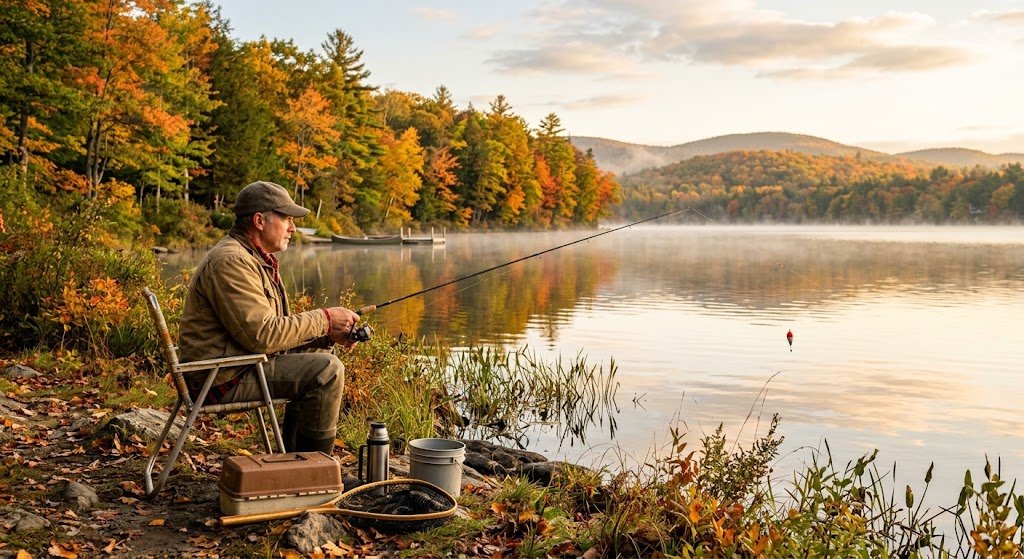
Overcast Days: On cloudy days, there is less light and lower visibility, making the underwater environment darker. Therefore, bright or dark, solid tones will stand out more. I will try white, chartreuse (like a chartreuse soft plastic worm), and any lure with silver or gold flakes to entice fish to bite.
Sunny Days: High visibility on clear days makes the underwater environment bright, but it is also prone to glare. Natural colors are best suited for these conditions.
Water Clarity: The Most Crucial Variable
Water clarity refers to how clear the fishing water is, and it is the most important single factor in determining lure color. The more suspended particles (like algae or sediment) in the water, the lower the visibility.
Clear Water
In clear water, fish have the opportunity to carefully inspect the bait. Here, natural tones are key.
Underwater Visibility: > 5 feet
Best Lure Colors: Green pumpkin, watermelon red, light brown, silver, or translucent colors. You need to mimic the local, real baitfish or crustaceans as closely as possible. You can learn Which Lures Are Best for Freshwater Fishing? here.
Stained Water
The water typically takes on a tea or green color. You need a little extra flash to grab their attention.
Underwater Visibility: 1 – 5 feet
Best Lure Colors: Green pumpkin, dark green, dark brown, silver, black, white, gold, purple, red.
My favorite bait combination is: Choosing a lure that matches the color of the lake bottom, adding a bit of flake—such as green pumpkin with purple flake, or watermelon red with red flake.
Muddy Water
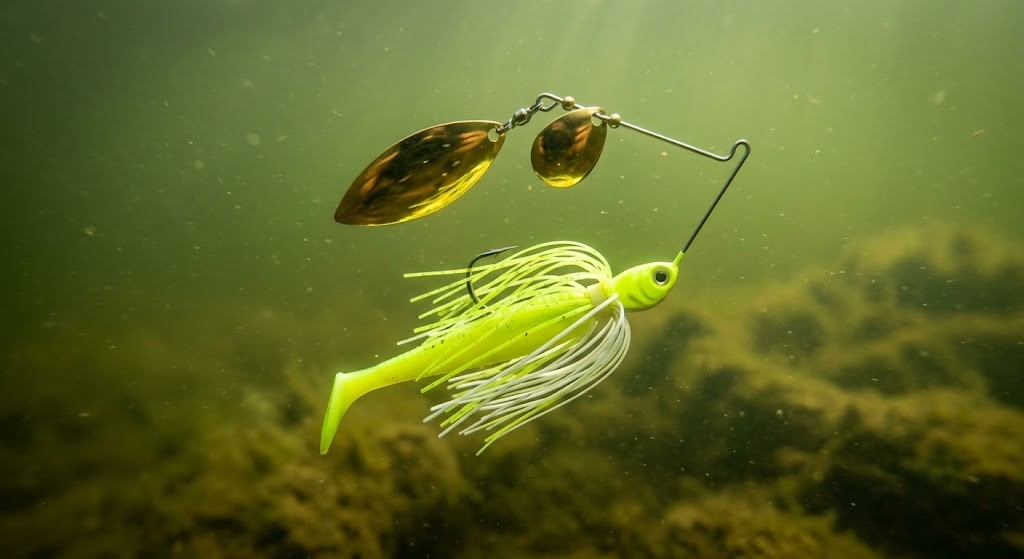
In muddy water, a fish’s vision is obstructed, and they rely more on their lateral lines to sense vibration, depending visually on striking contrasts.
Underwater Visibility: < 1 foot
Best Lure Colors: Chartreuse, silver, white, gold, blue.
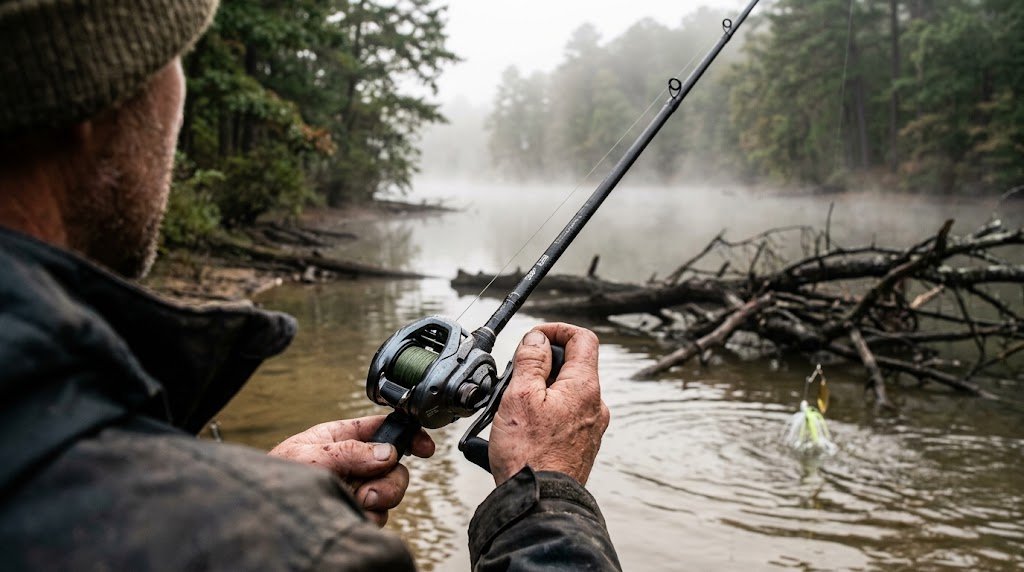
I like to use dynamic baits like red crankbaits and chartreuse spinnerbaits.
Water Temperature and Forage Hues
I feel that water temperature also affects the color of artificial lures because I have noticed that baitfish display different colors and patterns at different water temperatures.
Cold Water Period (Early Spring / Late Fall): Many crustaceans (like crayfish) take on reddish or dark brown hues in cold water. Dark colors or tones that mimic decaying vegetation and silt work best. I often use a black blue sparkle chatterbait.
Warm Water Period (Summer): Baitfish and insects are highly active and brightly colored. You can mimic them with bright or shiny lures, such as brown, green, and smoke gray.
Water Depth and Light Absorption
Water depth refers to the distance from the water’s surface to the bottom, and depth affects the absorption of light waves. Optical physics data from NOAA (National Oceanic and Atmospheric Administration) points out that water acts like a filter, absorbing different wavelengths of color layer by layer as depth increases.
| Water Depth Range | Physical Phenomenon of Color Change | Best Lure Color Strategy |
| 0 – 20 Feet | Warm tones are absorbed first. Red turns dark gray around 15-20 feet. | All colors work well. You can confidently use red or orange in shallow water. |
| 20 – 45 Feet | Orange begins to fade; yellow gradually loses its vibrancy. | Green, blue, or baits with strong silver reflection. |
| 50 – 75 Feet | Almost exclusively green and blue light waves can penetrate. | Blue, dark green, or use silhouette colors to create black-and-white contrast. |
| > 100 Feet | All natural colors turn to black, white, or gray. | Glow coatings, UV-reflective lures, solid black, or solid white. |
Bottom Composition and Background Contrast
The color of the water’s bottom affects how much light is absorbed or reflected by the water.
Light-Colored Bottom: Sandy or coral bottoms can reflect more light, enhancing water clarity. Natural colors and silver blend in well and trigger bites.
Dark-Colored Bottom: Black rock or silt can absorb more light, reducing visibility and water clarity. You need to use bright colors (white, chartreuse) to break the dullness of the dark background and ensure fish can lock onto the target.
Pro Tips: Match the Hatch for Local Forage
Observe the Shallows
Before casting, take a few minutes to observe the activity in the shallow water. Pay attention to swimming baitfish or startled, darting shrimp and crabs. Their colors and sizes are the ultimate standard for choosing your lure.
Check Local Fishing Reports
Explore local fishing reports or forums to learn about the recent “trending colors” favored by target fish in that area.
Adapt to Seasonal Changes
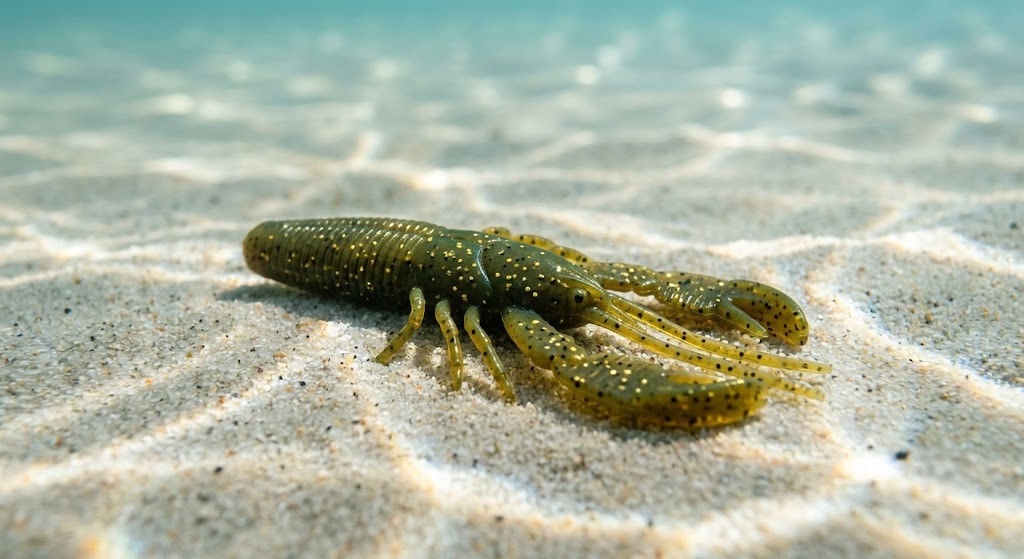
Understand that forage colors change with the seasons; for example, spring crayfish might be reddish, while by late summer during molting, they might lean towards blue-green. You can check out soft plastic craws to find the colors you want.
Conclusion: Selecting the Winning Lure
Picking the best fishing lure color isn’t based on guesswork; it’s the result deduced from a three-step formula: Water Clarity + Water Depth + Weather. In clear, shallow water, try to stay natural; in muddy or deep water environments, prioritize strong silhouette contrast and flash.
Before your next fishing trip, simply apply the scientific principles above, and you’ll be able to quickly pick out today’s “champion lure” from your tackle box.
Want a [Lure Color Quick-Reference Guide] you can save on your phone to check anytime? Leave your email below, and we will send you this high-definition PDF guide for free.
Whether it’s sunny or raining, clear or muddy water, one glance at the chart and you’ll pick the right color in 3 seconds—you’ll never choose the wrong bait again!
FAQ
What color lure is best for muddy or stained water?
In low-visibility conditions, high-contrast colors perform best. Chartreuse, solid white, and dark color combinations like black and blue help create a strong silhouette that fish can easily spot in murky water.
What is the most versatile lure color for clear water?
Green pumpkin and watermelon red are widely considered the most versatile colors for clear water. They effectively mimic a wide variety of natural forage, including baitfish, bluegill, and crayfish, without looking unnatural under bright sunlight.

7 thoughts on “What Color Fishing Lure is Best? The Ultimate Lure Color Guide”