

Blog
Hard Baits vs. Soft Plastics: Which Lure is Better?


Table of Contents
If you spend enough time walking the banks or casting from a deck, you will inevitably run into the most heavily debated topic in modern fishing: should you tie on a hard bait or a soft plastic lure?
Ask ten different anglers, and you will get ten different answers. Sometimes, the fish are incredibly aggressive and will absolutely demolish a fast-moving crankbait. The very next day, a cold front might roll in, and those same fish will completely ignore anything that isn’t a subtly twitching, slow-falling wacky rig.
In this comprehensive guide, I am going to share my personal, on-the-water experiences to break down the hard baits vs. soft plastics bait debate. We will look at the strengths, the weaknesses, and exactly when you should be throwing each to maximize your time and catch more fish.
The Golden Rule: Let the Underwater Structure Decide
Before we dive into the specific mechanics of each lure type, there is a fundamental rule of thumb that dictates my lure choice on almost any body of water: I generally throw soft plastics in areas where I am prone to getting snagged, and I use hard baits in more reliable, open waters.
This approach does two very important things:
Saves Money
High-quality hard baits are an investment. Losing a $15 crankbait to a submerged tree hurts. Soft plastic fishing baits, on the other hand, are incredibly cheap and come in bulk packs.
Keeps Lure in the Strike Zone
The physical design of soft plastics makes them naturally superior at slipping through heavy underwater obstacles.
Many hard baits—especially deep diving crankbaits—deflect beautifully off of hard, rocky bottoms. But the moment they encounter thick weed beds, submerged brush piles, or laydown logs, those hanging treble hooks will grab hold of the wood, and your lure is stuck.
Wood and thick grass are the sworn enemies of hard baits. If you are casting into the “thick stuff,” soft plastics will win every single time.
Soft Plastics: The Masterclass in Finesse Fishing
Soft plastics have revolutionized the fishing industry. They are incredibly lifelike, pliable, and come in a mind-boggling array of shapes, sizes, and colors. Whether you are imitating a dying baitfish, a crawling crawdad, or a simple swimming worm, there is a soft plastic fishing lure designed for the job.
The Power of Versatility and Rigging
The absolute greatest strength of a soft plastic lure is its versatility. You can use them as a “trailer” on the back of a jig head, spinnerbait, or chatterbait lure to add a bulky profile and a tantalizing swimming action. Or, you can fish them completely standalone.
If you are just getting started, the rigging options might seem overwhelming. You should definitely familiarize yourself with these essential setups:
- The Texas Rig: I personally believe the Texas rig is the absolute most versatile setup in existence. The hook point is buried back into the plastic body, making it entirely weedless and perfect for dragging through heavy cover.
- The Wacky Rig: An incredibly simple but deadly presentation where the worm is hooked directly in the middle, creating a fluttering action as it sinks.
- The Ned Rig & Drop Shot: Excellent for highly pressured water and extremely finicky fish.
Presentation: Slower is Better
I have found that fishing with soft plastics is usually a much slower, more methodical game. You are relying on your rod tip to painstakingly control the bait, bringing it to life manually.
You are trying to convince a predator that this piece of plastic is an easy, unsuspecting meal. Because you are subtly coaxing the fish to bite, this technique is universally known as “finesse fishing.”

The Hookset Learning Curve
Here is a reality check from my own experience: fishing with soft plastics requires a much steeper learning curve when it comes to knowing how and when to set the hook.
Because the hook is usually buried safely inside the rubber (to prevent snagging on weeds), the fish won’t hook itself. You have to wait for the distinct “thump,” reel down the slack, and actively drive that hook through the plastic and into the fish’s mouth.
The process is slower, and you will miss fish when you first start, but once you master the technique, the accomplishment you feel is incredibly rewarding.
Hard Baits: High Speed, Aggression, and Reaction Strikes
On the other end of the spectrum, we have hard baits. Today’s premium hard lures are typically constructed from highly durable materials like ABS plastic rather than traditional wood, allowing for internal rattle chambers, weight transfer systems for long casting, and incredibly precise swimming actions.
Built-in Action and Water Coverage
The beauty of hard baits—whether they are crankbait, jerkbaits, topwater popper, or massive glide bait—is that their swimming action is drastically different and built right into the lure.
Hard baits are designed for speed. They have a much faster presentation, and you will be casting and reeling constantly. Because their swimming action relies primarily on the swinging, jerking, and pausing of the fishing rod. This allows you to cover massive amounts of water in a short period. If you are on a huge, unfamiliar lake, a hard bait is the perfect “search bait” to help you quickly locate schools of active fish.
The Thrill of the Reaction Strike
Hard baits are generally armed with two or three hanging treble hooks. Because of these exposed hooks, they are notoriously difficult to use in heavy cover. However, these hooks provide a distinct advantage: they are sticky.
When fishing a fast-moving hard bait, you actually do not need a massive, sweeping hookset. When a fish decides to bite, it usually hooks itself. The fish reacts entirely on pure, predatory instinct, violently attacking the lure and attempting to swim off with it. The sheer aggression of a fish slamming a moving crankbait provides a unique thrill that soft plastics simply can’t match.
Beginner Friendly (With a Catch)
I actually consider hard baits to be highly beginner-friendly because the lure does all the “swimming” work for you. You cast, you reel, and the lure wiggles.
However, there is one crucial caveat: You must understand diving depths. Every hard bait is designed to run at a specific depth. If you throw a crankbait designed to dive 15 feet deep into a pond that is only 5 feet deep, you will spend your entire afternoon dredging mud and getting snagged.
Hard Baits vs. Soft Plastics Chart
To make things easy, here is a quick breakdown of how these two lure categories stack up against each other:
| Feature | Soft Plastics | Hard Baits |
| Cost | Low (Cheaper to buy and replace) | High (More expensive per lure) |
| Durability | Low (Torn up by fish teeth/rocks) | High (Built to last through hundreds of fish) |
| Weedless/Snag Resistance | Extremely High (Hooks can be hidden) | Low (Exposed treble hooks snag easily) |
| Speed of Fishing | Slow and Methodical | Fast and Aggressive |
| Best Water Type | Heavy cover, weeds, wood, brush | Open water, rock bottoms, drop-offs |
| Hookset Difficulty | Harder (Requires timing and force) | Easier (Fish hook themselves) |
Tips for Beginners: Essential Soft Plastics & Hard Baits
Start with User-friendly Lures
Begin with time-tested soft plastics—such as worms or grubs—and basic hard baits like shallow diving crankbaits and topwater poppers. This allows you to learn the fundamental techniques for both types without feeling overwhelmed.
Pay Attention to Water Clarity And Color
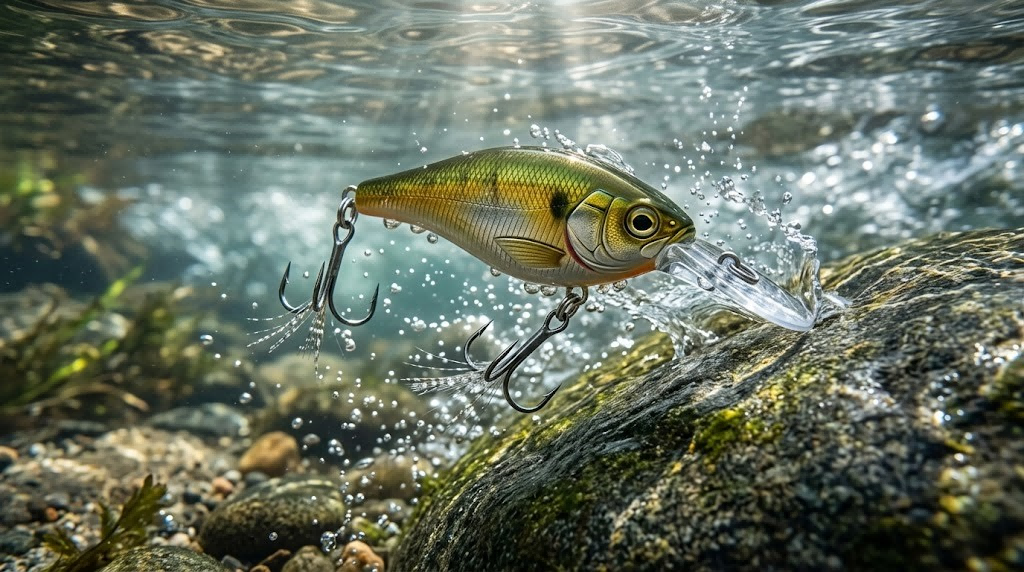
In clear water, opt for natural tones (greens, browns, or translucent colors with glitter). In murky water, bright colors (chartreuse, orange) or dark silhouettes (black, blue) make the lure easier for fish to spot.
Rig Soft Plastics Correctly
Improper rigging is a common mistake. Learn to tie weedless rigs like the Texas rig (for soft plastics) and use jig heads (for swimbaits). Proper rigging ensures natural lure action and reduces snags, directly impacting your success rate.
For Advanced Users: Advanced Strategies for Soft Plastics & Hard Baits
Use Lure Selection to Gauge Fish Behavior
Instead of casting blindly, observe how fish react to different lure types and presentation styles.
If fish strike a hard bait but fail to hook up, they may simply be swiping at it. Switching to a soft plastic—which fish tend to hold onto longer—can turn those missed strikes into successful hookups. This highlights the value of dynamically comparing soft plastics and hard baits.
Tailor Lures to Specific Conditions
Don’t be afraid to customize. Trimming a soft plastic can alter its action or profile, while adding suspension strips or lead tape to a hard bait can change its buoyancy or diving depth. These subtle adjustments can yield significant results, especially in heavily fished waters where soft plastics often hold a distinct advantage over hard baits.
Conclusion: Which One Should You Throw?
So, which is better? The truth is, neither is inherently “better” than the other. They are completely different tools designed for different jobs.
If you are staring at a massive, tangled mess of fallen trees or a thick mat of lily pads, tie on a Texas-rigged soft plastic. It will slide through the danger zone and trigger the fish hiding in the shadows.
But, if you are fishing a clean, rocky point, or you notice fish actively chasing bait near the surface, a high-quality ABS hard bait will trigger those violent reaction strikes and help you cover water efficiently.
As an angler, your goal shouldn’t be to pick a side. Your goal should be to experiment with various bait and rig combinations until you figure out exactly what the fish want on any given day. Master both, and you will always be prepared for whatever the water throws at you.
FAQ
When to use hard baits?
For locating schools of fish; during cold-water periods or the pre-spawn phase; when targeting aggressive fish; or when fishing in rocky areas or open water.
What are types of soft plastics?
Worms, creature baits, grubs, paddle tail, straight-tail lure, cylindrical baits with tentacle-like tails, great for smallmouth bass.
Hard baits vs soft plastic baits for bass?
Hard Baits: Crankbaits, jerkbaits, and topwater lures are effective for active bass.
Soft Plastics: Craws, and creature baits are perfect for flipping, pitching, and finesse.


4 thoughts on “Hard Baits vs. Soft Plastics: Which Lure is Better?”