

Blog
What is The Best Power Rod for Fishing?

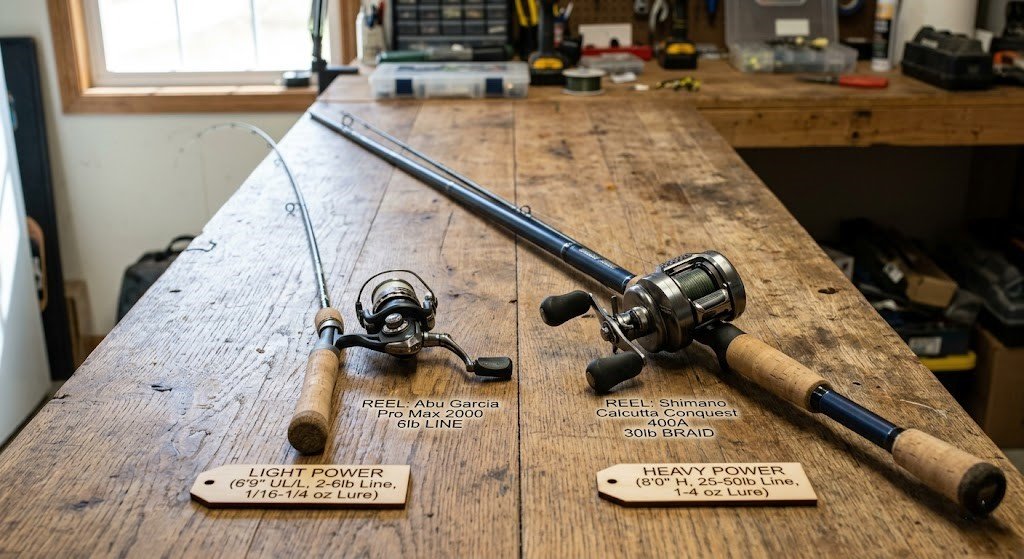
Table of Contents
When your fishing rod bends too much (overloaded) or barely bends at all (underloaded), it usually means the rod power you chose does not match the situation.
Many anglers mistakenly think rod “weight” refers to ounces (oz). In reality, the industry standard refers to fishing rod power (rod backbone/stiffness), which is the rod’s resistance to bending.
Light Power: improves bite sensitivity
Medium Power: balances control and versatility
Heavy Power: provides strong hook penetration and fish control
More than 80% of lost fish are essentially caused by “mismatched tackle” (Rod + Line + Lure + Hook).
Understanding rod power is the dividing line between “not catching fish” and “consistently landing fish.”
What Is Fishing Rod Power?
Rod power refers to how much a rod resists bending under load.
You can think of it as the rod’s backbone or strength. A higher-power rod has a stronger backbone and bends less; a lower-power rod bends more.
It can be understood as:
Power = stiffness (resistance to bending) → determines fish size and lure weight
Action = where the rod bends → affects casting feel and hook-setting efficiency
Power determines whether you can control the fish.
Action determines whether you can keep the fish pinned.
Fishing Rod Power Chart
Fishing Rods come in multiple power ratings, each designed for specific applications:
| Power | Line(lb) | Lure(oz) | Application |
| UL | 2–6 lb | 1/64–1/8 oz | Streams, small fish |
| L | 4–8 lb | 1/16–1/4 oz | Trout, panfish |
| ML | 6–10 lb | 1/8–3/8 oz | Light lure fishing |
| M | 8–14 lb | 1/4–3/4 oz | All-around bass |
| MH | 10–20 lb | 3/8–1 oz | Cover/structure |
| H | 15–30 lb | 1–2 oz | Heavy cover, big fish |
| XH | 20–50+ lb | 2–6 oz | Saltwater, big game |
There is no universal standard for rod power ratings across the industry. A medium-heavy rod from one brand may feel similar to a heavy power fishing rod from another.
Some manufacturers intentionally label rods “heavier”. Therefore, hands-on testing is critical when switching brands instead of relying solely on labels.
Expanding knowledge: What Size Fishing Reel Do You ACTUALLY Need?
4 Key Factors That Determine Your Ideal Rod Power
Target Fish Species
The species you target largely determines the rod strength you need.
Large fish like pike or musky require stronger rods for control. Fish that fight aggressively (e.g., bass or many saltwater species) also require more backbone to maintain pressure.
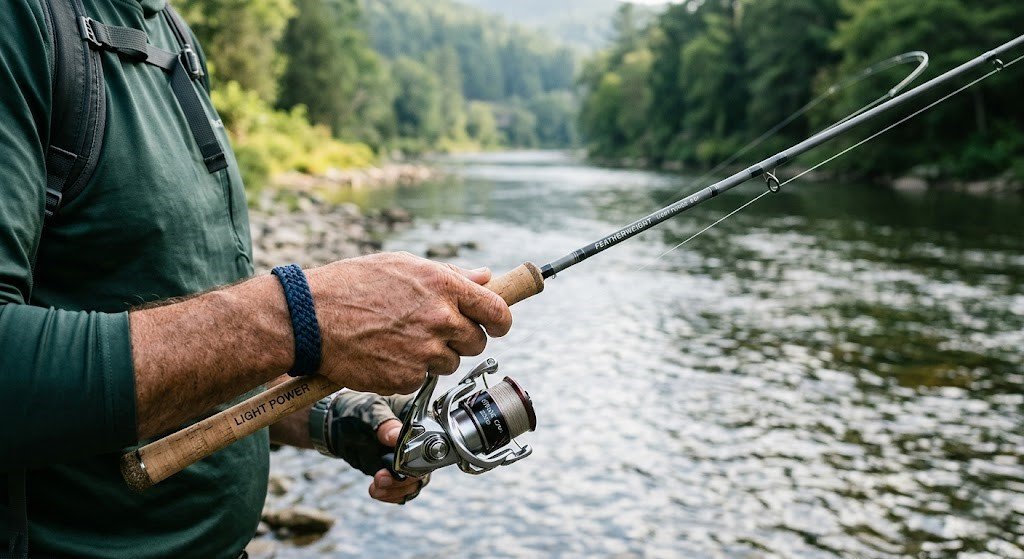
Mouth structure also matters. Fish with soft mouths (like trout) are better suited for light power fishing rods to avoid pulling hooks. Fish with hard, bony mouths require stronger rods for effective hooksets.
Lure and Bait Weight
Your rod usually indicates an optimal lure weight range near the handle. This is not a suggestion—it is a performance standard.
If the lure is too light, the rod won’t load properly, reducing casting distance.
If it is too heavy, it may damage the rod or reduce casting efficiency.
Certain techniques are tied directly to lure weight. For example, heavy flipping requires MH or H rods, while finesse techniques perform best with lighter power rods.
Line Strength
Like lures, rods are designed for specific line ranges. Proper matching ensures system balance between rod, reel, line, and lure.
Using heavy line on a light rod can cause rod failure under pressure.
Using light line on a heavy power fishing rod increases the risk of line breakage during hooksets.
Hook type also matters. Thick single hooks require more force, while treble hooks require less.
Fishing Environment and Technique
Fishing around heavy cover (grass, docks, structure) requires stronger rods to pull fish out quickly. Open water allows for lighter, more sensitive rods.
Different techniques demand different power levels:
Finesse fishing (drop shot, Ned rig): Light to Medium
Reaction baits (crankbaits, spinnerbait fishing lures): Medium to Medium-Heavy
Power fishing (jigs, frog lures, large swimbaits): Medium-Heavy to Extra-Heavy
Saltwater fishing rodsgenerally requires stronger due to harsher conditions and more powerful fish.
Guide for Rod Power Selection
| Fishing Scenario | Recommended Rod Power | Best For | Reason |
| Panfish & Small Trout | UL- L | Small species, tiny lures, delicate presentations | Prevent hook pull-outs |
| Bass – All-around | M – MH | Versatile bass fishing lures with various techniques | Balanced performance |
| Bass – Finesse | ML – M | Clear water, pressured fish, lightweight presentations | Improved sensitivity |
| Bass – Heavy Cover | H | Thick vegetation, frog fishing, heavy cover extraction | Strong control |
| Walleye | ML – M | Jigging, live bait rigging, subtle bite detection | Sensitivity priority |
| Pike & Musky | MH – XH | Large predators, heavy lures, powerful runs | Shock resistance |
| Catfish | M – H | Varies with size and current conditions | Stable power |
| Saltwater – Inshore | ML – MH | Speckled trout, redfish, structure fishing | Versatility |
| Saltwater – Offshore | H – XH | Deep water, powerful species, heavy rigs | High load capacity |
These are general guidelines. Your specific conditions, local fish size, and personal preference may require adjustments.
Why Do You Lose Fish?
3 primary reasons:
Power too low → insufficient hook penetration
Power too high → lack of cushioning → hook pull-out
Rod + Hook mismatch
Examples:
Using an H rod for crankbait fishing lures → high chance of losing fish
Using an ML rod for heavy jigs → poor hook penetration
Choose the Right Fishing Rod Power!
No single rod power fits all fishing scenarios. The correct choice depends on your target species, lure type, line strength, and fishing environment.
Rod power ratings—from UL to XH—exist to help you match your gear to specific conditions. Choosing the right power transforms fishing from frustration into consistent success.
FAQ
What rod power is best for beginners?
Medium (M) or Medium-Heavy (MH) is the most versatile choice.
They cover most freshwater scenarios and handle a wide range of lures with higher tolerance for error.
Which is more important: fishing rod power vs action?
Both matter, but priority depends on the situation:
Fish control / big fish / heavy cover → Power is more important
Hooksets / lure control / sensitivity → Action is more critical
What power is best for bass fishing rods?
Medium-Heavy (MH) is the most versatile option.
It works with most lures (jigs, worms, spinnerbaits) and provides sufficient hook-setting strength across varied conditions.
What rod power for crankbait fishing?
Medium (M) with Moderate Action.
It provides cushioning and reduces treble hook pull-outs.
2 thoughts on “What is The Best Power Rod for Fishing?”