

Blog
How To Fish A Crankbait For Bass?

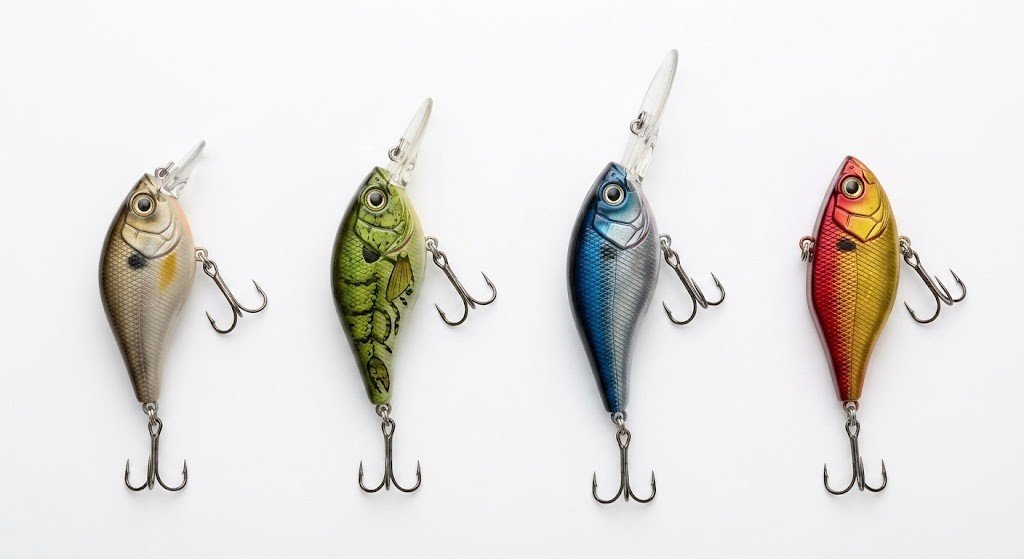
Table of Contents
If you’ve ever used a crankbait to catch bass and came up empty, the problem is likely not that you “don’t know how to reel,” but that you haven’t truly understood the core mechanics of this lure.
A crankbait is not a simple “cast and retrieve” hard bait. At its core, it is a highly efficient search lure that triggers reaction strikes through hydrodynamic disturbance and structure deflection. Under the right conditions, it can cover large areas of water in a short time and quickly locate active fish. Under the wrong approach, however, it can easily become one of the most unproductive lures.
This guide systematically breaks down: why crankbait lures, when to use them, how to fish them, and how to choose the right type and setup—helping you build a repeatable fishing system instead of relying on luck.
Crankbait Working Principle (More Than Just “Retrieving”)
The true mechanism of a crankbait can be broken down into three layers:
Hydrodynamics
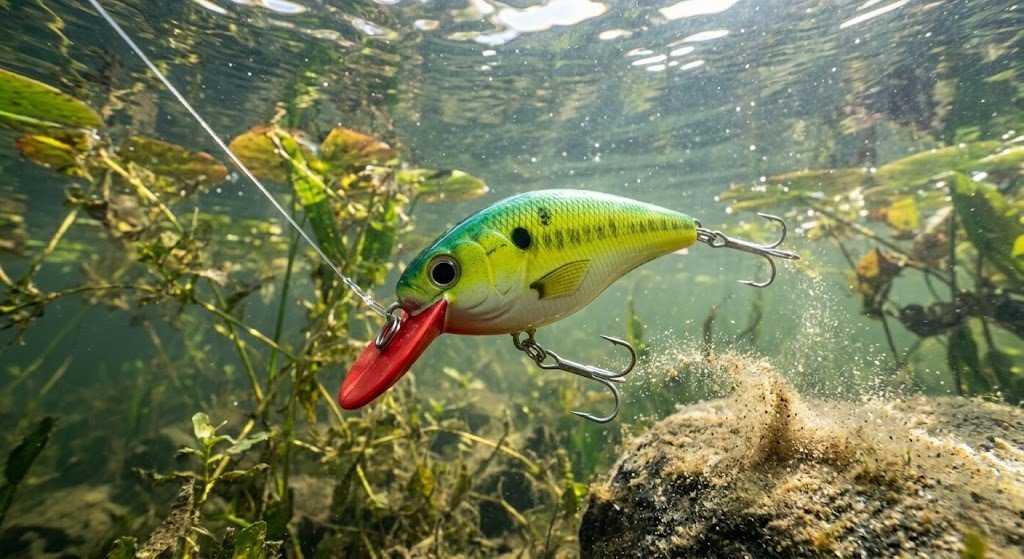
The lip/bill creates resistance in the water → generating a side-to-side wobble
Bill length → determines diving depth
Bill angle → determines diving speed
Bill shape → determines wobble frequency
Water Displacement & Lateral Line Trigger
Crankbait fishing lures do not primarily rely on vision, but rather:
They stimulate the bass’s lateral line system through water disturbance.
This is why they remain effective in:
Muddy water
Night fishing
Windy conditions
Deflection (Collision Trigger Mechanism)
This is what separates crankbaits from other lures.
When the lure hits:
Rock
Stump
Laydown
It produces an erratic movement → mimics a startled prey → triggers strikes
Crankbait Actions
Tight Wobble
A tight wobble crankbait has a smaller side-to-side movement but a higher vibration frequency.
These lures are typically slimmer with thinner bills.
Best for: cold water (<18°C), clear water, high-pressure fisheries.
Wide Wobble
Wide wobble crankbaits have a larger side-to-side movement.
They are usually bulkier and rounder in shape, with wider bills that displace more water.
Best for: warm water, stained water, night fishing.
Rattling
Most bass lures contain internal rattles designed to produce sound and attract fish.
Rattles vary in size and material:
Tungsten → high-pitched, sharp
Brass → low-frequency, dull
Rattling crankbaits work best in murky water or whenever extra attraction is needed.
Silent
More silent crankbaits are now available.
They contain no internal rattles—the only sound comes from hooks lightly contacting the body.
Best for: clear water and heavily pressured lakes.
When To Fish A Crankbait for Bass
To decide whether to use a crankbait, consider three factors: weather, water temperature, and fish depth.
Weather
Crankbaits perform best in cloudy or windy conditions.
Ideal conditions:
Wind: 5–15 mph
Cloud cover: >50%
Reason:
Surface disturbance → reduces fish wariness
Diffused light → increases strike probability
Water Temperature
Bass are cold-blooded, so their metabolism changes with water temperature. This makes temperature a key factor in crankbait effectiveness.
Crankbaits perform best during warming spring or cooling fall transitions.
| Water Temp | Behavior | Recommended Crankbait |
| <10°C | Very low activity | Lipless / Tight |
| 10–18°C | Increasing activity | Tight wobble |
| >18°C | High activity | Wide wobble |
Fish Depth
When bass are deeper than 20 feet (~6 m), it becomes difficult for crankbaits to reach bottom and make contact. While possible, it requires long casts and large deep diving crankbaits.
The optimal depth for crankbait fishing is 15 feet (~4.5 m) or shallower.
The essence of crankbait success: run the lure at the target depth + bottom contact.
Key factors:
Casting distance (longer = deeper)
Line diameter (thinner = deeper)
Line type (fluorocarbon > mono > braid)。
What Are Crankbaits Types Bass Fishing
Shallow Diving Crankbait
Shallow divers have small bills and typically run 0–5 feet deep.
The square bill crankbait is the most commonly used type in this category.
They are popular because they deflect well off shallow cover.
Core use: targeting shoreline structure.
Medium Diving Crankbait
These have slightly longer bills and run 5–12 feet deep.
They are effective when bass move off shallow water and hold in mid-depth zones.
Deep Diving Crankbait
Deep divers have large, thick bills and require heavier tackle to handle.
They are designed for 12–20 feet (3.7–6 m).
Ideal for bottom contact and deflection near deep structure.
Lipless Crankbait
Lipless crankbaits have no bill. Their flat profile allows them to sink and produce tight vibrations during retrieve.
They are most effective around grass.
A common technique is ripping them over submerged vegetation.
They can be used at any depth:
Heavier models → deep water
Lighter models → shallow water
How To Choose The Best Crankbait for Bass Fishing
Water Clarity
Water clarity directly affects crankbait selection.
In clear water:
Use tight wobble, silent crankbaits for a more natural presentation.
In stained water:
Use tighter wobble with some noise, or wide wobble without rattles.
Water Temperature
Temperature determines whether to use tight or wide wobble.
Cold water → tight wobble performs best
Warm water (>65°F / ~18°C) → wide wobble
In extremely cold water:
Lipless crankbaits and jerkbaits outperform other types.
Water Depth
Depth is the primary factor when choosing a crankbait.
Shallow water → shallow divers
5–12 feet → medium divers
12–20 feet → deep divers
Conclusion
Ultimately, bass fishing crankbaits are not luck-based lures—they are logic-driven system tools. What determines consistent success is not color or brand, but whether you run the lure at the correct depth, around the right structure, and with an action that matches the water temperature.
Once you understand the three core principles—depth priority, temperature-driven action, and structure-triggered strikes—a crankbait shifts from a simple hard bait into a high-efficiency tool for locating and catching bass.
FAQ
Are crankbaits suitable for beginners?
Yes, but only if the core logic is understood.
While operation is simple (cast + retrieve), success depends on depth control, structure deflection, and matching action to water temperature.
A straight retrieve without bottom or structure contact rarely produces consistent bites.
Why does my crankbait keep snagging?
This is usually not a bad thing—it means you are in the “strike zone.”
Key adjustments:
Use a squarebill to reduce snagging
Choose floating crankbaits
Control retrieve angle (avoid vertical dragging)
If you’re not hitting cover, you’re likely not getting bites either.
What line is best for crankbait fishing?
Fluorocarbon is preferred due to its sinking properties and sensitivity.
Common line sizes:
10–15 lb (general use)
8–10 lb (deep diving)




4 thoughts on “How To Fish A Crankbait For Bass?”