

Blog
Early Fall Topwater Fishing Guide: Best Poppers & Frogs for Bass

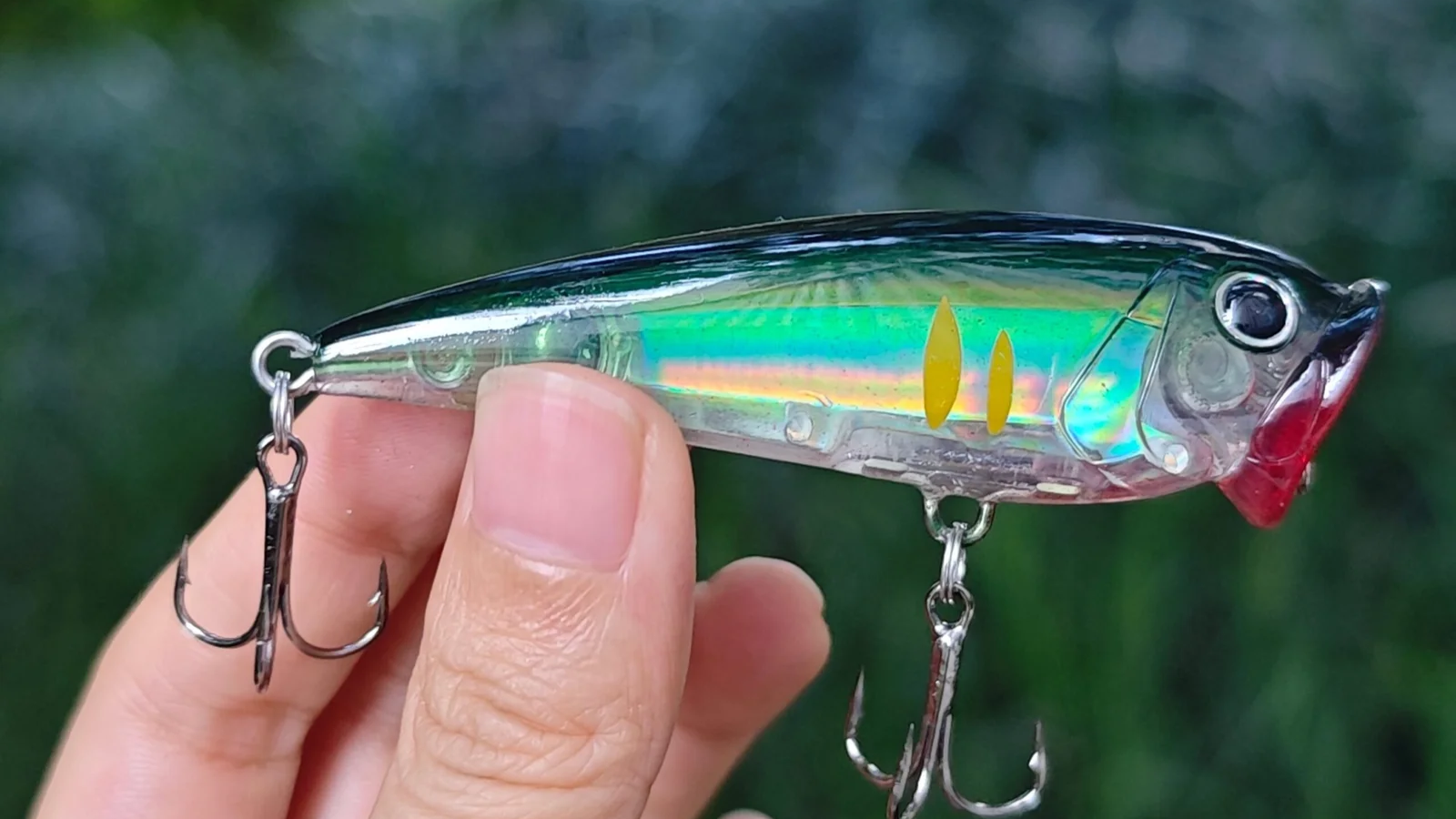
Table of Contents
Early fall temperature drops push baitfish into shallow waters, and hungry bass follow. To catch these aggressive feeders, mastering a top water popper and a weedless frog lure for bass is essential. Here is exactly how to fish them.
Understanding the Early Fall Topwater Bite
The early fall topwater bite is driven by baitfish migration and cooling surface temperatures. As the water cools, oxygen levels rise in the shallows.
According to seasonal studies published by Game & Fish Magazine, shad, bluegill, and minnows school up tightly along the shorelines, creek channels, and dying weed beds. Bass push these baitfish toward the surface to trap them.
When you see bass breaking the surface or pushing bait into the shallows, reaction baits are mandatory. You need lures that create surface disturbances to mimic fleeing or dying baitfish.
This is where poppers and hollow-body frogs outperform almost every other presentation in your tackle box.
Mastering the Bass Popper
A bass popper is unbeatable for fishing open water, defined grass lines, and hard structures like docks or rocky points. The cupped mouth of a top water popper moves water forward, creating a distinct sound that calls fish up from deeper strike zones.
The Perfect Popper Cadence
The secret to success with any popper is the pause. Bass usually strike when the lure sits perfectly still on the surface.
Cast your lure past the target structure.
Let the lure sit until the initial ripples disappear completely.
Pop the rod tip sharply downward once to spit water forward.
Wait for the ripples to fade entirely before moving it again.
Use a general ultralight lure fishing mentality to keep your rod twitches subtle and realistic, avoiding overly aggressive jerks that pull the lure out of the strike zone.
For more on downsizing your gear and improving lure control, check our BFS vs. Ultralight Fishing.
Line Choice for Poppers
Always use monofilament or braided line when fishing a bass popper. Fluorocarbon line sinks and will pull the nose of your topwater lure underwater, ruining the action. Monofilament floats, keeping the lure sitting perfectly horizontal on the surface.
Our Popper Fishing Lure uses a deeply cupped mouth to create a loud “bloop” that mimics struggling baitfish. Its internal rattle system provides extra acoustic draw in stained water. Its durable build even makes it a great choice for anglers crossing over into lures saltwater setups to target inshore species.
How to Use Frog Bait in Heavy Cover
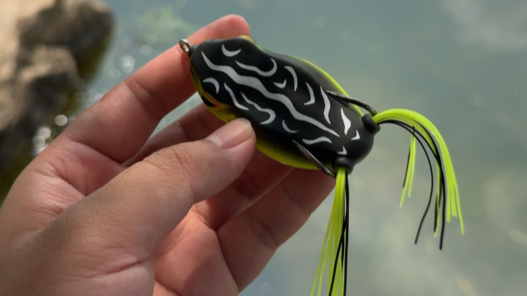
Dying fall vegetation creates dense, floating mats where bass ambush prey. Exposed treble hooks will instantly snag on this vegetation, making top water frog baits the perfect solution when comparing Hard Baits vs. Soft Plastics in heavy cover. Because the hooks ride flush against the back of the lure, you can throw a frog into the thickest cover imaginable without getting stuck.
Frog Placement and Retrieval
Learning how to use frog bait requires precision casting and rhythm. You cannot simply cast and reel a lure in a straight line.
The Placement: Cast directly onto lily pads, matted grass, duckweed, or overhanging laydowns.
The Action: Keep your rod tip pointed down toward the water. Use short, rapid twitches of the rod tip while slowly turning the reel handle. This imparts a side-to-side “walking” action that triggers violent reaction strikes.
Targeting Edges: Drag the frog slowly off a lily pad and let it sit perfectly still in the open water pocket for three seconds before walking it again.
The Hookset Delay
The most critical aspect of fishing topwater frogs is the hookset delay. When a bass explodes on a frog, your instinct is to set the hook instantly. If you do this, you will pull the lure right out of the fish’s mouth.
When you see the blowup, drop your rod tip.
Wait one full second.
Reel up the slack line.
Set the hook as hard as you can with an upward motion.
Our Weedless Frog Lure features a soft, easily collapsible body and twin upturned hooks. This design ensures weed-free casting in the thickest slop while exposing the heavy-gauge hooks instantly when a fish bites down.
The Ultimate Casting Rod Setup
When a bass strikes a frog in heavy grass, it will immediately dive downward and try to wrap your line around the vegetation. A medium-action spinning rod lacks the strength to stop this run. You need a medium-heavy to heavy power casting rod to winch the fish out of the cover immediately.
Line Requirements for Frogs
Never fish a frog on monofilament or fluorocarbon. You must use heavy braided line (40lb to 65lb test). Braid has zero stretch, which transfers all your hookset power directly to the thick frog hooks. Braid also acts like a saw, cutting through weed stems if a fish wraps you up.
Whether dragging frogs through thick pads, throwing poppers over submerged points, or seeking the best inshore casting rod versatility for multiple environments, you need reliable power. Our Telescopic Casting Fishing Rod combines easy on-the-go portability with the heavy-duty backbone required to wrench monster bass out of the weeds before they can bury themselves.
Whether dragging frogs through thick pads or seeking the best inshore casting rod versatility, you need reliable power.
Final
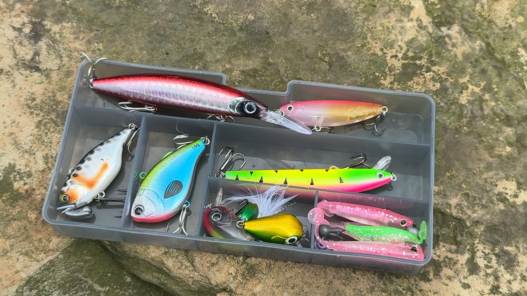
Ready to dominate the fall topwater bite? Explore our full collection of topwater baits and casting rods to gear up for your next personal best today.
FAQ
When’s the best time to use a frog lure?
Use them during low-light conditions at dawn and dusk, or anytime you are casting directly over thick surface weeds, lily pads, or matted grass.
How fast should I reel in a popper lure?
Never reel continuously; instead, give the rod a sharp twitch to splash water, then let the lure sit completely motionless until the ripples fade before popping it again.