

Blog
How to Bass Fish at Night?


Table of Contents
Are you tired of slow bass fishing during the hot midday hours? When the weather gets too hot or fish refuse to bite during the day, consider fishing at night. Many people mistakenly believe that water temperatures drop too low at night and bass become inactive, making them difficult to catch. This is completely wrong!
Weather does have a significant impact on bass activity, and while water temperatures do drop at night, remember this: the BassMaster Classic is held in early spring, when daytime water temperatures are often lower than summer nighttime temperatures. Although it may take some time to adapt to the methods and comfort of night fishing, targeting bass after dark is absolutely worth the effort.
This article will explain in detail why to fish for bass at night, when to fish, what lures to use, how to fish, and where to fish—helping you land more bass.
Why Fish Bass at Night
As long as temperature and other weather factors such as precipitation and barometric pressure are similar to your normal daytime fishing conditions, bass can be very active at night. Think about the buzzing mosquitoes and dragonflies over the water after sunset. These are food sources for baitfish, and where there are baitfish, bass will follow—and they are more than willing to feed on them.
Bass have a highly sensitive lateral line that allows them to detect movement, and they use their inner ear and vision to lock onto prey. Therefore, lures with action, scent, and sound perform exceptionally well in the dark. Surface-disturbing lures, loud noise-producing baits, and even high-tech lures with built-in LED lights can trigger aggressive strikes, as bass do not need to clearly see a lure to locate and attack it.
The unique challenge of night fishing is reduced visibility for the angler. However, once you adapt, there are clear advantages.
- First, there are far fewer anglers at night, so competition is minimal.
- Second, the absence of sunlight reduces shadows, lowering the chance of spooking fish.
- Finally, and most importantly, in some ecosystems, the largest and oldest bass are highly skilled at avoiding danger during the day. Under the right conditions, they become more active at night and are easier to catch.
When Is The Best Time To Fish for Bass at Night
Timing is one of the most difficult aspects of night fishing for bass. In general, you should focus on seasons with optimal water temperatures—primarily summer. During peak summer, daytime temperatures can be unbearable, making cooler nighttime fishing a better option. That said, in most regions, spring, summer, and fall are all suitable for night fishing.
The best fishing windows are typically one hour before sunset, one hour after sunset, and from 8 PM to midnight. Windy nights, cloudy conditions, or bright moonlight can have a greater impact on success than many anglers expect. Aside from full moon and new moon phases, the lunar cycle has limited influence on night fishing.
Full Moon Nights
Bass are visual predators and rely on light to locate and track prey. A bright full moon reflecting over shallow flats or weed edges provides enough illumination for effective hunting after dark. Increased visibility also improves fishing conditions. White/fluorescent topwater lures and crankbaits work well under these conditions.
New Moon Nights
These nights are extremely dark, and few anglers venture out—but bass can still be caught in complete darkness. You must locate them precisely, as limited light reduces their roaming range. Night fishing in total darkness is still worth trying. Buzzbaits and spinnerbaits are commonly effective choices.
What Lures to Use for Bass at Night
Observing and recording water conditions during the day helps you select the right lures at night. Once you understand the locations of weeds, logs, docks, rocks, or other structures, as well as approximate depth, you can quickly determine the best lure.
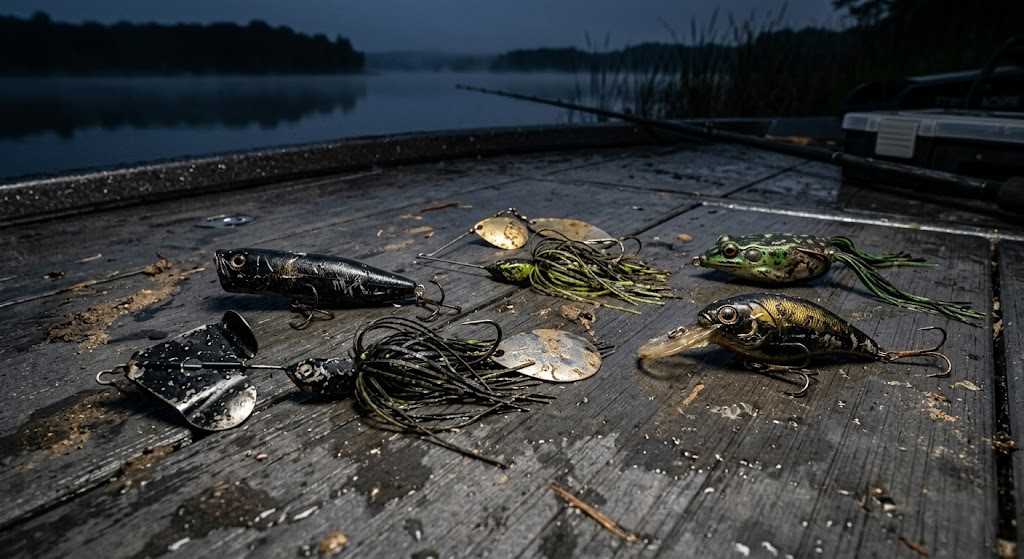
Buzzbaits
Buzzbaits are excellent when you want to cover large areas with a steady, aggressive retrieve. They create just enough disturbance, even in windy conditions, without being excessive. They are easy to cast, loud, and highly reflective.
Poppers
Rattling popper lures are a personal favorite at night. Their distinct popping sound and surface disturbance make it easier to track the lure. Strikes are also more audible, allowing faster hooksets.
Spinnerbaits
Spinnerbaits perform well in weed cover, producing strong vibration and noise. Many anglers rely on them in low-light or nighttime conditions.
Crankbaits
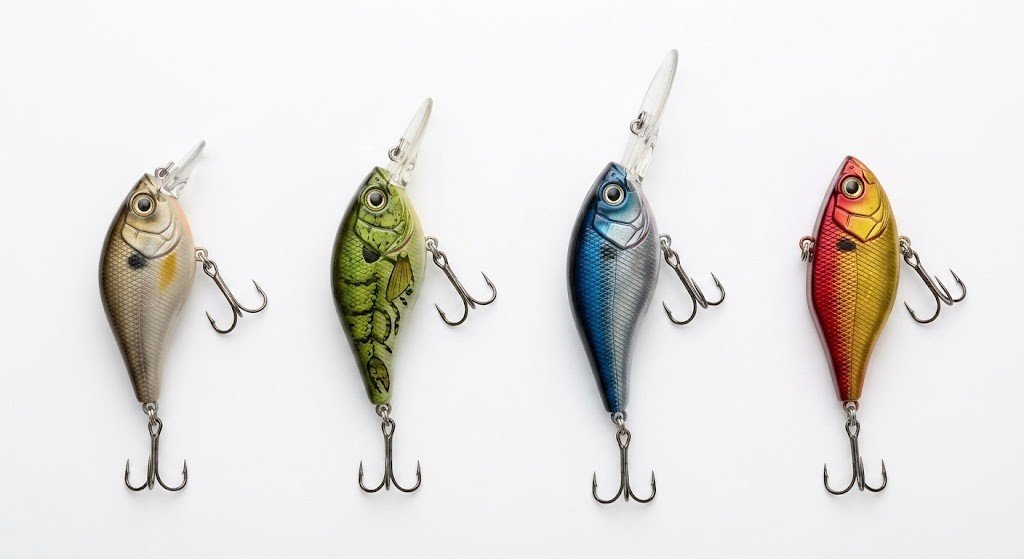
Crankbaits with erratic, wobbling action are highly effective. Match the diving depth and lip design to the water depth. In warm water, shallow and mid-depth zones tend to produce better results.
Topwater frogs
Topwater frogs generate unmatched surface noise and disturbance. They are especially effective for largemouth bass, particularly around transitional zones with changing light conditions.
Color selection is also critical. Under moonlight, fluorescent white and yellow reflect light better and are easier for bass to detect. Lures with red or silver flakes, bright orange patterns, and similar finishes can capture subtle surface light. In darker conditions, use high-contrast combinations such as black and white or black and red.
How To Catch A Bass Fish at Night
Every angler has their own fishing habits and techniques, but I believe the key to successful night fishing lies in more aggressive lures and techniques.
Here are some key factors influencing night fishing success:
Reeling Rhythm
Irregularly moving lures are perfect for night fishing. They don’t necessarily need to move far or fast, but ideally, they should make a struggling motion when retrieved. You can use a steady → pause → slight jerk → continue reeling rhythm.
Sound
Adding some extra sound elements during fishing is never a bad thing. Surface lures, especially those that make a “plop” sound, are very popular with anglers. Lures with rattles and built-in sound devices are ideal for night fishing.
Color
This is a controversial topic. Black and purple are the most versatile choices at any depth and in any conditions. Adding some yellow-green or pink can also achieve good results. I think movement and sound are more important factors, but black is undoubtedly the best color choice.
Accuracy
Night fishing = blind fishing → relies more on experience. You can cast from the same spot multiple times at different angles, keeping the lure close to the structure.
At night, with reduced visibility, learn to “listen”:
A splash = surface attack
Slight vibration = following
Sudden weightlessness = bite.
Where to Fish for Bass at Night
If your goal is maximum results at night, ponds and lakes are generally the best options.
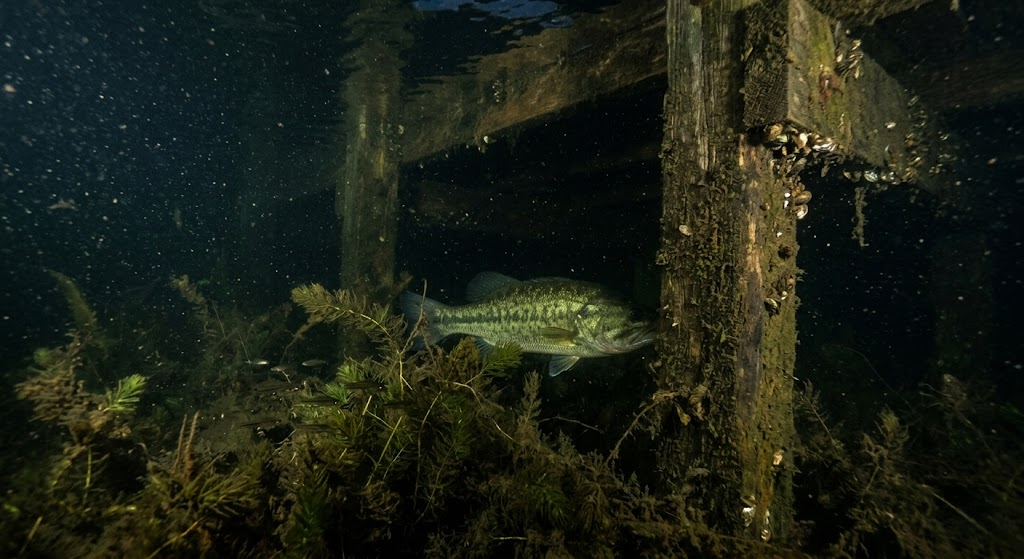
Docks
Docks provide excellent cover for baitfish and juvenile fish. At night, illuminating dark water or chumming around docks can trigger feeding activity, attracting bass.
Submerged Trees
Submerged trees—from sunken Christmas trees to fallen oaks or cypress—create ideal ambush habitats. At night, smaller bass retreat to these structures. Using artificial light sources such as blacklights, white lights, or floating lights can draw bass out. Submerged lighting has proven effective in attracting species like northern pike and largemouth bass.
Creeks & Drainage
Creeks and drainage points are connected to moving water, bringing nutrients and baitfish. Casting into these channels and working toward the inflow often produces results, as bass position themselves along current edges to ambush prey.
Shorelines
Shorelines with structure, slopes, and vegetation form micro-ecosystems. Some areas hold dense baitfish populations, while others are barren. Casting toward open water and retrieving back to shore helps avoid spooking fish while covering more water.
Conclusion
Night fishing for bass is not complicated, but it requires a shift in approach. It is not just about changing time—it is about changing strategy, cadence, and sensory reliance. Once you understand how bass hunt in the dark, you will realize that nighttime is often when the biggest fish emerge!
FAQ
What bait works best for bass at night?
The most effective lures share key traits: vibration, sound, and strong silhouette—such as buzzbaits, spinnerbaits, poppers, and frogs.
Is it possible to catch a bass at night?
Absolutely. In many cases, night fishing is even more effective for catching larger bass.
Will bass hit topwater at night?
Yes. Topwater fishing is often highly productive at night, as bass actively patrol shallow areas and respond strongly to surface disturbance and sound.



2 thoughts on “How to Bass Fish at Night?”