

Blog
The Best Trout Fishing Guide for Beginner

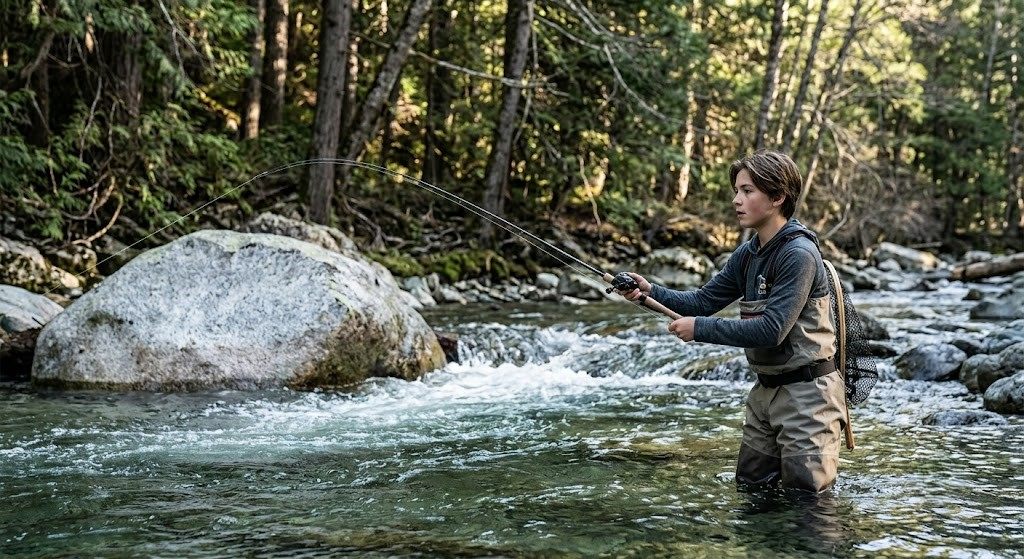
Table of Contents
Just like bass, trout is one of the most sought-after freshwater fish by anglers every year. However, if you are new to the sport, standing on the banks of a rushing river or a vast lake can feel a bit overwhelming. You might be wondering: as a beginner, how do you catch trout without getting confused by complicated gear and an endless variety of trout fishing rigs?
The good news is that catching your first trout doesn’t require a boatload of expensive equipment. As long as you understand how to “read the water,” know what triggers a strike, and use a minimalist finesse fishing combo, you could be catching beautiful rainbow or brown trout this very weekend. Let’s dive straight into this ultimate beginner’s guide.
The Biggest Beginner Myth: You Don’t Need a Truckload of Gear
Keep It Finesse: The Power of Light Tackle
One of the most common mistakes beginners make is using a heavy, clunky fishing combo. Trout have excellent eyesight and are easily spooked. The secret to success lies in finesse fishing techniques.
Thinner fishing lines, smaller hooks, and a stealthy presentation will always out-fish heavy tackle setups. A minimalist approach not only makes casting easier but also makes the fight much more exciting once you hook a fish.
If you would like to learn more about finesse fishing, please read: Finesse vs. Power Fishing: The Ultimate Guide for Every Water Condition
The “One Rod” Rule for Beginners
You don’t need a different fishing rod for every technique. For beginners, the ultimate shortcut is the “one rod” rule: a high-quality 7-foot fishing rod. This length provides the perfect balance—it’s long enough to cast lightweight fishing lures a great distance, yet sensitive enough to feel the most subtle bites.
At HELMTACKLE, we highly recommend a 7-foot rod setup for anglers just starting out. Whether you prefer a spinning fishing rod that is simple to operate and easy to master, or a casting rod for ultimate casting accuracy and lure control, a 7-foot blank gives you the versatility to handle any fishing situation.
Think Like a Trout: Reading the Water for Instant Bites
Trout thrive in cool, clear waters—such as streams, rivers, creeks, ponds, and lakes. But they never just wander aimlessly. They are ambush predators. To find them, you must think like them.
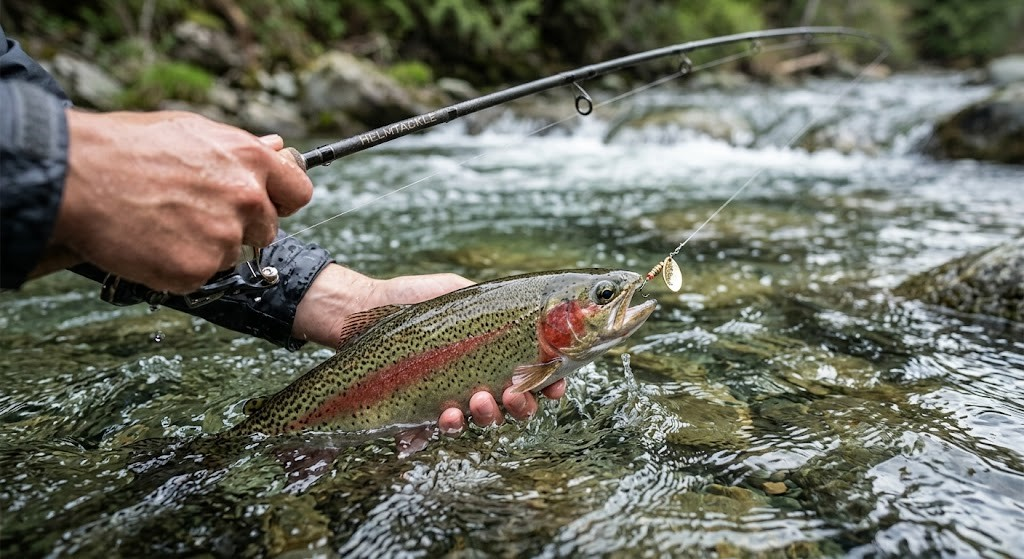
The 4 Trout Fishing Spot You Must Check
Trout love to hide and wait for the current to deliver food right to their mouths. Be sure to check the following prime trout fishing spots:
Clear Water: Large populations of trout inhabit cool, clear waters like streams, rivers, creeks, ponds, and lakes.
Structure: Trout also love to hide. Look near rocks, fallen timber (laydowns), undercut banks, and deep water areas where trout can take cover and feed.
Seams: Trout most commonly live in cold water. They frequently move up and down rivers and creeks, holding in moving water—specifically the visible seams where fast currents meet slow water.
Pools: Deep, dark-colored waters where trout retreat to rest and feed safely.
If you would like to learn more about finding nearby fishing spots, please read: How to Find A Good Fishing Spots Before You Cast?
Why Temperature Dictates Everything
If the water temperature is too low, fish activity slows down; if the water temperature is too high, they become sluggish. According to data from Trout Unlimited, a leading American conservation organization, the ideal feeding temperature range for most trout is between 55°F and 65°F (around 12°C – 18°C), which is when trout are most active.
Below 50°F: I look for trout in areas with slower currents.
Above 65°F: I recommend seeking out faster-moving water, shaded deep pools, and areas with higher dissolved oxygen levels.
Bait vs. Lures: What Actually Triggers a Strike?
When to Use Natural Bait (And Why It Works)
Despite their excellent vision, trout are not picky eaters and will eat almost anything.
Beginners should try various live baits, such as insects like crickets, as insects are a primary food source for trout. Minnows, aquatic worms, salmon eggs, and earthworms are also common live bait choices for a successful fishing trip.
While brightly colored dough baits are incredibly popular, they are typically only effective for hatchery-raised stocked trout. If your target is wild trout, stick to natural baits or artificial fishing lures.
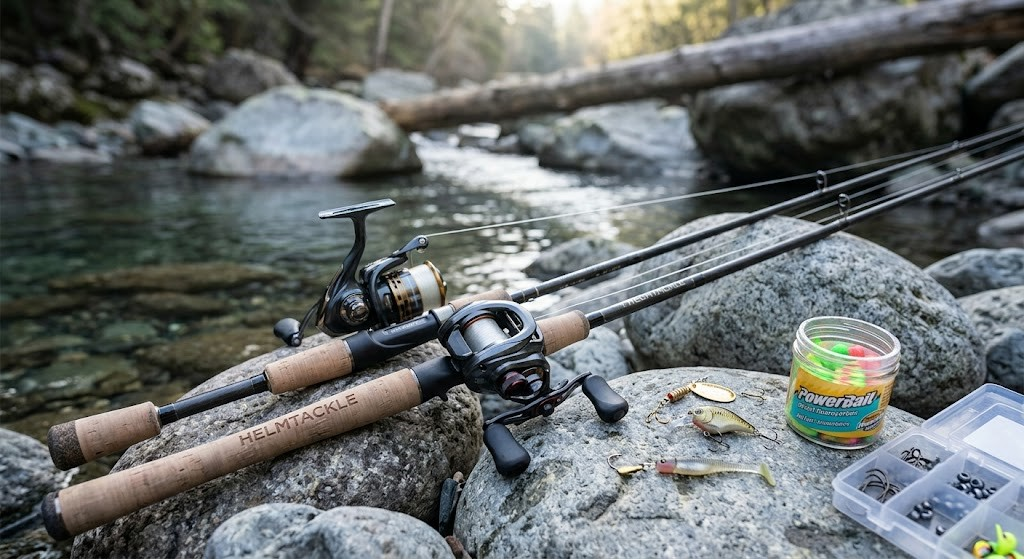
Finesse Lures That Provoke Aggressive Bites
Spinners
Inline spinners and tail spinners are must-have trout fishing tackle for anglers nationwide. They can be easily swapped out using a snap swivel and can attract fish anywhere in a lake. Furthermore, their wobbling, flashing blades are especially deadly in rivers, where the current amplifies their flash.
Trout love to prey on small baitfish, especially the larger trout. When they are feeding on baitfish near the surface, the best way to entice a strike is by using a compact paddle tail. This type of soft plastic lures disrupts the water flow, sending out vibrations that trigger a predator’s instinct to attack.
Often overlooked by beginners, crankbait lures are also highly effective lures for predatory trout. While larger hard baits might not work well on stocked fish, they are absolute killers for big, wild trout looking for a substantial meal.
Ready to Hit the Water?
Trout fishing is an incredibly rewarding experience, and as you can see, you don’t need to overcomplicate it. Master the temperature patterns, stick to finesse baits and lures, and trust in a versatile fishing rod setup.
FAQ
What is the best time of day to fish for trout?
Early morning and late afternoon are the best times. Trout are most active during these cooler, low-light periods when insect activity is at its peak.
Do I need a bobber to catch trout?
Not always, but using a slip bobber rig is highly recommended for beginners. It keeps your bait suspended off the bottom at the perfect depth and gives you a clear visual cue when a fish bites.