Blog
Best Time to Fish for Crappie in Every Season

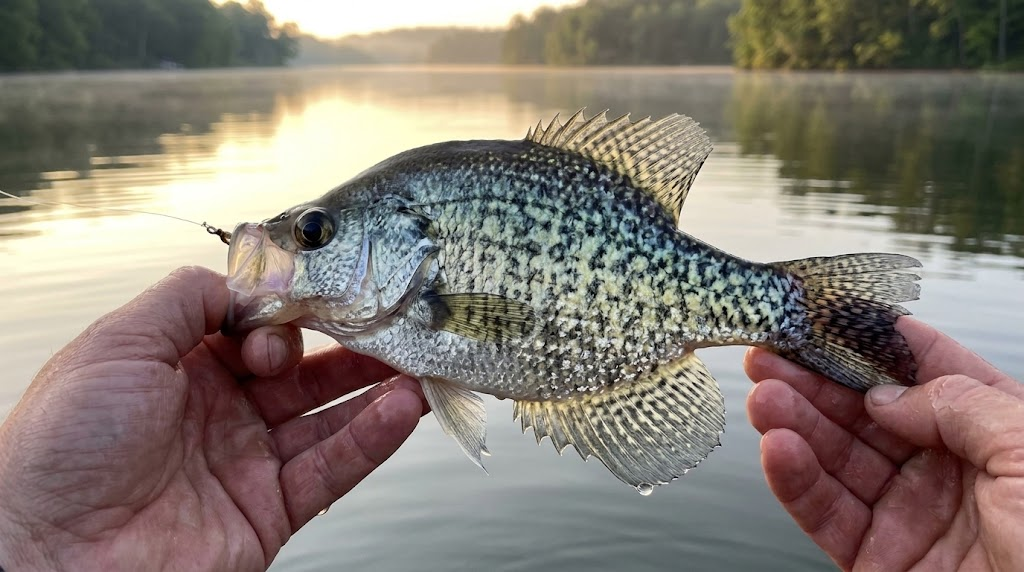
Table of Contents
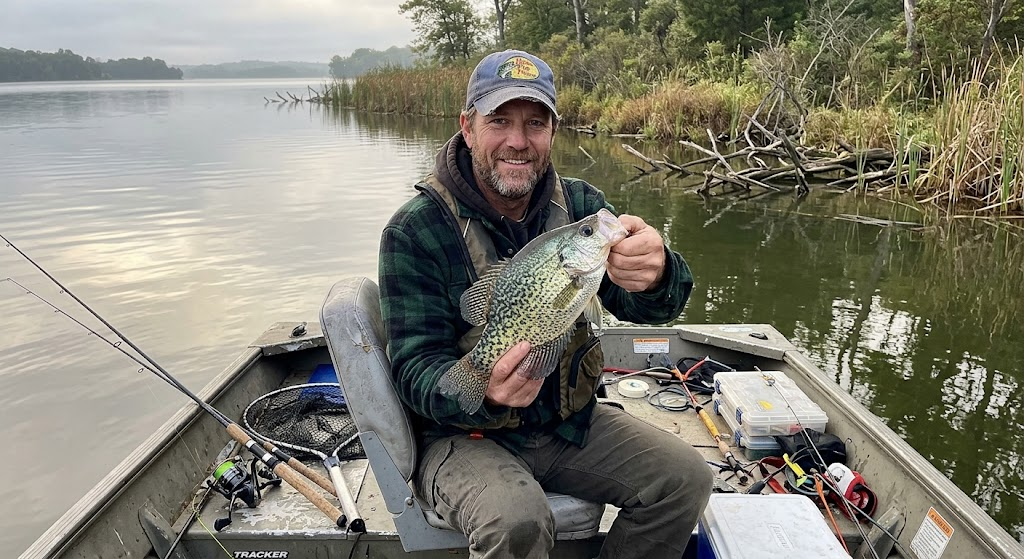
Want to catch a limit every time you hit the water? Finding the “best time to fish for crappie” isn’t just about luck; it’s a science of water temperature, seasonal migration, and the right gear.
As an experienced tackle developer and lure enthusiast, I will guide you through this ultimate guide to decoding the crappie spawn water temp and sharing ultralight fishing secrets from the scorching summer to the freezing winter.
How to Fish for Crappie: Decoding the Crappie Spawn Temp
The core of mastering how to fish for crappie lies in understanding their migration routes as water temperatures change. Knowing the “spawn temp” not only helps you locate schools of fish but also allows you to predict their willingness to bite.
Why Spring is the Best Time to Catch Crappie
If you often ask yourself “how do I fish for crappie” effectively, spring is undoubtedly the golden season for catching them all year round.
As the spring water temperature gradually warms, fish begin to prepare for spawning, causing them to migrate into warmer, shallow waters.
Before spawning, fish will feed in schools; at this time, they are highly aggressive and will not hesitate to attack almost any lure that passes in front of them.
Once you find a fish bed, you can often catch fish continuously in the same spot.
The Ideal Crappie Spawn Water Temp for Maximum Bites
Data and field experience show that when the water temperature reaches 60°F to 68°F, it is the absolute peak time for fish to move into shallow waters (usually 2 to 8 feet deep) to build nests and spawn.
According to In-Fisherman‘s authoritative water temperature guide, crappie have slightly different sensitivities to temperature, but around 65°F is generally the “maximum bite” point across all waters.
You can find them near weeds, shoals, gravel bottoms, or dock pilings in the early morning or evening.
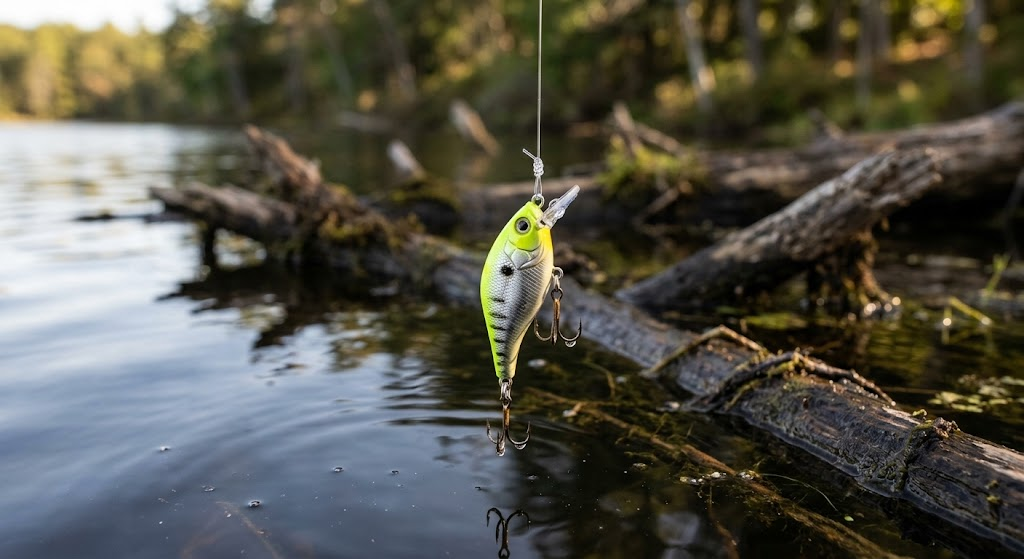
Personally, I highly prefer using small shallow crankbaits, utilizing a slow and steady retrieve to trigger their nest-guarding aggressive instincts.
Summer to Winter: Adapting Your Crappie Fishing Tips and Techniques
When the spring frenzy ends, fish behavior patterns change drastically. Mastering different seasonal “fishing tips and techniques” is the key that separates beginners from pros.
How to Catch Crappie in the Summer
As summer water temperatures rise, fish like to seek out the thermocline or hide near deep-water structures to escape the heat.
The secret to summer fishing is changing your fishing time and depth.
I usually fish in the early mornings, evenings, or at night during the summer; as the water temperature drops, fish will swim near the surface to feed.
At this time, using deeper-diving crankbaits for deep-water trolling, or using glow-in-the-dark lures with a steady retrieve over structures, are extremely efficient strategies.
Want to learn more detailed summer limits? Please read our in-depth feature: How to Catch Crappie in the Summer
Locating Winter Fish
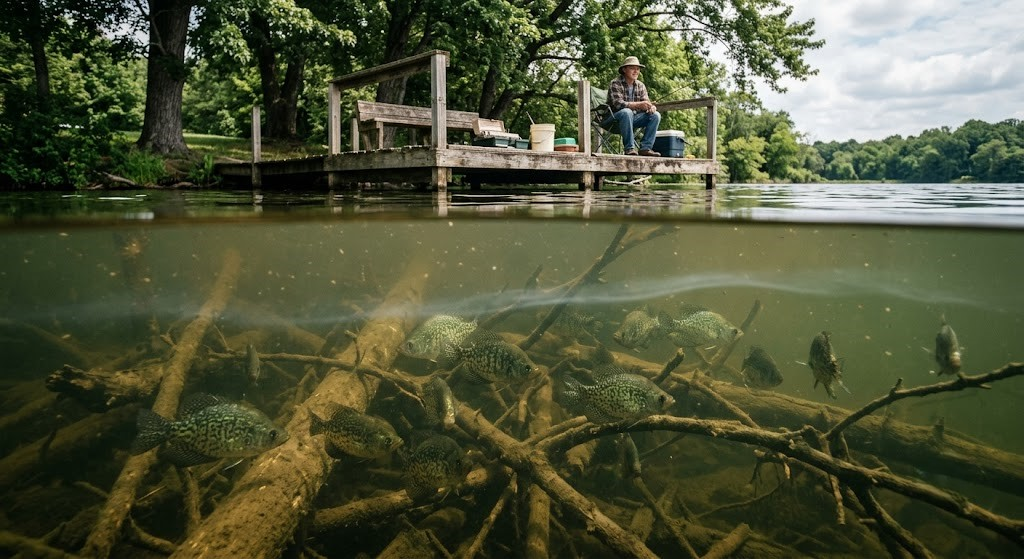
Winter fish will school tightly together in deep-water structures like steep drop-offs, deep holes, or large submerged brush piles to stay warm.
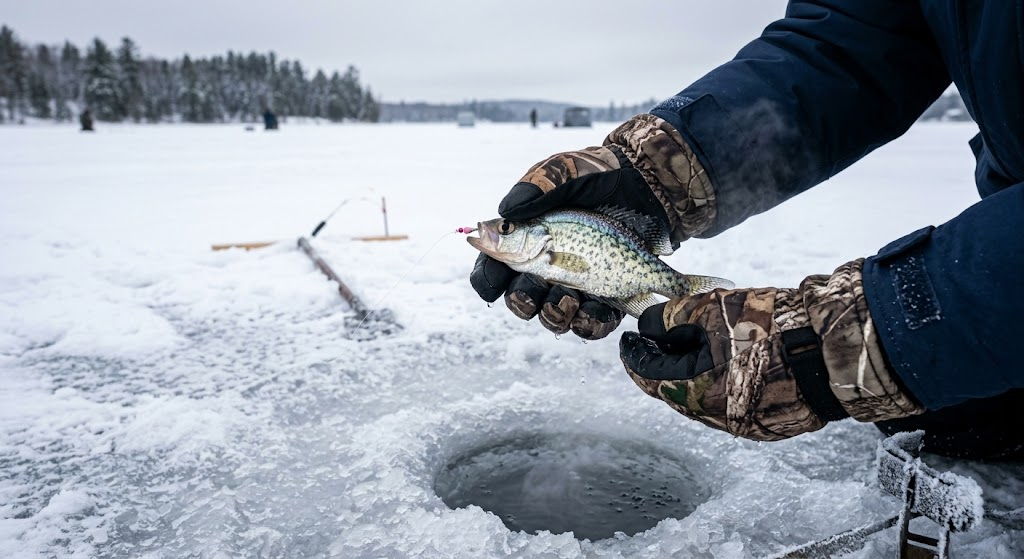
Because of the low water temperature, their metabolism slows down, their activity decreases, their swimming posture becomes stiff, and they are unwilling to chase prey; at this time, “slow” is the only rule.
You can use micro ice fishing jigs for slow vertical fishing to match them, dropping it right above the school of fish with extremely small twitches (vertical jigging) to induce a reaction bite.
If you frequently search engines for “crappie fishing near me”, wanting to find good local winter spots, it is highly recommended to combine local bathymetric maps with fish finders (Sonar/LiveScope).
Essential Gear: Crappie Crankbaits and Finesse Tactics
The right techniques require the right gear to match. Whether it’s ultralight casting or pinpoint precision around complex cover, a reasonable combination of lures and rods will make your fishing twice as effective.
Choosing the Right Crankbaits
When selecting crankbait lures, color and diving depth are the two core elements.
Color Selection: Follow the principle of “natural colors for clear water, bright colors for muddy water.”
In clear waters, silver, translucent, or natural baitfish patterns are the most effective; while in muddy water environments, chartreuse, fluorescent pink, or highly reflective colors can greatly increase the bite rate.
Diving Depth Control: Your tackle box needs to be stocked with models ranging from shallow divers (0-3 feet) to deep divers (8-12 feet) to handle different needs from spring shallows to summer deep waters.
Spinning Combos vs Casting Rods for Crappie
When mentioning crappie gear, most people’s first reaction is lightweight spinning rod and reel combos. Spinning rods do have a massive advantage and a low learning curve when casting extremely light micro lures (like 1/32 oz jig heads).
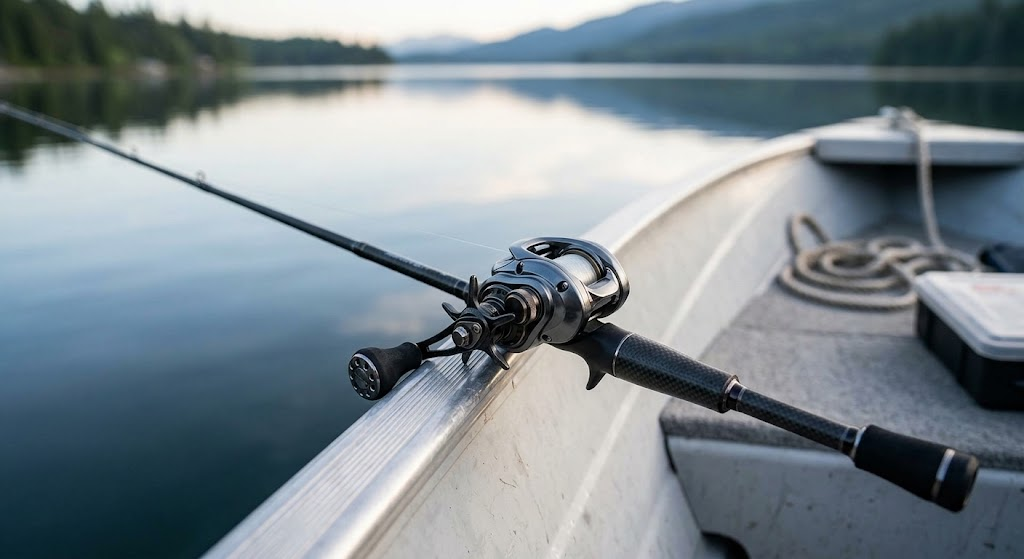
However, for experienced anglers, especially when performing finesse fishing in complex structure areas like brush and reed beds, lightweight baitcasting rods are equally deadly weapons.
Combined with the micro baitcasting reels (BFS – Bait Finesse System) that have become popular in recent years, casting rods can provide casting accuracy and entry control that spinning rods cannot match, allowing you to silently deliver the lure into a fish nest deep inside cover.
Determining which gear is better suited for your fishing style? Check out our: Spinning vs Casting Rod: Choosing Your Right Gear
Conclusion
Whether you choose to chase shallow-water schools under the warm spring sun or conduct deep-water probing in the cold winter wind, understanding the seasonal habits of crappie and supplementing it with the right micro gear is your key to breaking the “skunk” curse.
Grab your ultralight setup, adjust your strategy based on the current water temperature, and get ready for those adrenaline-pumping back-to-back bites! What is your favorite crappie fishing month in your local area? Feel free to share your field experience in the comments section below.
FAQ
Best way to catch crappies?
Use an ultralight rig paired with a micro-lure—such as a small crankbait fishing lure or a jig head—and fish slowly and precisely near underwater structures like submerged brush or docks.
When do crappies spawn?
In the spring, when water temperatures reach 60°F to 68°F, fish typically migrate in schools to shallow waters—ranging from 2 to 8 feet deep—to build nests and spawn.