
Blog
What Are Some Tips for Ice Fishing for Beginners?

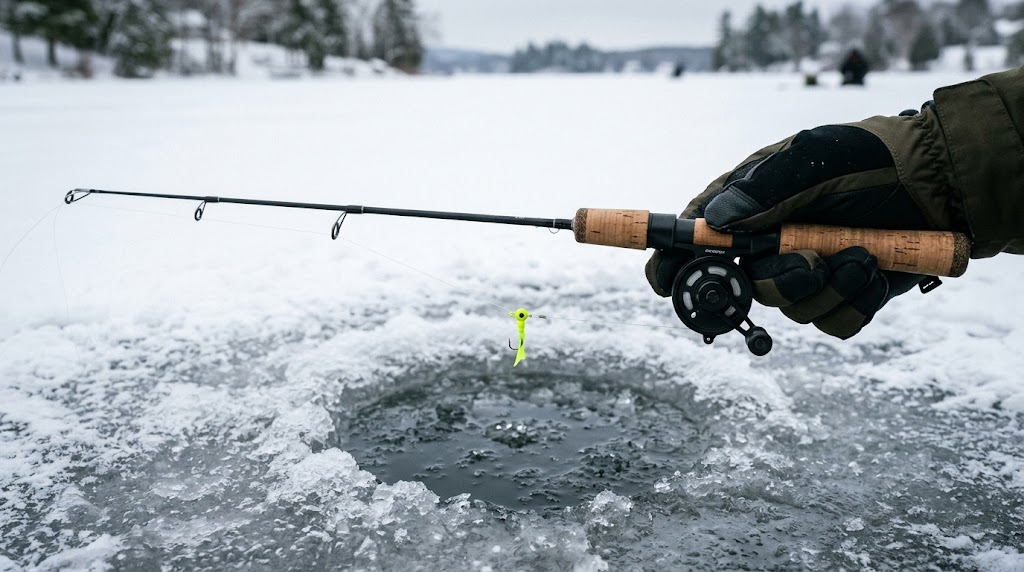
Table of Contents
What should beginners pay attention to when ice fishing? The key to ice fishing success lies in three points: First, ensure safety; the ice thickness must reach at least 4 inches (10 cm), and you must wear appropriate warm clothing. Second, use professional ice fishing gear, such as 24-32 inch (60-80 cm) light rods paired with inline reels. Finally, before drilling the ice hole, use depth maps to locate winter structures.
Ice fishing may seem intimidating, but with adequate preparation, it is one of the most enjoyable ways to fish. Let’s dive into the essential gear, location strategies, and proven ice fishing tips needed to get started.
Essential Setup: What Ice Fishing Gear Do You Really Need?
Clothing and Safety First: Ice Cleats, Picks, and Shelters
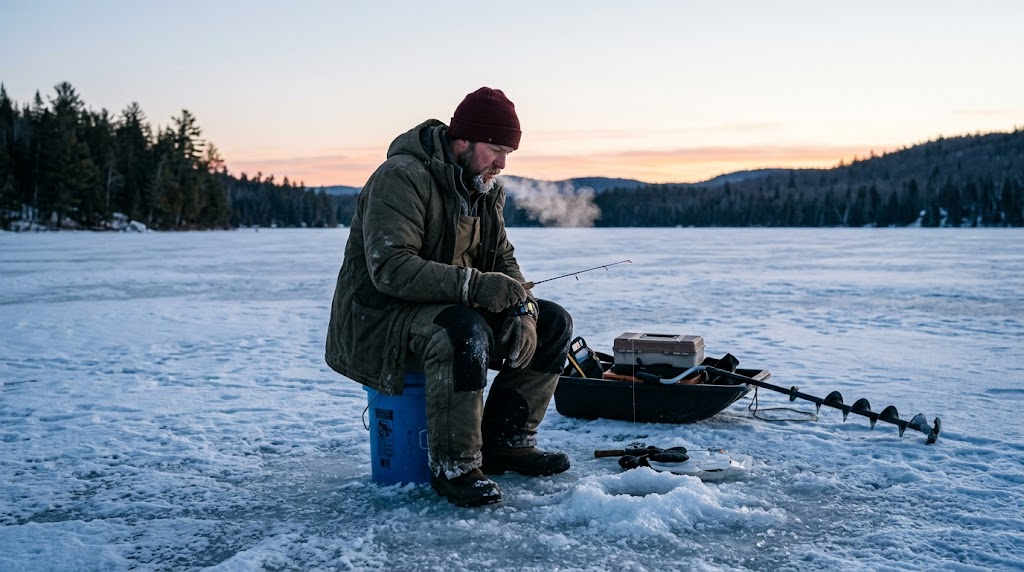
When fishing ice fishing spots, staying warm and safe is always the top priority.
You must adopt the layering system: a moisture-wicking base layer + an insulating mid-layer + a waterproof outer shell. This allows you to regulate body temperature according to environmental changes.
- Base Layer: Say no to cotton! Choose merino wool or synthetic fibers to wick away moisture.
- Mid Layer: Fleece or down materials to lock in body heat.
- Outer Shell: To block biting wind and snow.
Besides clothing, the following safety gear ice fishing enthusiasts need is absolutely essential:
- Ice Cleats: Anti-slip devices on your boots prevent dangerous slips and falls on the ice.
- Ice Picks: Hang them around your neck with a lanyard so that if the ice breaks and you fall in, you can stab them into the ice to pull yourself out.
- Ice Shelters: Portable shelters not only enhance fishing comfort but also protect you from strong winds and retain heat, preventing hypothermia.
According to the official ice safety guidelines from the Minnesota DNR, clear new ice needs to be at least 4 inches (about 10 cm) thick for safe solo walking. Before heading out, always use a spud bar to test the ice as you walk.
Selecting Beginner-Friendly Ice Fishing Fishing Rods
As a beginner, you need a light or ultralight fishing rod.
A rod length of 24-32 inches is the best choice. It can bend with the gentle bites of the fish, securing the hook firmly in the fish’s mouth.
Choose a fast or extra-fast action so you can set the hook quickly and accurately.
Of course, for beginners, an inline ice reel is the most perfect partner. It helps you prevent line twist, allowing the lure to drop naturally and smoothly.
How to Find Fish When Fishing Ice Fishing Holes
Locating Winter Structure and Drop-Offs
Winter fish metabolism slows down. They won’t roam widely to feed like in the summer; instead, they gather in specific underwater structures.
Before drilling holes, learning to “read the water” is crucial:
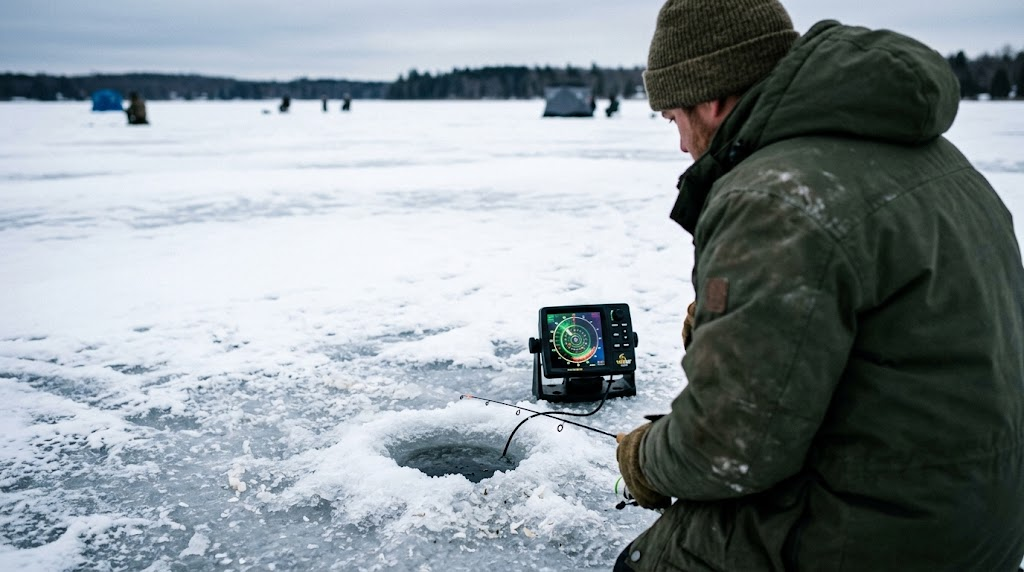
Use contour maps (like Navionics) or portable flashers to find underwater holes, weed lines, and drop-offs where shallow and deep waters meet.
Want to learn more techniques for locating underwater structures? Please refer to our complete guide: How to Find A Good Fishing Spots Before You Cast?
Target Species: From Panfish to Walleye
Different target species inhabit completely different depths under the ice.
Small species like panfish, northern pike, and bass tend to stay closer to the shore.
- Panfish (Bluegill, Crappie, etc.): Edges of shallow weed beds or remaining green vegetation.
- Pike & Bass: The drop-offs between deep and shallow water in small bays and coves.
- Walleye: In deep water during the day, and moving to shallow reefs and drop-offs to feed during low-light periods.
Ready to challenge the highly sought-after Walleye? Read our guide: How To Catch Walleye?
Proven Ice Fishing Tips: Lures and Techniques
Choosing the Best Lure Colors Under the Ice
In ice fishing, light penetration is the key to determining lure color.
Thick ice means light has difficulty penetrating underwater; therefore, it’s best to use lures with glow-in-the-dark or reflective properties.
During the early and late ice periods, you can choose neutral or natural-colored lures, as these colors tend to work well during these times.
When the snow cover begins to thin, water visibility is high, and you can use more natural colors.
When snow cover thickens, visibility decreases, and you should use brighter, more vibrant colors like green and yellow.
To learn more about how underwater light absorption affects colors, please read: What Color Fishing Lure is Best?
Mastering the Jigging Motion and Finesse Tactics
When water temperatures approach freezing, fish metabolism slows down, and their desire to strike is extremely low. At this time, finesse tactics are the only way to break the ice.
Most anglers will use aggressive jigging, quivering, or dead-sticking methods for ice fishing.
- Aggressive Jigging: Quickly lift the rod upward to pull the lure through the water. Then, typically allow the lure to fall back to the starting position slowly and with control. This mimics a fleeing or startled baitfish under the ice, attracting actively feeding fish.
- Quivering: Repeatedly shake the rod in roughly the same position to imitate small prey like insects and minnows.
To achieve the perfect “jig-pause-drift” action, we highly recommend using slender jerkbaits. Check out this Minnow with Teaser Jerkbait, highly praised among anglers! It produces incredibly realistic underwater refraction with just a slight quiver, making it an excellent weapon to trigger bites from sluggish winter fish!
Conclusion: Ready to Hit the Ice?
Ice fishing is not just about the catch; it is a unique winter outdoor experience. As long as you ensure ice safety, dress warmly enough, and bring the right lightweight rods and finesse lures, you will experience the ultimate thrill of hooking a fish in the snow and ice.
Ready to upgrade your winter ice fishing gear arsenal? Browse our BEST SELLERS section to pick out your first set of ice-breaking weapons! Stay warm, stay safe, and tight lines!
FAQ
What is the trick to ice fishing?
The secret to successful ice fishing lies in using contour maps to accurately locate underwater holes or structure areas, combined with extremely gentle finesse tactics to entice winter fish with slow metabolisms.
What is the best month to go ice fishing?
While the thick ice of January and February is the safest, the “late ice” period in March is often the best month to go ice fishing. The slight rise in water temperature during this time triggers fish to enter a highly active feeding peak in preparation for spring spawning.