

Blog
Lake Fishing Guide: How to Fish in a Lake Successfully?

Table of Contents
Have you ever stared at a vast, beautiful lake and wondered, “Where do I even start?” Lake fishing is one of the most enjoyable outdoor activities in North America, but for beginners, the sheer size of the water and the endless array of fishing gear can feel overwhelming. Whether you’re hoping to land a largemouth bass hiding under a dock or yearning to catch a beautiful rainbow trout, success on the lake comes down to three things: the right gear, understanding the water, and selecting the perfect bait.
In this comprehensive guide, we will break down everything you need to know about how to fish in a lake. From choosing between a spinning and casting rod to reading lake topography like a pro, this lake fishing guide will equip you with the knowledge you need to turn a quiet day by the lake into an action-packed fishing adventure. Let’s dive in!
Essential Lake Fishing Gear: What Do You Need to Get Started?
Before casting your line, you need the right tools. A common mistake beginners make is buying fishing tackle that doesn’t match their target species or fishing style. Here is a detailed breakdown of the essential lake fishing gear you need.
Spinning vs. Casting Rods: Which Setup is Right for You
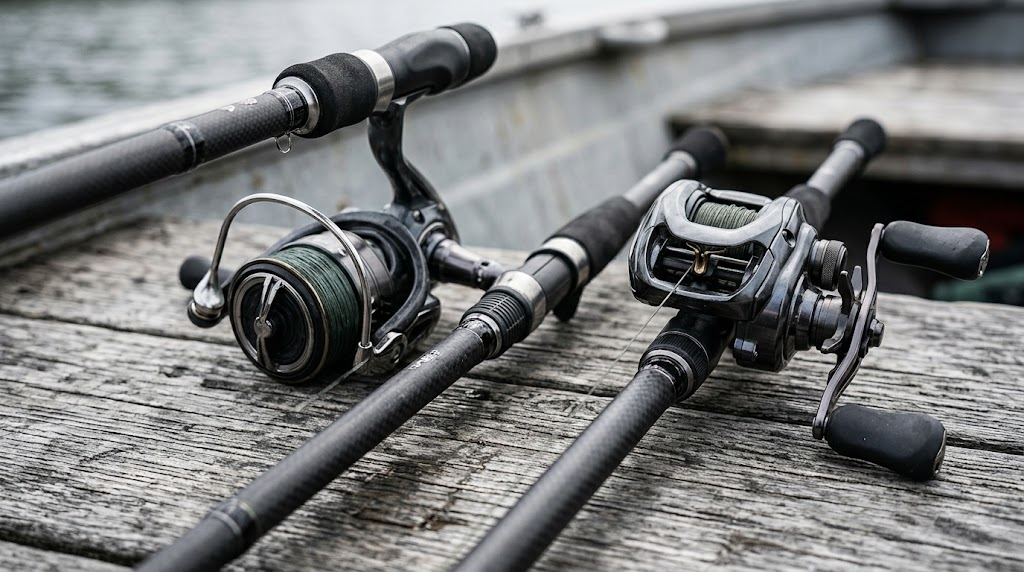
Spinning rods are more stable and incredibly beginner-friendly. Baitcasting (casting) rods are better suited for experienced anglers and offer more control and fun. Knowing which fishing rod to use for lake fishing depends on how heavy your lures are, how you cast, and where the fish are hiding.
Spinning Rods: Light, Slow, and Finesse
Light: Used for lighter lures, such as small soft plastic worms, micro jigs, Ned Rigs, and Drop Shots. When you aren’t sure where the fish are, a spinning setup helps you cast light finesse baits further.
Slow: When fish are lethargic, you don’t need a fast, continuous retrieve. Instead, let the lure sink naturally, pause, and move slowly to entice a bite.
Finesse: Finesse fishing focuses on subtle movements and micro-actions, like gently twitching the rod tip to make the soft plastic worm barely quiver.
Baitcasting Rods: Heavy, Accurate, and Active Searching
Heavy: Handles heavier lures compared to finesse baits. It allows for powerful casts and continuous retrieves.
Accurate: A baitcaster rod & reel helps you cast with pinpoint accuracy to the edges of structure, controlling the landing spot to find bass hiding underneath.
Active Searching: Baitcasting rods allow you to actively search for fish through rapid, continuous casting.
To learn more about the differences between finesse and power fishing, read: Finesse vs. Power Fishing: The Ultimate Guide for Every Water Condition
Choosing the Right Fishing Line and Hooks
Matching your fishing line and hooks to your rod setup is crucial. Finesse setups and power fishing setups require completely different approaches.
For Finesse Fishing (Spinning Reel Setups):
Lightweight lures demand thin lines and smaller hooks to maintain their natural swimming action underwater.
A great entry-level combo is a 7-foot Medium-Light (ML) spinning reel combo, paired with an 8 lb braided main line and an 8 lb fluorocarbon leader.
Pair this with a size #1 or #2 finesse hook and a 3-4 inch soft plastic bait.
The fluorocarbon leader is practically invisible underwater, giving you a distinct advantage in clear lakes.
For Power Fishing (Baitcasting Setups):
When pitching baits into thick weeds or near submerged timber, you need heavy-duty, durable fishing tackle.
A 7-foot Medium-Heavy (MH) casting rod paired with a 30-50 lb braided line is the ideal choice.
Use a 3/0 to 5/0 Extra Wide Gap (EWG) hook rigged with a 4-5 inch soft plastic.
The thick braided line acts like a weed-cutter, helping you muscle fish out of nasty, snag-heavy cover.
How to Find the Best Spots for Lake Fishing
Most of a lake is empty water; 90% of the fish live in 10% of the lake’s area. Knowing how to read the water is what separates the pros from the amateurs. Wondering how to find local spots? Read: How to Find A Good Fishing Spots Before You Cast?
Lake Topography: Drop-offs, Points, and Coves
Depth changes are a critical factor. Predators use sudden drop-offs (where shallow water abruptly turns deep), contour changes, and underwater ledges as ambush points.
When a shallow flat is adjacent to deep water, you will often find plenty of baitfish there.
When a shoreline point extends into the lake, it provides a convenient highway for fish traveling between feeding grounds and deep-water sanctuaries—making that point absolutely worth fishing.
Offshore humps, reefs, and sandbars can also concentrate fish far away from the shoreline, especially when fish aren’t frequenting shallow, near-shore cover.
Targeting Cover: Weeds, Docks, and Submerged Timber
Fish love structural elements. Structure provides shade, security, and a prime location for ambushing prey.
Bass frequently hang out around points, weed edges, boat docks, rocks, fallen trees (laydowns), and shallow flats close to deep water.
Walleye prefer to hang around steep drop-offs, rock reefs, and points, particularly in low-light conditions.
Muskie and Pike might congregate around brush piles, docks, submerged timber, basin edges, or near sheltered coves.
Northern Pike frequently cruise near weed lines, bays, and ambush zones.
The Thermocline Effect: How Water Temperature Drives Fish
During the warm summer months, lakes undergo a phenomenon called thermal stratification, dividing the water body into three distinct layers.
The top layer (epilimnion) is warm and oxygen-rich, but the temperature can be too hot for certain fish to survive.
The bottom layer (hypolimnion) is cold, but it usually lacks oxygen.
The magic happens in the middle layer, known as the thermocline. This narrow band of water perfectly balances cool temperatures with high dissolved oxygen.
In the summer, baitfish and predatory species like bass and trout will suspend in or just above the thermocline. If you can find this depth using a fish finder, or by experimenting with sinking lures using the countdown method, you will consistently locate active schools of fish.
To learn more about the science of water stratification, visit In-Fisherman or TakeMeFishing.org.
The Best Bait and Lures for Lake Fishing
Whether you prefer a natural live bait approach or the thrill of tricking a fish with an artificial lure, having the right bait is essential.
Top Live Baits for Consistent Action
Nightcrawlers and minnows are incredibly popular live baits, perfect for a relaxing family fishing trip. Various lake fish will naturally feed on these natural baits.
Sunfish & Trout: Small red worms, crickets, or wax worms.
Salamanders/Mudpuppies: Red worms.
Carp: Dough baits or corn mixtures.
Largemouth Bass & Walleye: Live shiners, minnows, or small sunfish.
Artificial Lures for Bass, Pike, and Etc.
If you prefer an active cast-and-retrieve style, artificial lures are your best bet.
For beginners, you can opt for simple search baits like spinnerbaits, crankbait lures, and topwater baits.
Just cast them out and reel them in—their built-in flash and vibration will do the work to attract bites.
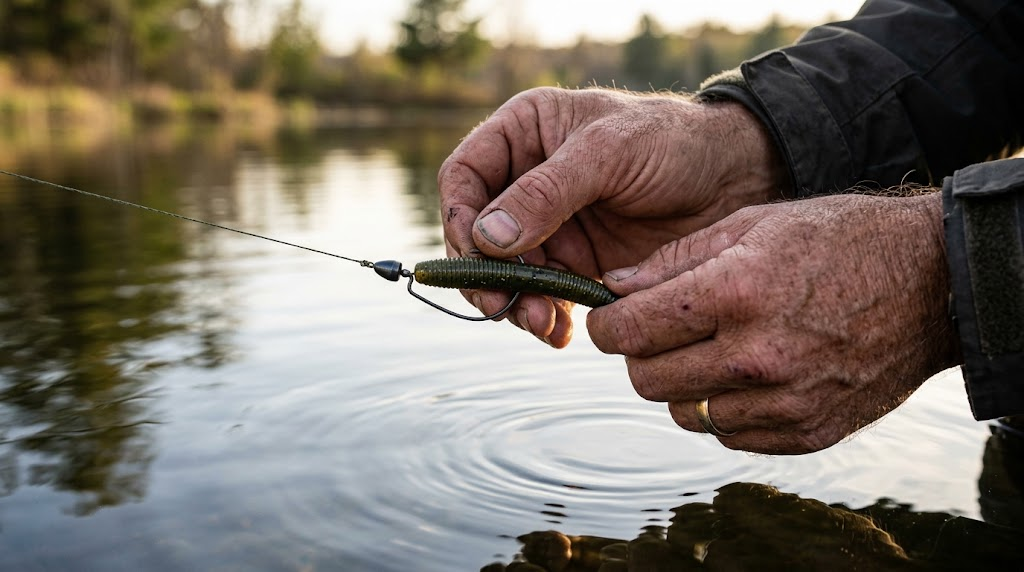
Of course, soft plastic fishing lures are a must-have in your tackle box, as they allow you to rig a wide variety of setups.
Because they are often weedless, you can pitch them directly into weed-choked areas, let them sink slowly to the bottom, and then gently hop them back to the boat.
This slow, natural falling action is often the exact trigger needed to provoke a strike from a wary bass.
Conclusion
Learning how to fish in a lake requires patience, observation, and adaptability. By mastering the differences between spinning rod combos and casting setups, learning to read lake topography, and targeting the thermocline and heavy cover, you are already one step ahead of the average angler.
Ready to hit the water? Explore HELMTACKLE‘s premium fishing gear, specifically designed for anglers who demand top-tier performance and durability. Tight lines!
FAQ
What bait is best for lake fishing?
Live bait (like nightcrawlers and minnows) is the most consistent choice for catching a variety of lake fish.
If you prefer artificial lures, soft plastic worms and spinnerbaits are the most versatile and effective for bass, pike, and trout.
What time of day do fish bite most?
The best times are early morning (dawn) and late evening (dusk). During these low-light periods, water temperatures are cooler, and predatory fish actively move into shallow waters to feed.