

Blog
Jerkbait vs Crankbait: How to Choose the Right Hard Bait?

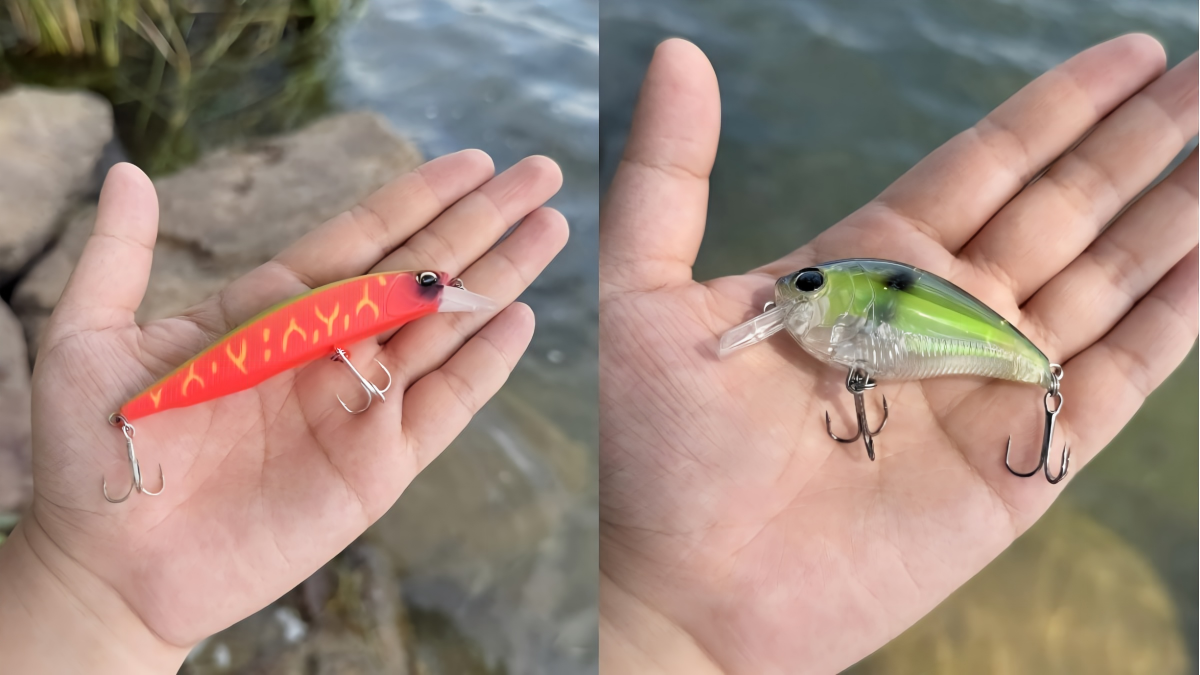
Table of Contents
Whether you are trying to catch sluggish pre-spawn bass or looking to trigger their aggressive reaction strikes in the heat of summer, knowing when to throw a jerkbait vs crankbait can make or break your success on the water. Jerkbait vs crankbait, both are highly effective bass fishing hardbaits, but their design purposes, ideal water temperatures, and retrieve styles are completely different.
Jerkbait vs Crankbait: The Core Differences at a Glance
The main difference between a jerkbait and a crankbait is that a jerk bait is a slender, long-profile lure, whereas a crankbait is a rounded, wide-bodied hardbait.
What Is a Jerkbait
A jerk bait lure is a long, slender baitfish imitation featuring a small diving lip. By utilizing pauses and suspending actions, it relies on rod tip twitches to produce an erratic swimming motion, perfectly designed to mimic an injured or fleeing baitfish.
Body: Hardbody or soft plastic. Hard jerkbaits clearly display their swimming action, while soft plastic jerkbait presents a more realistic profile. To learn more about hard and soft lures, please read: Hard Baits vs. Soft Plastics
Action: Quick side-to-side darting action, realistically imitating a dying baitfish.
Lip Size: The deeper the diving depth, the larger the lure’s lip.
Target Fish Activity: Highly pressured or lethargic fish, as well as aggressive, active bass.
Ideal Conditions: Clear water fishing environments.
What Is a Crankbait
A crankbait lure is generally made of plastic or wood with a rounded, fat body shell. It features a wide plastic or metal diving lip (bill) at the mouth, equipped with treble hooks on the belly and tail.
Treble Hooks: On one hand, they handle bass attacking from the side or rear; on the other, they significantly increase the hook-up ratio for “reaction strikes”.
Bill Angle: When the bill is parallel to the body, it dives deeper; when the bill has a steep downward angle, it tends to run shallow near the surface.
Lip Size: Features squarebill or round bills. The larger the lip, the deeper the crankbait dives.
Line Tie: The position of the line tie affects the lure’s center of gravity and swimming action. Lip crankbaits have the line tie on the lip, while lipless crankbaits have it on the top of the head.
Target Fish Activity: Best used during peak feeding times when fish are highly active.
Action: Wide wobble or tight, subtle wiggling vibration.
Ideal Conditions: Fast search bait for covering large bodies of water.
Quick Comparison Chart: Jerkbait vs Crankbait
| Feature | Jerkbait Lures | Crankbait Lures |
| Diving Depth | 3 to 15+ ft (Depending on lip) | 0 to 20+ ft (Square, Round, or Deep bills) |
| Best Water Temp | Cold to Cool (< 55°F / 12°C) | Warm (> 55°F / 12°C) |
| Retrieve Style | Twitch, twitch, pause (Rod-driven) | Steady reel, stop-and-go (Reel-driven) |
| Water Clarity | Clear to lightly stained | Stained to muddy |
| Target Fish Activity | Lethargic, suspended, or cautious | Highly active, feeding, or aggressive |
| Hook-up Strategy | Visually mimicking dying baitfish | Reactionary deflection strikes |
Anatomy & Action: Jerkbait vs Crankbait, How Each Lure Triggers Bass Strikes
How to Fish a Jerkbait
One of the most effective lure retrieval methods is the classic twitch-twitch-pause cadence to simulate a wounded baitfish. After casting, reel up the slack line, snap the rod tip down twice, and then pause.
According to expert guides on jerk bait fishing tactics from Wired2Fish, water clarity directly affects the lure’s drawing power; in clear water, bass rely on sight to track this erratic movement from a distance.
The more active the fish, the harder you should twitch the lure (and the shorter the pause can be).
The higher the water temperature, the more aggressive the twitches and the shorter the pauses.
The colder the water, you might only need a single sharp twitch followed by a very long pause. It is best to quickly reel in the slack during the first stage of the cast so the line remains tight to the lure.
Once the lure reaches its target depth, your twitching cadence should stabilize.
Note: You need to reel up some slack line between each twitch, but be careful not to reel it completely tight (leave a slight bow).
How to Fish a Crankbait
The secret to using a crankbait lure is generating a reaction strike through active water displacement and deflecting off underwater structures (Rock, Wood, Riprap).
- Deflection Strikes:
Crankbait lure hits an object → Deflects → Changes direction → Bounces erratically → Triggers predatory fish’s instinctual attack.
- Stop-and-Go Retrieve:
Reel for 5 seconds → Pause for 1 second → Fish strikes
- Ripping Through Grass:
Lipless crankbait → Gets bogged down in weeds → Violently rip the rod → Accelerates to break free → Triggers bass bite
To learn more about lipless crankbaits, please read: How to Fish a Lipless Crankbait for Trophy Bass?
- Burning (Fast Retrieve):
Fish are inactive → Retrieve quickly → Fish have no time to inspect → Instinct drives the reaction bite
Jerkbait vs Crankbait: Diving Depths and Lip Variations
- Lip vs Lipless Crankbaits
| Lip vs Lipless Crankbaits | |||
| – | Type | Features | Divinng Depth |
| Lip crankbaits | Square Bill | Deflects off wood and cover without snagging | 0-5 ft |
| Round Bill | Ideal for mid-depth transition zones and gravel banks | 6-12 ft | |
| Deep Divers | Large lip design to quickly reach deep offshore ledges | ≥ 20 ft | |
| Lipless crankbaits | Sinking | Tight and fast vibration | – |
| Loud internal rattles | – | ||
| Easily ripped through grass | – | ||
| Can sink to a specific depth before retrieving | – | ||
- Diving vs Suspending Jerkbait
| Diving vs Suspending Jerkbait | |||
| – | Type | Features | Divinng Depth |
| Diving jerkbaits | Shallow Diving Jerkbaits | Short lip | 3-5 ft |
| Medium Diving Jerkbaits | Reaches standard suspending depth | 4-8 ft | |
| Deep Diving Jerkbaits | Longer diving lip | 10-20+ ft | |
| Suspending jerkbaits | – | Neutral buoyancy; flawlessly maintains exact depth on a pause | – |
When to Throw a Jerkbait vs Crankbait: Seasonal & Water Conditions
Water Temperature & Season: Cold-Water Stalling vs Warm-Water Cranking
Water temperature almost always dictates this choice.
In warmer water (above 70°F), use a wide-wobbling crankbait lure because fish are highly active and aggressive, allowing you to use it as a fast search bait.
When water temperatures are around 50-60°F, a suspending jerkbait is usually a great option because it sits motionless in the strike zone, giving sluggish winter bass enough time to react.
Water Clarity: Sight Feeding in Clear Water vs Vibration in Stained Water
Because jerkbait lures rely on visual flash and erratic movement, they dominate in clear water where fish primarily feed by sight.
In muddy or stained water, fish rely on their lateral lines to hunt, so using a wide-wobbling crankbait lure helps fish track the bait; in very clear water, a tight-wiggling crankbait lure is preferred as fish are more easily spooked in these conditions.
Wondering about lure color selection for different waters? Please read: What Color Fishing Lure is Best?
Cover & Structure: Open Water / Suspended Fish vs Rock / Timber Bumping
Jerkbait lures excel in open water or along deep-to-shallow transition zones (where bass often suspend), but they do not perform well in heavy cover.
Crankbaits, especially square bill crankbaits, are built for combat. Their large diving lips act as a shield, allowing the lure to deflect off stumps, hard bottoms, and laydowns without snagging.
Conclusion
Ready to upgrade your hard bait fishing game? Having the right fishing lure is the key to successfully hooking and landing fish. Explore HELMTACKLE’s premium selection of jerkbait lures and crankbait lures today to build your ultimate bass fishing tackle setup.
FAQ
What is the most common mistake when fishing a suspending jerkbait?
The most common mistake is reeling continuously instead of using the rod to move the bait. Anglers often forget to leave a slight bow of slack line after a rod twitch, which completely kills the lure’s erratic darting action.
Can you fish a jerkbait in dirty or muddy water?
While not the best option, you can fish a jerk bait in dirty water by choosing bright, opaque colors (like chartreuse or bone) and selecting models with loud internal rattles to help fish locate it via sound.