Blog
Saltwater Fishing Guide: What Is the Best Tide to Fish?

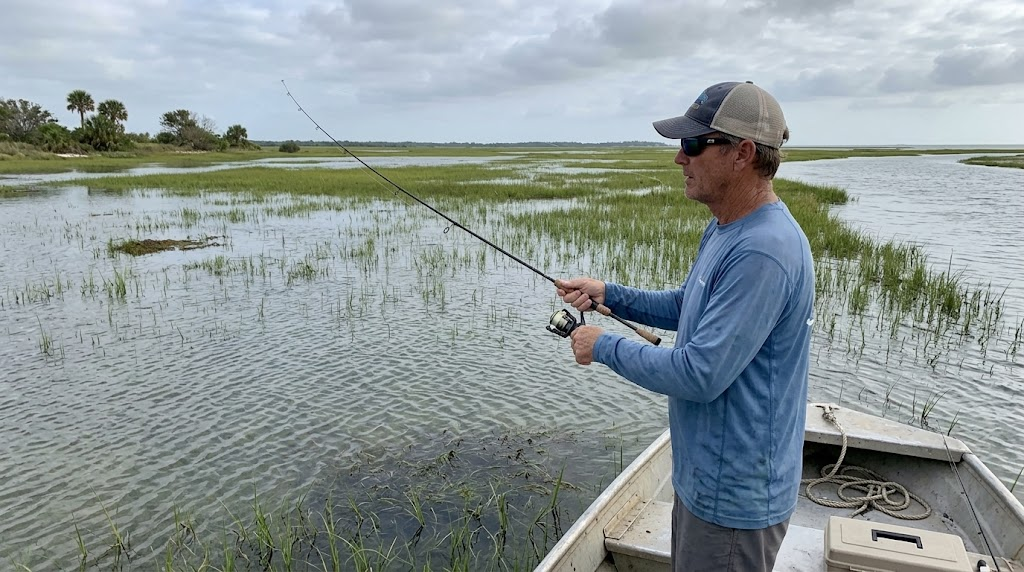
Table of Contents
If you’ve ever spent hours saltwater fishing on the coast with zero bites, only to watch the fish suddenly start biting like a light switch was flipped, you’ve just experienced the power of the tide. As an angler who has spent countless hours studying saltwater patterns, I can tell you that understanding the tide is the key factor to coastal fishing success.
So, what is the best tide to fish in saltwater? In this guide, we will break down the science behind the bite, share effective saltwater fishing strategies for both high and low tides, and help you choose the right fishing tackle based on water movement to maximize your catch rate.
How Do Tides Affect Saltwater Fishing?
To catch more fish, you first need to understand what drives them to feed. Tides are the rise and fall of sea levels caused by the combined effects of the gravitational forces exerted by the Moon, the Sun, and the rotation of the Earth.
The Science Behind the Bite: Gravity, the Moon, and Water Movement
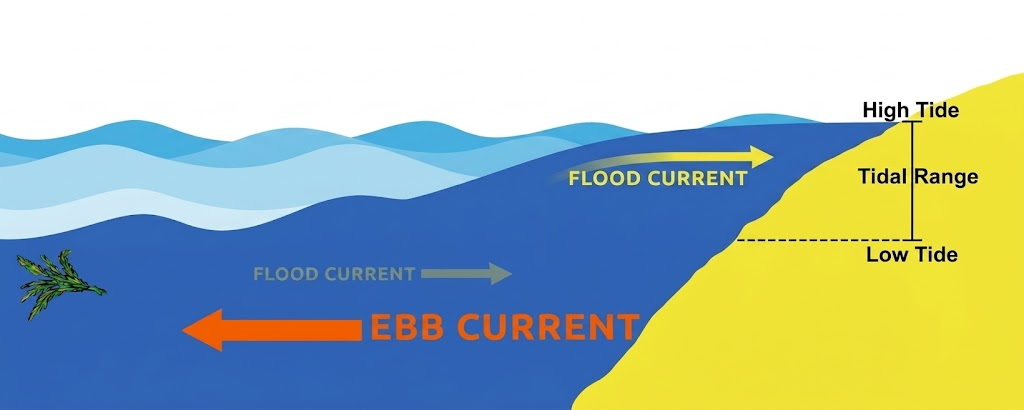
When the gravitational pull is at its maximum, it’s high tide; at its minimum, it’s low tide. An incoming tide means water levels are rising, while an outgoing tide means water levels are falling.
The difference in water level between low tide and high tide is called the “tidal range.” Generally, you should look for fishing spots with a larger tidal range.
Tides create water movement. Plankton, a primary food source for fish, is swept away by the current, causing baitfish that feed on plankton to school up and become active. In turn, larger predatory game fish that chase these baitfish also become active and aggressively hunt.
Therefore, when tidal currents are flowing strong, fish actively search for food, increasing your chances of getting a bite. That’s why I frequently visit the NOAA (National Oceanic and Atmospheric Administration) Tides & Currents website to learn more about tide predictions.
The Golden Rule: What is the Best Tide in Saltwater Fishing
According to angling authority Ken Schultz, the general fishing rule of thumb is that you can catch fish around the 30% mark of an incoming tide or the 70% mark of an outgoing tide.
The golden rule of saltwater fishing is simple: whether it’s an incoming or outgoing tide, moving water is the key to triggering a feeding frenzy in predatory fish (like redfish, speckled trout, and bass). Slack tide is usually the toughest time to fish.
Why the Incoming Tide (Flood Tide) is a Game-Changer
As an incoming tide brings an influx of cooler water loaded with more oxygen and bait, schools of fish follow the current into mangroves or shallow flats, making it one of the best times to fish.
Water flowing from the ocean into estuaries is typically cooler, has higher dissolved oxygen, and is clearer than the water inside the estuary during low or slack tide. These factors usually encourage fish to feed actively (barring wind and other weather conditions).
The flood tide pushes baitfish into estuaries, creeks, and flats, with predators pushing inland right behind their food. You can cast your saltwater fishing lures in the deeper water along the flats, as this is where schools of fish brought in by the ocean will hold.
Focus on drain mouths, channel edges, and the edges of newly submerged grass beds.
Fishing the Outgoing Tide (Ebb Tide) for Ambush Predators
During an outgoing tide, baitfish are forced out of the shallows, and predators wait to ambush them in troughs, deep holes, and along structure edges.
Have you often noticed many saltwater anglers gathering near river mouths during a falling tide? This is because bait is swept into streams and channels by the receding water, making river mouths a prime hunting ground for big game fish.
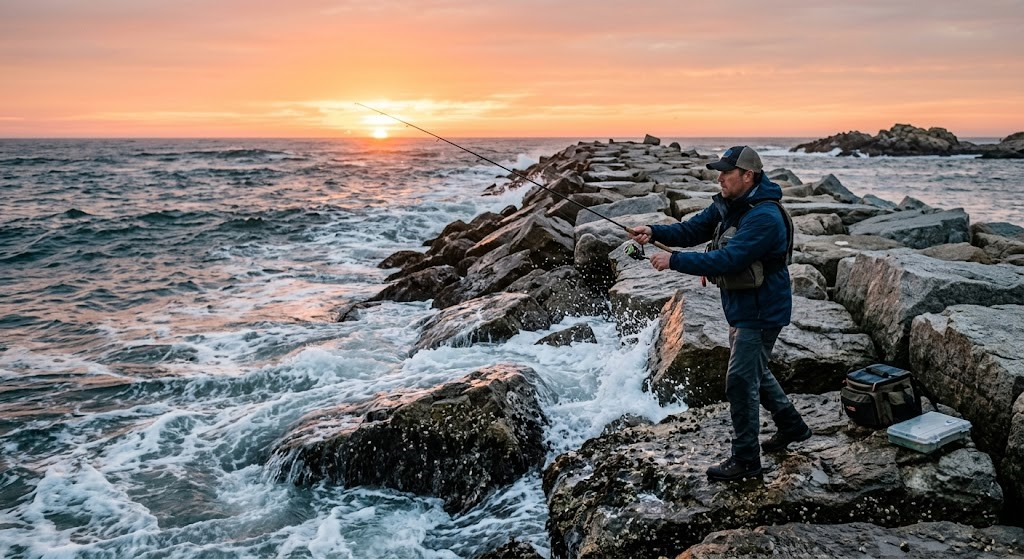
Therefore, I frequently fish inshore areas near dock pilings or other underwater structures. Submerged structures like pilings or jetties are ideal spots for fish to ambush prey being flushed out of the estuary during an ebb tide.
Proven Saltwater Fishing Strategies for High and Low Tides
Understanding the tide is only half the battle; adjusting your location based on water levels is the key to separating novice anglers from the pros.
Want to know how to find the fishing spot near you? Read: How to Find A Good Fishing Spots Before You Cast?
High Tide Tactics: Targeting Flats, Mangroves, and Grass Beds
At high tide, water overflows the bank edges, allowing fish to access areas they couldn’t reach just hours before.
I frequently focus my efforts on reef platforms, shallow grass flats, and the base of drop-offs.
Because fish specifically cruise into these areas to forage while water levels permit, these fishing spots are often surprisingly productive.
Low Tide Tactics: Drop-offs, Channels, and Deep Holes
At low tide, water levels drop, exposing bottom rocks and sand flats. Fish congregate in deeper water and along channel edges, and they also tend to roam further.
During this time, the low tide exposes cuts, deep holes, and drop-offs, which serve as sanctuaries for fish when the tidal flats dry up. These are areas you should heavily target.
Of course, I also recommend scouting the terrain during low tide. Note the locations of fish highways and depressions, so you can target these precise waypoints once the tide rolls back in.
Matching Your Gear to Tidal Currents: Essential Saltwater Tackle
Adapting to tidal changes means selecting the right saltwater fishing tackle for your environment.
Want to learn the difference between spinning and casting rods? Read: Spinning vs Casting Rod: The Guide to Choosing Your Right
Choosing the Right Spinning Combo for Long Casts on the Flats
During an incoming tide, when targeting highly spooky fish on expansive flats, casting distance is crucial.
A high-quality HELMTACKLE spinning rod and reel combo is the ideal choice here.
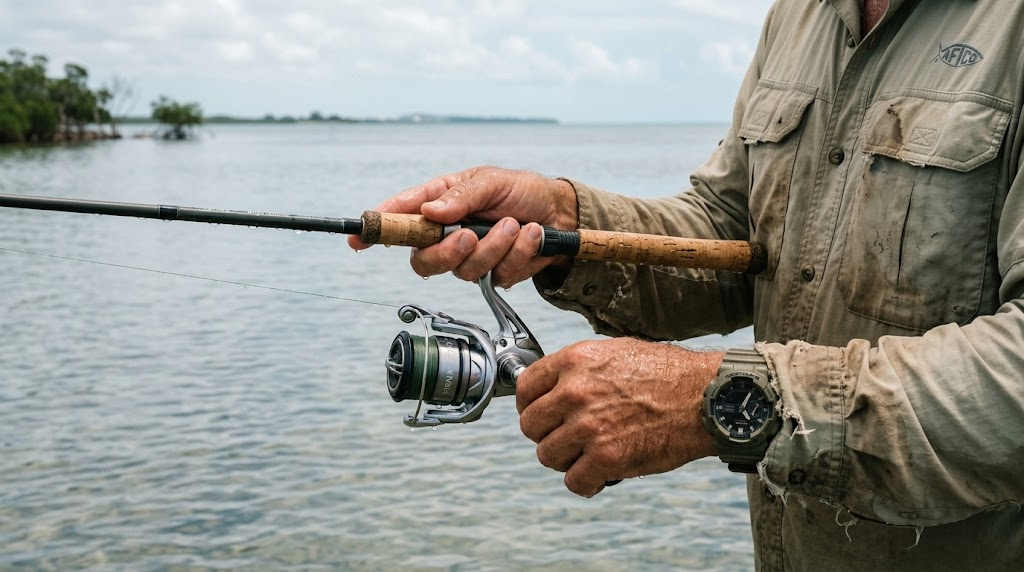
A medium-light to medium spinning rod and reel combo allows you to bomb long casts into the wind while maintaining the buttery smoothness and saltwater corrosion resistance needed to battle aggressive inshore species.
Baitcast Combos for Pinpoint Accuracy in Tight Tidal Spots
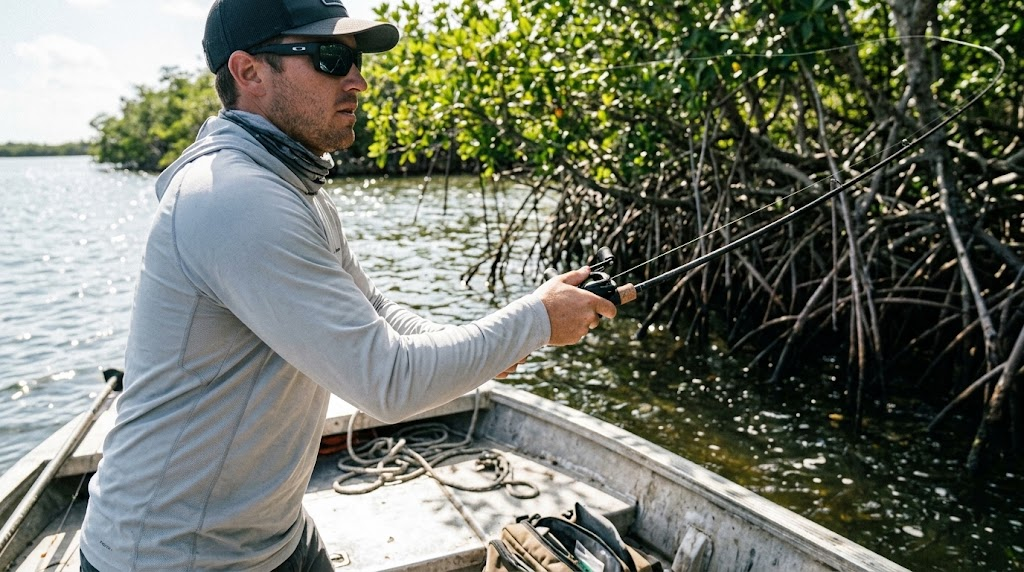
As the tide drops and fish tuck tightly against bridge pilings, mangrove roots, or narrow creek mouths, accuracy becomes far more important than casting distance.
At this point, switching to a HELMTACKLE baitcaster rod will give you a distinct advantage.
A finely tuned baitcaster combo allows you to thumb the spool and control your bait with pinpoint precision, dropping your lure exactly into the strike zone where large ambush predators hide during a falling tide.
Best Lures for Moving Water: Topwater vs. Soft Plastic Fishing Lures
Your lure retrieval speed should match the speed of the current.
- Fast Current (Mid-Tide):
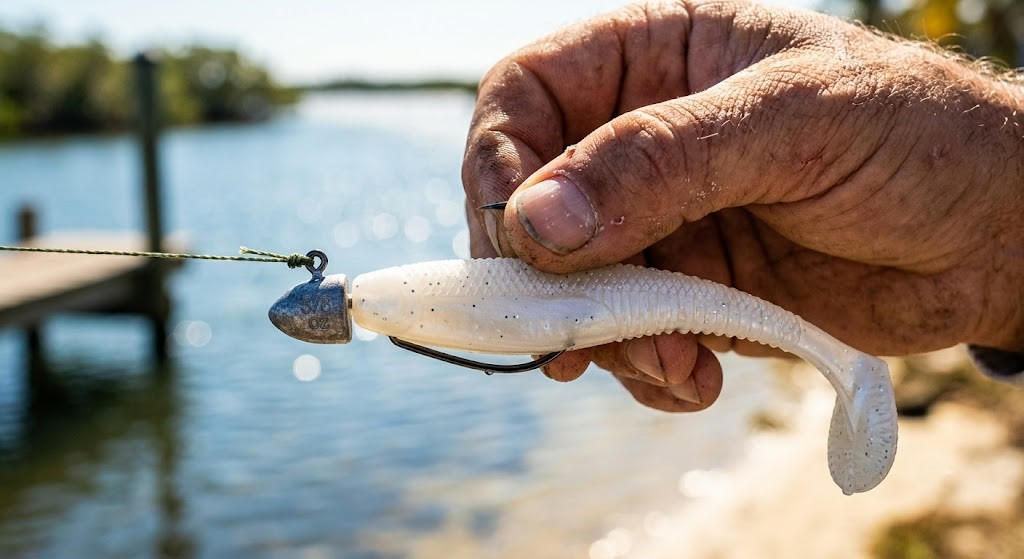
I recommend using soft plastic baits rigged on jig heads or heavy swimbait lures. The extra weight helps the lure break through the current and stay near the bottom where the fish are holding.
- Slow Current / Slack Tide:
This is the prime time for topwater fishing.
On the calm surface of an early incoming tide or just before slack tide, walking bait or popper lure work exceptionally well, triggering violent surface strikes from the fish.
Summary: Mastering the Tides for More Bites
ltimately, there is no guaranteed “golden hour” that promises a catch, but prioritizing periods of strong water movement—whether an incoming or outgoing tide—will significantly increase your fishing success rate. Tight lines, and make sure your fishing tackle is ready to go when the tide starts moving!
FAQ
What fish bite during low tide?
Ambush predators like redfish, flounder, and snook gather in deep channels and drop-offs during low tide, aggressively attacking baitfish that are flushed out of the shallows.
What time do fish bite the most?
Fish generally bite the most during the low-light hours of dawn and dusk, or whenever strong tidal currents sweep baitfish into active feeding zones.