

Blog
What Size Fishing Reel Do You ACTUALLY Need?

Table of Contents
If you only remember one thing, make it this: Reel Size = Line Capacity × Target Species × Application Intensity × Rod Balance. According to industry reports from the American Sportfishing Association and technical manuals from leading brands (like Shimano / Daiwa reels), the core of selecting a reel isn’t just about “how big the fish is,” but rather:
How much effective line capacity do you need?
Is your gear balanced?
Does your fishing technique require lightweight finesse or heavy cranking torque?
In other words: Don’t just choose the “biggest,” choose the “just right and perfectly balanced” size!
Decoding Reel Sizing: What Do the Numbers Actually Mean?
A larger reel number generally indicates a larger spool diameter, greater line capacity, and a heavier overall build. The size of your reel makes a massive difference when you’re trying to haul a fish in, directly impacting casting distance, fish-fighting control, and angler fatigue.
Larger Reel → Heavier Line → Stronger Fish-Fighting Power
Smaller Reel → Lighter and More Sensitive → Lower Margin of Error
I once hooked a big fish that started peeling line, and because I had no choice but to use an undersized reel, the line snapped and I went home empty-handed.
Fishing reel sizes do not have a universally standardized system. There are variations across different brands, but the underlying logic remains consistent.
Shimano, Daiwa, and Penn use a thousands-based system, ranging from 1000 (the smallest) all the way up to 30,000 for their big game reels. Most of the reels you’ll see from them will fall between the 1000 and 6000 range. For context, a 1000 Shimano reel will be roughly the same physical size as a size 10 Abu Garcia reel.
Common Spinning Reel Size Chart & Specifications
| Reel Size | Line Capacity (Mono) | Reel Weight | Gear Ratio | Max Drag | Best Rod |
| 1000 | 2–6 lb | 180–220g | 5.0:1–5.2:1 | 3–5 kg | UL / Light |
| 2000 | 4–8 lb | 200–240g | 5.1:1–5.3:1 | 4–6 kg | Light / ML |
| 2500 | 6–10 lb | 220–260g | 5.2:1–6.0:1 | 5–7 kg | ML / Medium |
| 3000 | 8–12 lb | 240–280g | 5.2:1–6.2:1 | 6–9 kg | Medium |
| 4000 | 10–15 lb | 260–320g | 5.3:1–6.2:1 | 8–12 kg | Medium-Heavy |
Note: Specific line capacities for different models may vary depending on line diameter and brand. For more, you can read What Size Spinning Reel for Beginner?
Common Baitcasting Reel Size Chart & Specifications
| Size | Line Capacity (lb/yd) | Retrieve Rate (ipt) | Max Drag | Application |
| 50 | 12/65 | 23”-29” | 10 lb | Ultralight trout and bass |
| 70 | 12/85 | 23”-32” | 10 lb | Finesse bass fishing |
| 100 | 12/120 | 26”-34” | 11 lb | All-around bass |
| 200 | 12/200 | 26”-36” | 12 lb | Heavy bass |
| 300 | 12/260 | 26”-36” | 22 lb | Inshore saltwater |
| 400 | 12/330 | 26”-38” | 25 lb | Inshore saltwater |
4 Key Factors That Determine Your Ideal Reel Size
The reel size you choose must take into account: What are you fishing for? How heavy is the line you plan to use? How well does it match your rod? And finally, most importantly, how well does it match your fishing technique? Let’s take spinning reels as an example:
Target Species (Establishing Your Baseline)
You must choose a reel that holds enough line for your specific target species!
When it comes to fish behavior, species that make long, blistering runs rather than fighting vertically require more line capacity. Fish holding in deep water naturally require more line just to reach the strike zone.
Generally speaking:
Small Species: 1000–2500
Medium Species: 3000–4000
Large Species: 5000+
Line Weight and Type
The thickness of the line (line diameter) is actually the true deciding factor for reel size—even more so than the size of the fish.
Because braided fishing line (PE Braid) has an incredibly thin diameter, you can get away with using a smaller reel. However, monofilament fishing line(Mono) or fluorocarbon fishing line (Fluoro) are thicker and hold line memory, requiring a larger spool to prevent line management issues like wind knots and tangles.
1000-2500:2-8lb Mono/Fluoro
2500-3500:6-12lb Mono/Fluoro
3000-5000:10-20lb Mono/Fluoro
Rod Match and Balance
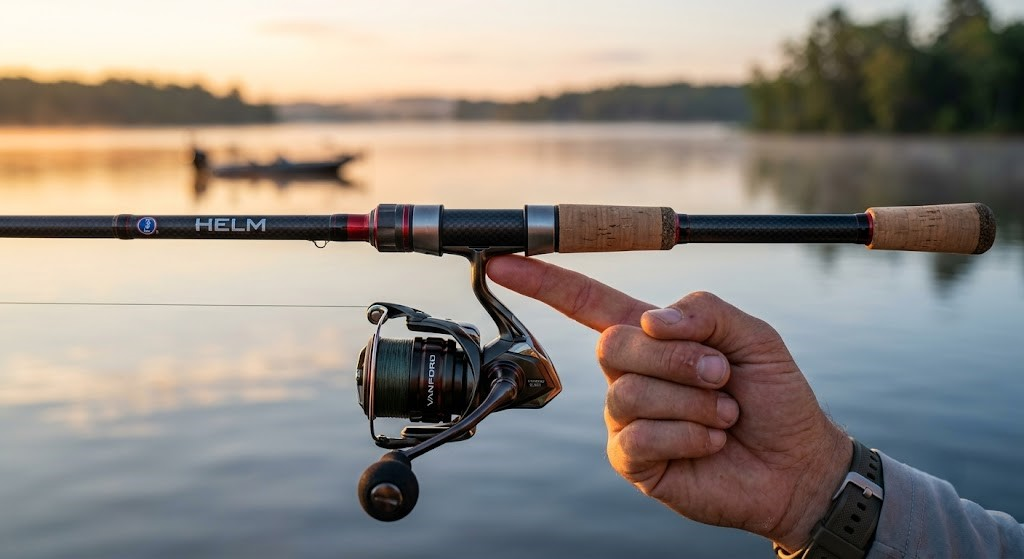
Your rod’s power rating and length are absolutely crucial. Lighter power rods require lighter, smaller reels, while longer rods need larger reels to maintain proper balance.
The longer the fishing rod, the larger the reel you need to pair with it. If I’m using a 6-foot rod, I’ll use a 2500 reel; this provides better balance. Also, it’s best to have a shallower spool so I don’t have to use so much braided line to fill it up.
When you match them correctly, the balance point should rest right at the reel seat or the front of the handle—you can try feeling it out yourself! An unbalanced combo leads to fatigue, lowers your hook-up ratio, and kills lure sensitivity. You can test for imbalance by holding the combo’s grip to see if it feels excessively tip-heavy or butt-heavy.
Generally speaking:
Smaller reels in the 1000 to 2500 range are perfect for ultralight rods.
Heavy duty saltwater fishing rods demand larger reels, typically in the 5000 to 7000 range.
Fishing Technique
Different fishing techniques place different demands on your reel. Finesse fishing pair well with lightweight reels that won’t overpower subtle lure actions or fatigue the angler during endless casting. Power fishing applications demand larger reels to handle the increased stress of heavy casting and cranking.
For example:
1000–2500: Ultralight lure fishing, Drop shotting, Finesse spinning/float fishing
3000–4000: Stream spinning, Bottom fishing
5000+: Heavy saltwater game fishing, Freshwater salmon fishing
Hard to memorize all these specs? You don’t have to.
Download the free HELMTACKLE Reel Sizing Blueprint! Keep it handy for your next gear run and never guess your setup again. Drop your email below, and we’ll send the Blueprint straight to your inbox!
Final Takeaway: The Biggest Mistake Most Anglers Make
The primary reason most people choose the wrong reel boils down to one thing: they start with “fish size” instead of “Line + Technique + Balance.”
The correct order of operations should be: Select your line first, then choose your reel, and finally match the rod. When these three elements align, you’ll achieve longer casts, smoother retrieves, and a significantly higher hook-up ratio!
FAQ
What is the most versatile spinning reel size?
The 2500 or 3000 size spinning reel. This is the undisputed sweet spot for most freshwater and light inshore fishing, offering a perfect balance of light weight and sufficient line capacity.
What is the best size reel for bass fishing?
For spinning setups (finesse techniques like drop shots), a 2500 size is the gold standard.
For baitcasting (power fishing like topwater frogs or heavy jigs), a 100 or 150 size is the most popular choice.


One thought on “What Size Fishing Reel Do You ACTUALLY Need?”