
Blog
How To Catch Walleye?

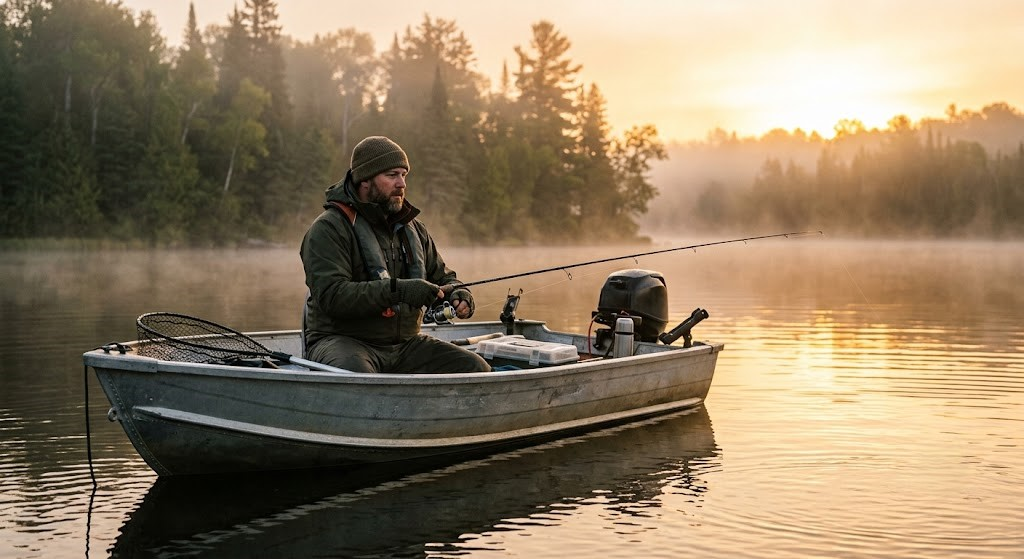
Table of Contents
Walleye fishing is largely about reading conditions rather than relying on a single lure or location. Their position changes constantly with light, temperature, and seasonal movement. Once you understand these patterns, locating and catching them becomes far more predictable.
When To Catch Walleye
To understand the best time to catch walleye, you first need to understand their behavior. As is well known, walleye behavior is unpredictable, with two key factors: light and temperature.
Light
Walleye are extremely sensitive to light. They typically move into deeper water around midday. Because they adapt well to low-light conditions, they are most active at dawn, dusk, and on cloudy days. During the day they stay in deeper areas, while at night they move closer to the surface. Therefore, fishing for walleye at sunrise or sunset is the most reliable approach.
It is also worth noting that walleye can become more active during a full moon, as increased light helps them locate prey more easily.
Temperature
Walleye prefer cooler water temperatures, generally between 55–70°F. They are more active in spring and fall, when you can usually catch more fish. In summer, they are more likely to be found in deeper water and shaded areas. In winter, their activity level is usually lower.
| Season | Reason | When to fish | Where to fish |
| Spring | Spawning period | Dawn and dusk | Rocky or gravel-bottom areas |
| Summer | Higher water temperatures | Dawn and dusk | Deep water and shaded areas |
| Fall | Cooling water, feeding before winter | Dawn, dusk, and cloudy days | Areas with abundant baitfish |
| Winter | Low activity | Early morning and evening | Deeper water areas |
Where To Find Walleye
Night walleye fishing
At night, walleye usually gather in fast-moving water areas such as river mouths, channels, deep structure zones, and areas near dams.
Downstream areas below spillways or dam outlets are among the most popular and productive walleye fishing spots year-round.
Summer walleye
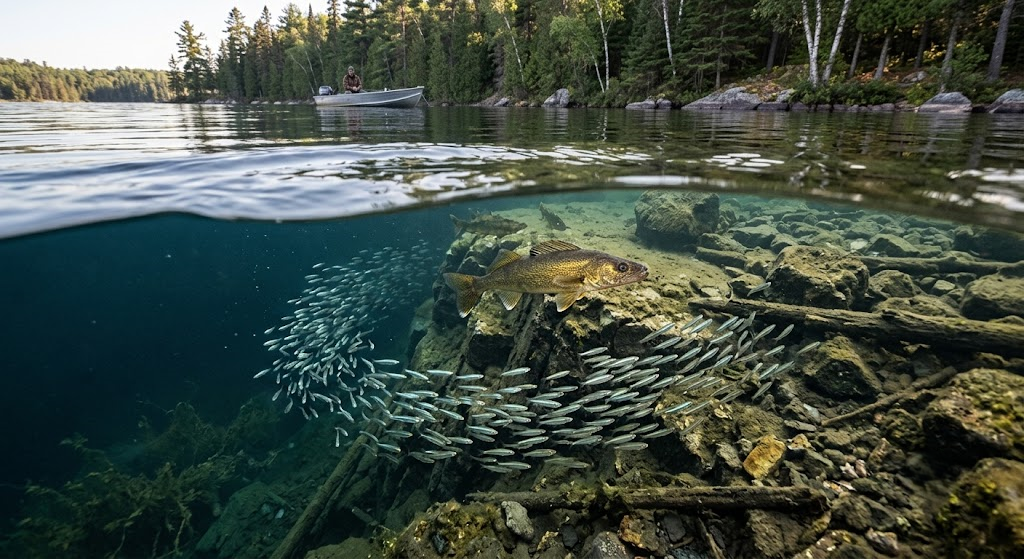
In summer, when water temperatures are high, you can find walleye along steep drop-offs and deep structures. Because walleye have excellent vision in low light, they often move above deeper water during sunrise and sunset.
Spring and fall walleye
Walleye gather in shallow water to spawn, where the stirred-up conditions create a cloudy environment ideal for hunting.
In spring, I usually look in water around 12 feet deep.
In fall, I typically target 6-foot-deep areas with current and underwater structure.
When water temperatures change, walleye are commonly found near shoreline drop-offs in lakes and wing dams in rivers.
Winter walleye
In early winter, walleye usually gather in shallow flats, bays, and near shorelines.
Larger lakes often push walleye into bays and shallow flats, while smaller lakes and ponds are better fished along shorelines and near nearshore drop-offs.
As winter progresses, walleye move to more typical offshore structures such as underwater humps, ridges, and the edges of flats.
Best Time For Walleye
Fishing during low-light periods when walleye are actively feeding is one of the simplest ways to increase your catch rate.
From mid-autumn to early winter, dropping water temperatures create the best fishing period of the year, both in terms of fish size and quantity.
Cloudy days are usually better than sunny days for fishing.
The period before sunrise and the first few hours of the morning are the best fishing times; over the years, I have often had the most success during this window. Dusk is also highly effective. Night fishing for walleye in shallow water can also be productive.
How To Fish a Walleye
Jig
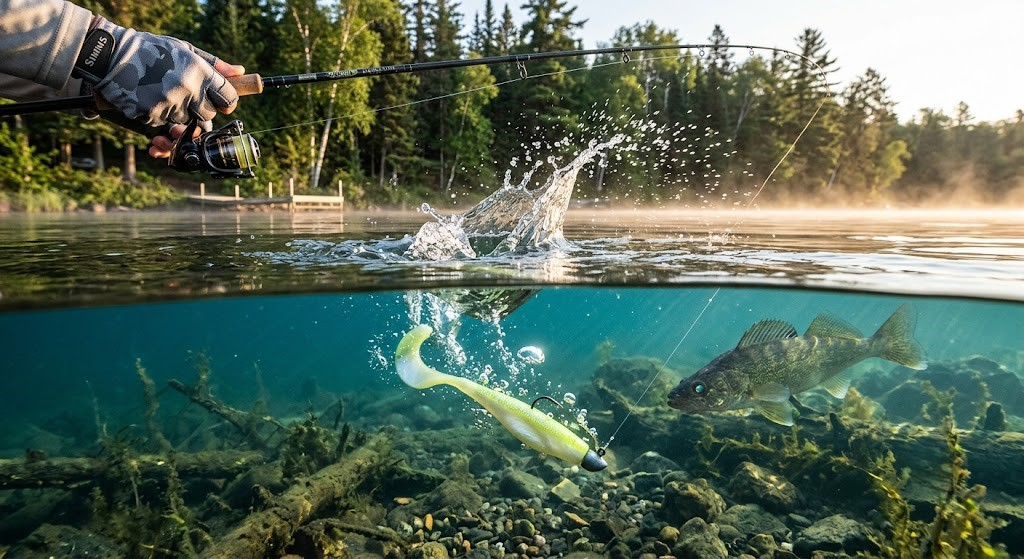
Jig is a popular choice for walleye fishing because it is effective under a wide range of conditions.
- Recommended setup:
3–4 inch soft plastic bait
Grub lure or minnow soft lure
Common colors: black, brown, purple
- Can be paired with live bait:
Minnows
Leeches
Nightcrawlers
- Technique:
Cast and let the jig sink to the bottom
Lift the rod about 1–2 feet
Let the lure fall naturally
Repeat the process
The key is to continuously adjust the rhythm to find the fish’s preference on that day.
Blade bait
Blade bait is a slender metal lure that can be cast and retrieved or jigged. It sinks quickly, making it suitable for deep water.
- Recommended colors:
Common walleye colors include gold, silver, and fire tiger patterns.
- Technique:
Cast the blade bait to the bottom, let it sink fully, then quickly lift it 1–2 feet and let it fall again. Repeat this motion.
Crankbait
Crankbaits are made of plastic or wood. Their plastic lip (or “bill”) allows the lure to dive underwater.
- Factors affecting diving depth:
Lip size, line diameter, casting distance, retrieval speed
It is recommended to choose deep diving crankbaits that reach depths of 10 ft (about 3 meters) or more.
- Common colors:
Black silver
Blue silver
Shad
Perch
- Fishing method:
Retrieve quickly to get the lure diving
Maintain a steady retrieve
- Advanced techniques:
Pause: let the lure suspend or rise slowly
Sweep: use the rod to create movement variations
These rhythm changes often trigger strikes.
- Trolling technique:
Adjust boat speed (accelerate/decelerate)
Turn to create action changes
Final Tip
If you are not catching walleye, the problem is usually not your lure. It is either the wrong depth, the wrong timing, or the wrong light conditions.
FAQ
What are the best lure for walleye at night?
Jigs with live bait and shallow diving crankbaits work best. Focus on darker colors or natural baitfish profiles.
Can you catch walleye in summer?
Yes. Target deeper water during the day and fish shallow during early morning and evening.
How deep are walleye?
Spring/Fall: 5–15 ft
Summer: 15–40 ft
Winter: deeper basins and structure.
Depth changes based on light and temperature.