Blog
How to Find Crappie: Year-Round Guide for Anglers

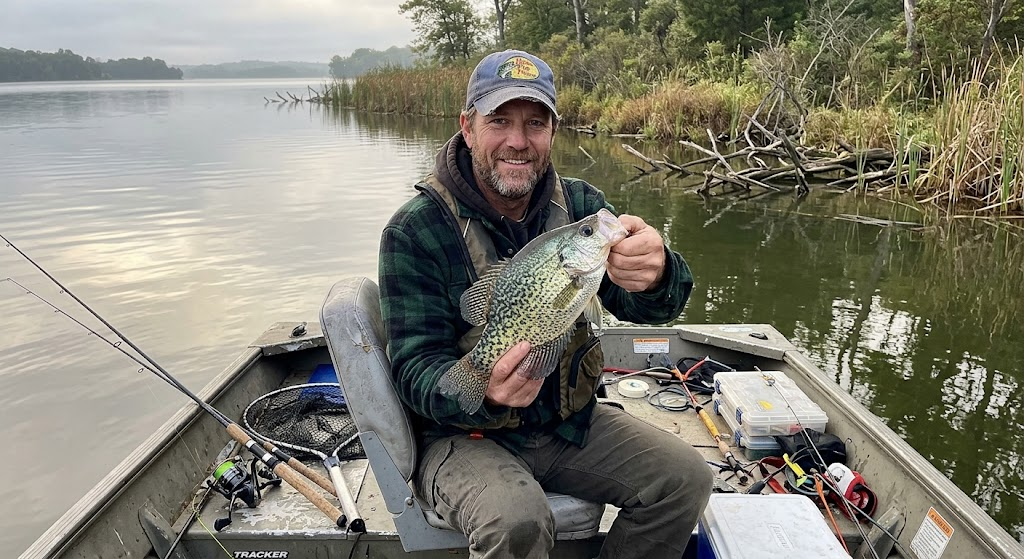
Table of Contents
If you ask ten different anglers what their favorite freshwater fish species is, chances are high that crappie will top the list. But the harsh reality is: if you don’t know where to find them, knowing how to catch crappie won’t do you any good.
In this guide, we will detail the crappie fishing tips, crappie habitats, and seasonal patterns you need to master, allowing you to confidently find crappie 365 days a year.
How to Find Crappie in Every Season
Understanding seasonal patterns is the key to finding crappie. Their behavior changes drastically from the freezing winter to the scorching summer.
Spring Spawning: Shallow Water Strategies
In spring, water temperature changes trigger crappie to move toward the shore; I typically look for shallow flats, reed beds, and spawning beds.
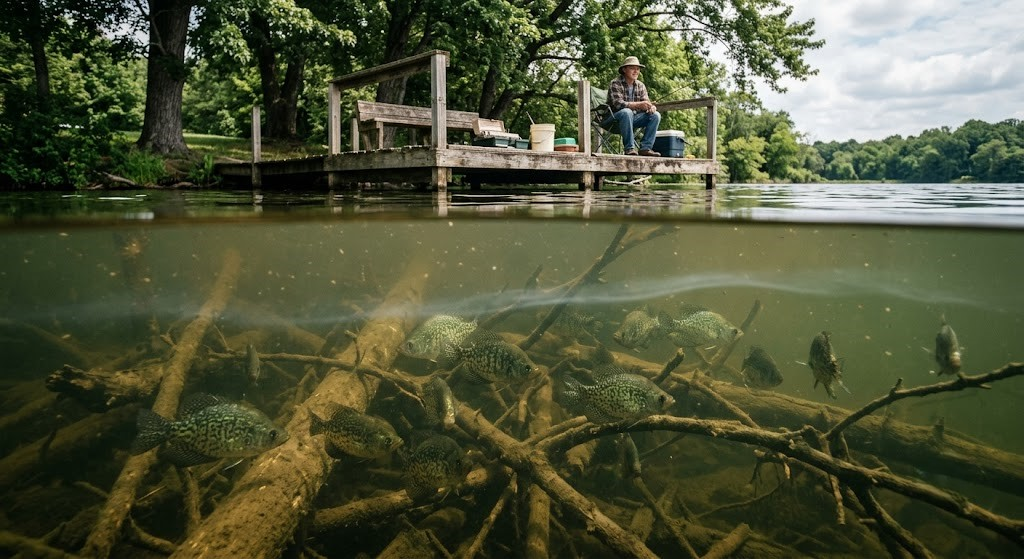
As the water temperature rises, schools of fish will migrate to shallow water for the crappie spawn, especially near woody cover, docks, aquatic vegetation, and bank structures, making their movement patterns much more predictable. This creates an excellent opportunity for anglers.
During the spawning season, crappie tend to be more aggressive and easier to locate, making spring the most efficient season for fishing.
At this time, using soft plastic baits or a slip bobber rig paired with live minnows are both excellent choices.
Summer Heat: Deep Water and Thermoclines
As temperatures rise, crappie will move towards deeper offshore waters, such as near brush piles, standing timber, creek channels, and bridge pilings.
According to fisheries biologists from In-Fisherman magazine, finding this oxygen-rich depth is crucial because fish simply cannot survive below the thermocline during the mid-summer heat.
Crappie will suspend near or slightly above this thermocline, which you can use to pinpoint the depth where the schools congregate.
Summer is perfect for night fishing; as water temperatures rise and boat traffic increases, crappie tend to be more active after sunset.
They typically gather around illuminated docks, bridges, marinas, and submerged fishing lights.
To learn more about summer crappie fishing tactics, please read: How to Catch Crappie in the Summer: The Ultimate Guide
Fall Feeding Frenzy: Following the Baitfish
In the fall, crappie feed aggressively to pack on fat for the winter; you can find them at current intersections and the mouths of shallow bays.
As water temperatures drop in autumn, baitfish will flood into creeks, shallow flats, and the backs of bays, attracting crappie to come and feed.
When baitfish school up in creek tributaries and river bends, the crappie are close behind.
Crappie usually feed in shallow waters during the early morning hours, and later move to deeper water or closer to cover, following a very regular pattern.
Winter Fishing: Deep Basins and Slow Presentations
In winter, schools of fish cluster tightly around deep-water structures; in cold water, finding the fish is more critical than how you fish for them.
During the freezing winter, as water temperatures plunge, a crappie’s willingness to chase fast-moving bait decreases, making accurate casting absolutely vital.
Crappie often congregate around standing timber, brush piles, creek bends, bridge pilings, and other deep-water structures with stable currents. The key to success is often to slow down.
Whether you are using a perfectly balanced spinning combo or a finesse casting rod specifically designed for ultralight lure fishing, you need gear capable of transmitting the faintest “tick.”
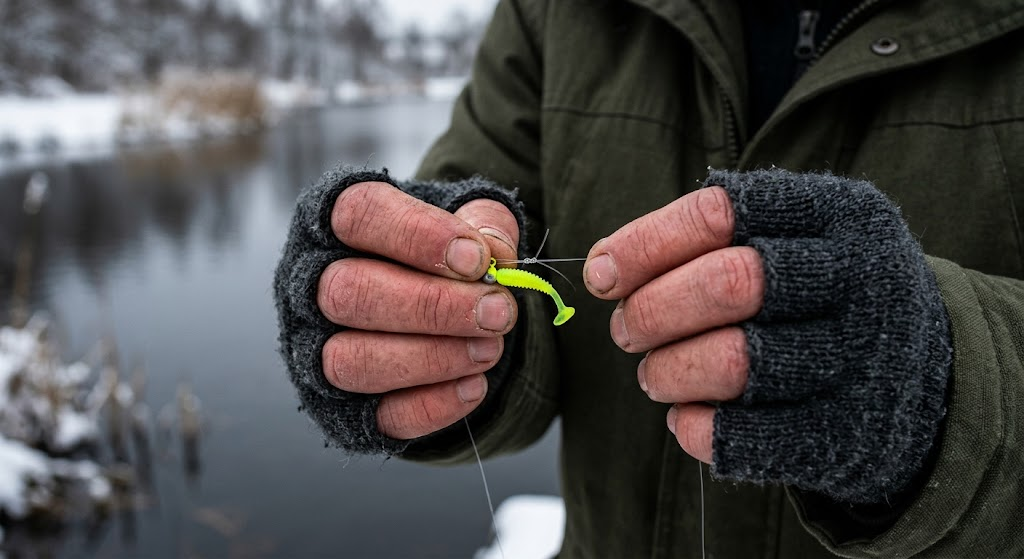
I generally slowly drag micro swimbaits, hair jigs, soft plastic fishing lures, and live baits through the fish’s strike zone, which usually yields great results.
Cracking the Perfect Habitat: Top Structures for Crappie Fishing
Crappie are classic “structure fish.” They rarely roam aimlessly in open water; they almost always stay near some form of cover to ambush prey and seek shelter.
Brush Piles and Submerged Timber
Wood is a natural crappie habitat. Natural submerged trees, laydowns, and stump fields offer excellent camouflage and harbor insects and smaller baitfish.
Distinguishing between natural timber and man-made brush piles is essential.
Anglers and state wildlife agencies frequently sink structures like old Christmas trees or PVC attractors (often marked on state conservation maps like Take Me Fishing’s interactive map).
These artificial habitats are often placed at specific depths (15-25 feet), specifically designed to hold crappie year-round.
Bridge Pilings and Boat Docks
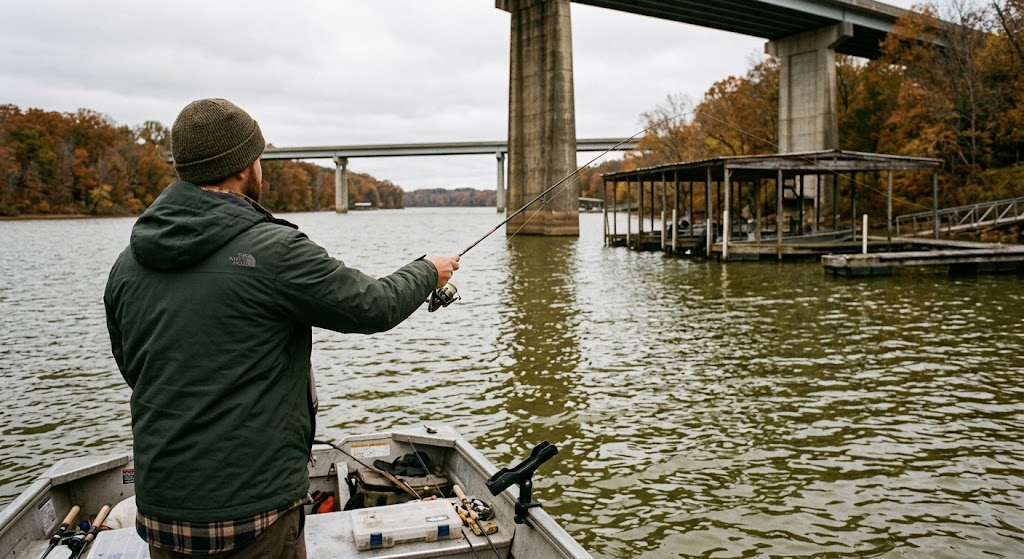
Bridge pilings and boat docks are fantastic artificial sanctuaries.
The shade provided by large docks is highly attractive to crappie, especially on bright, sunny days when UV rays penetrate the water.
When fishing from bridges, pay close attention to the pilings.
Pilings act as current breaks, creating small eddies where crappie will lurk in the slack water to ambush baitfish swept by the current. Vertical jigging along the pilings is highly effective here.
Drop-Offs, Ledges, and Creek Channels
Think of underwater drop-offs and old creek channels as submerged highways.
Crappie use these topographic contour lines to safely transition between deep-water sanctuaries and shallow feeding grounds.
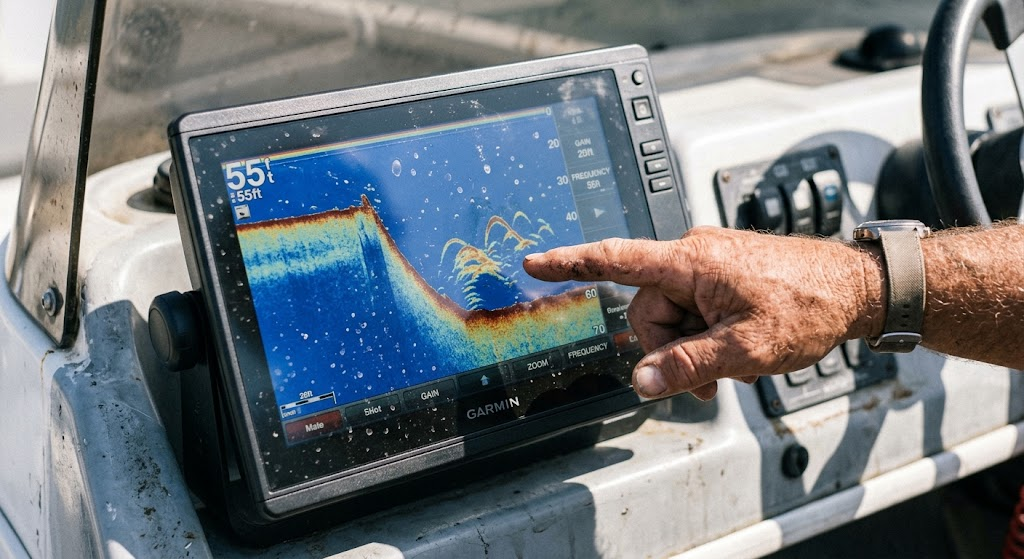
By using a topographic lake map (or fish finder) to locate areas where a 5-foot shallow flat suddenly drops into 20 feet of water, you can quickly find where crappie congregate.
Want to learn how to find nearby fishing spots? Please read: How to Find A Good Fishing Spots Before You Cast?
The Best Time to Catch Crappie: Weather and Water Conditions
Timing your trip based on environmental factors can drastically reduce your search time.
Golden Hours: Dawn, Dusk, and Night Fishing
Generally, the best time to catch crappie is at dawn and dusk, which aligns with their natural feeding windows.
A crappie’s feeding habits change throughout the day based on light intensity, water temperature, and prey activity.
In the early morning, crappie move from deep nighttime habitats to shallower waters to feed.
As the light fades at dusk, they become active again, preparing for night feeding. Their wariness drops, making them more likely to bite.
During summer night fishing, when the water temperature is cooler, crappie are even more active.
Use submersible lights to attract baitfish and crappie, then fish near the illuminated zones with small jigs or live bait.
Want to learn about morning and night fishing? Please read: Morning vs. Night Fishing: The Best Time to Catch Trophy Fish?
Cloudy Days and Post-Rain Strategies
Overcast days and post-rain conditions are usually more favorable for crappie fishing because reduced light makes crappie feel safer and more willing to feed.
Additionally, fishing after a rainstorm can be highly rewarding.
Runoff from heavy rain washes nutrients and insects into the lake, pushing baitfish—and crappie—toward tributary mouths and runoff areas.
The Crucial Role of Water Temperature and Clarity
Water temperature plays a vital role in crappie activity. They are most active when the water temperature is between 50–75°F, with the peak spring activity occurring between 60–65°F.
Water clarity dictates both the depth of the fish and your choice of lure.
In clear water: Using natural-colored lures (white, silver, and translucent hues) and adopting a stealthy approach works best.
In muddy or stained water: You must rely on lure vibration and bold colors. Bright chartreuse, pink, and lures that displace water (such as micro spinnerbaits or small lipless crankbaits) will help crappie locate your best crappie baits using their lateral line.
Want to learn how to choose lure colors? Please read: What Color Fishing Lure is Best? The Ultimate Lure Color Guide
Conclusion
Learning how to find crappie is a continuous challenge, but also one of the most rewarding endeavors in freshwater fishing. By understanding their seasonal migrations, accurately pinpointing their preferred woody and concrete habitats, and adapting to changes in weather and water conditions, you can catch fish year-round.
Grab your favorite ultralight gear, study the topography of your local lake, and hit the water with confidence! What is your favorite season for crappie fishing? Share your crappie fishing tips and experiences in the comments section below!
FAQ
What is the best bait to use for crappie?
Live minnows and small soft plastic jigs, particularly in highly visible colors like chartreuse or white, are widely considered the most effective baits for crappie.
What’s the best month to fish for crappie?
While it varies slightly by region, April and May are generally the best months because crappie move into shallow, predictable waters to spawn and feed aggressively.