

Blog
BFS vs. Ultralight Fishing: Which Finesse Setup is Right for You?

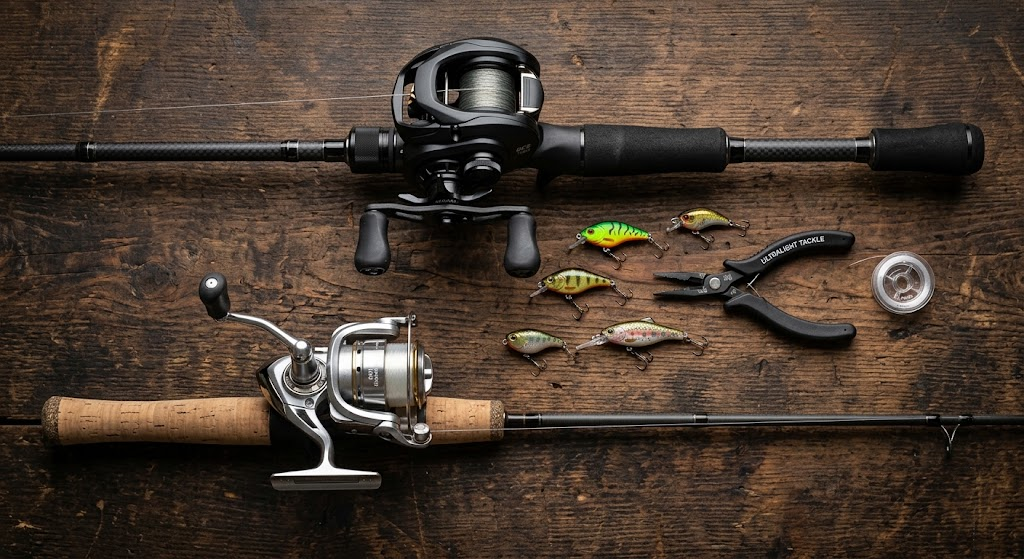
Table of Contents
If you are looking to downsize your fishing tackle to get more bites, you have likely encountered the ultimate finesse fishing debate: BFS vs. Ultralight Fishing. Both methods allow you to cast micro-lures and target highly pressured fish, but they differ completely in casting mechanics, gear requirements, and on-the-water performance.
Essentially, all BFS fishing is a form of ultralight fishing, but not all ultralight fishing is BFS. Let’s dive into these two setups to help you choose the best micro-fishing combo for your next trip.
What is the Difference Between BFS and Ultralight Fishing
Ultralight fishing is a broad style of angling, while BFS is a specific type of fishing tackle. All BFS fishing is ultralight fishing, but not all ultralight fishing is considered BFS.
BFS utilizes specialized shallow spool baitcaster and ultralight baitcasting rod to throw micro-lures, whereas traditional ultralight fishing relies on small spinning reel and spinning rod.
Understanding Bait Finesse System (BFS): Baitcasting Downsized
Originating from the Japanese JDM tackle scene, BFS is an ultralight fishing method specifically designed around using a baitcaster reel. It delivers superior control and pinpoint accuracy, with a lure weight range typically between 1g and 5g (or even sub-gram weights).
BFS baitcasting reels are equipped with ultra-shallow, heavily ported spools combined with highly tuned magnetic or centrifugal braking systems.
Traditional Ultralight Fishing: The Classic Spinning Approach
What is ultralight fishing? Traditional ultralight fishing is the foundation of finesse angling in North America.
This fishing method utilizes an open-faced spinning reel (usually size 500 to 2000) paired with a softer, light-action spinning rod. It is primarily used in freshwater environments to catch species such as walleye, bass (largemouth bass and smallmouth bass), northern pike, trout, and bluegill.
For more about spinning reel size, please read: What Size Spinning Reel for Beginner?
Quick Comparison: BFS vs. Ultralight Fishing
| Feature | BFS (Bait Finesse System) | Traditional Ultralight (Spinning) |
| Gear Type | Baitcasting reel & casting rod | Spinning reel & spinning rod |
| Lure Weight | 1g – 7g (1/32 oz – 1/4 oz) | 1g – 7g (1/32 oz – 1/4 oz) |
| Best For | Pinpoint accuracy, tight quarters, heavy cover | Long casting, open water, windy days |
| Learning Curve | Moderate to high (requires thumb control) | Low (very beginner-friendly) |
| Line Twist | Minimal to none | Prone to coiling and line twist over time |
Gear Breakdown: BFS vs. Ultralight Fishing Rods, Reels, and Line
The fundamental differences between these two styles dictate the specific fishing tackle you need to set up.
Reel Mechanics: Shallow Spool Inertia vs. Spinning Line Flow
- BFS Reels: BFS baitcast reels generally feature ultra-light and very shallow spools.
These shallow spools are often heavily ported to further reduce weight, with almost all of them weighing 9 grams or less.
The lighter the spool, the lower the inertia, making it easier to start up and providing better casting performance.
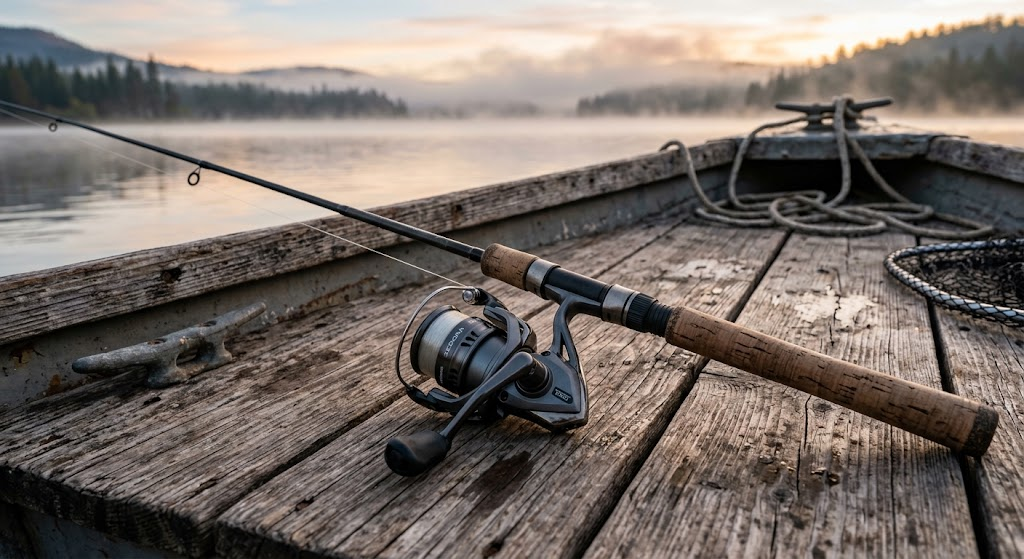
- Ultralight Spinning Reels: For an ultralight spinning combo, it is recommended to choose a size 500, 1000, or 2000 spinning reel with a moderate gear ratio.
These spinning reels are compact and lightweight, perfectly matching the balance of an ultralight fishing rod.
Because there is no rotating spool to manage, spinning reels handle the absolute lightest lures (under 1/32 oz) better than any baitcaster.
Rod Action & Power: Micro-Taper vs. Moderate Whipping
- BFS Rods: BFS fishing rods typically feature Light (L) and Ultralight (UL) power ratings. They are characterized by high sensitivity, great maneuverability, and pinpoint casting accuracy, which are crucial for effectively working small lures.
Depending on the application, rod lengths range from under 4 feet to about 6 feet 6 inches. They feature a fast or moderate-fast action, providing a crisp backbone.
This crispness is vital for loading the baitcaster fishing rod quickly and driving the hook home instantly when using single-hook micro-jigs.
- Ultralight Fishing Rods: The ideal ultralight spinning rod length is usually between 4 and 7 feet, rated for 1 to 4 lb line test, with a light to ultralight power rating.
They typically have a moderate or “whippy” action. This parabolic bend acts as a shock absorber for ultra-thin fishing lines and catapults feather-light lures into the distance like a slingshot.
Tip: For authoritative insights on rod tapers and hook-setting mechanics, organizations like Wired2Fish often highlight how faster tapers benefit single-hook applications.
Line Choice: Thin PE Braids, Fluorocarbon, and Ester Lines
- BFS Lines: Monofilament, fluorocarbon, and braided lines can all be used as the mainline for a BFS reel, each with its own pros and cons.
A 2-4 lb test monofilament line is often the preferred choice. The stretch it provides protects thin lines during aggressive hooksets, especially when using stiff, fast-action baitcasting rods.
Alternatively, 30-50 meters of 2-4 lb fluorocarbon is a favorite for sinking lure presentations.
Many advanced anglers use ultra-thin 8-strand PE braid (0.06 or 0.08 / 9-13 lb test) for maximum sensitivity when fishing Ned rigs.
- Ultralight Fishing Line: The fishing line used on ultralight gear mostly falls in the 1 lb to 6 lb test range. When choosing a line, monofilament, braided, and fluorocarbon lines perform similarly, but specific results vary depending on the target fish species.
Lure Selection: What Lures to Tie On
- BFS Lures: As long as it weighs around 1-7 grams, almost any lure can be fished effectively with a BFS rig!
Whether it is micro crankbaits, metal spoons, or soft plastic fishing lures paired with various finesse rigs, an ultralight BFS setup can successfully catch a wide variety of fish species.
- Ultralight Fishing Lure: For multi-species ultralight fishing, the ultimate lures are various types of jig heads and soft plastic lures.
They can imitate a wide range of prey (insects, minnows, crawfish, etc.) and can be fished at slow, fast, or any speed in between.
Of course, when fish are actively feeding, using hard baits like micro jerkbait lures or micro crankbaits provides an exciting bite!
BFS vs. Ultralight Fishing: Accuracy, Distance, and Casting Techniques
Pinpoint Casting vs. Open Water Distance
If you are fishing near overhanging branches, docks, or brush piles, BFS is the absolute winner.
The mechanics of a baitcasting reel allow for low-trajectory pitching, flipping, and roll casting.
You can accurately drop a lure into a teacup from 30 feet away.
Conversely, if you are wading in a large lake or broad river and need maximum distance with a 1/64 oz jig, the spinning combo will outcast the BFS gear every time.
Wind Resistance and the Backlash Factor
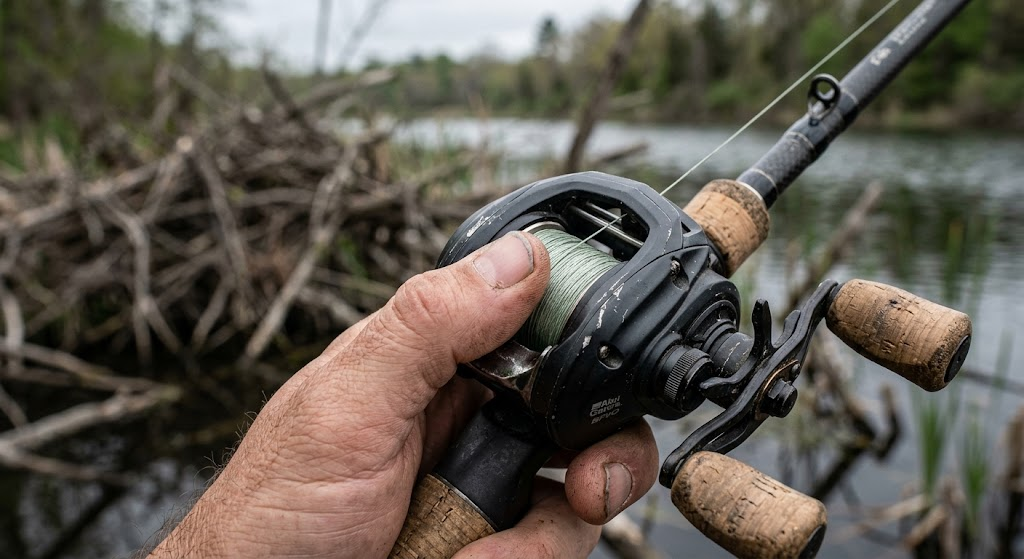
Wind is the arch-nemesis of baitcasting fishing reels.
Casting a lightweight, non-aerodynamic lure straight into a strong wind with a BFS setup requires highly skilled thumb control and aggressive brake tuning to avoid a “bird’s nest” backlash.
Traditional spinning reels are virtually immune to wind-induced backlashes, making them much more forgiving in harsh weather conditions.
Lure Control and Sensitivity: Direct Contact vs. Slack Line
Because your thumb rests directly on the BFS spool during a cast, you can instantly feather the line to ensure the lure lands silently with a subtle splashdown.
Furthermore, the line flows directly through the guides of the bait casting rod into the reel, providing incredible direct-contact sensitivity as the lure sinks.
In contrast, spinning reels naturally create a slight bow of slack line during the cast, which might cause you to miss bites on the drop.
Final Verdict: When to Choose BFS and When to Stick to Ultralight
- Choose BFS if: You demand absolute pinpoint accuracy, love fishing near structure and heavy cover, enjoy the ergonomic feel of a baitcaster rod, and are willing to practice thumb control to prevent backlashes.
- Choose Ultralight Spinning if: You are on a strict budget, want to cast the absolute lightest lures as far as possible, or prefer a beginner-friendly spinning setup that you can hand to anyone without worrying about line tangles.
Ready to upgrade your gear? BFS vs. ultralight fishing, which is better? Whether you want to master the extreme precision of a high-end casting rod or prefer the time-tested reliability of a straight-handle spinning combo, matching your fishing tackle to your water is the key to breaking your next personal best.
FAQ
When to use an ultralight fishing rod?
An ultralight spinning rod is best used for casting micro-lures long distances in open water or windy conditions. It is the ideal choice for targeting small panfish or presenting feather-light baits for trout.
What is BFS fishing good for?
BFS fishing excels at pinpoint precision casting, low-trajectory casts, and fishing in heavy cover or structure-rich waters.
Bài viết rất hữu ích, cảm ơn đã chia sẻ!
Cảm ơn bạn đã đọc! Bạn thích câu BFS hay câu siêu nhẹ (ultralight) thông thường hơn?