

Blog
Guide to Crappie Jigs: Catching Slabs in Any Season

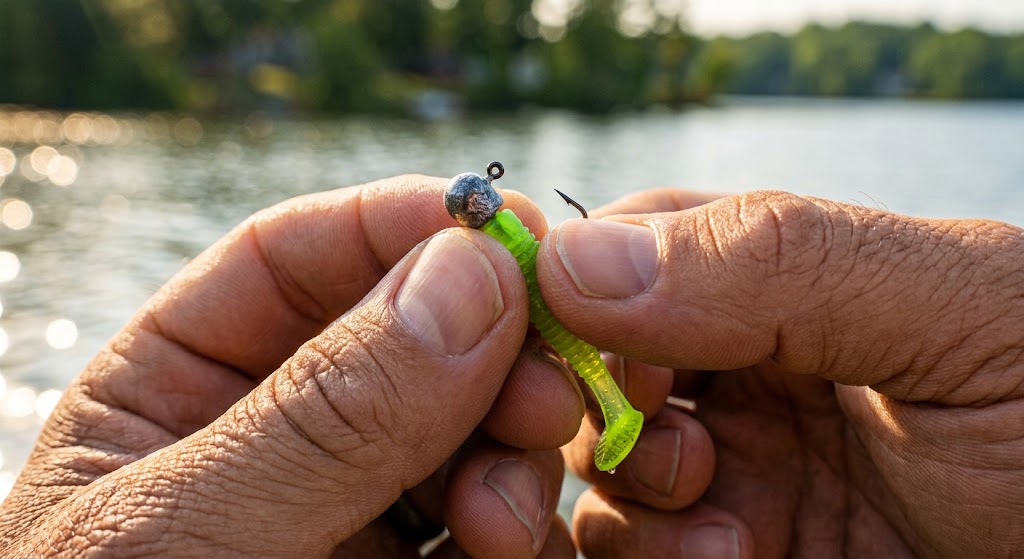
Table of Contents
Crappie fishing is a precision game of depth control, water column mastery, and subtle bite detection. Because crappie constantly adjust their position based on water temperature and baitfish movement, finding them is only half the battle.
Their notoriously light strikes demand an approach sensitive enough to feel the lightest inhale. If you want to consistently catch slabs, mastering the presentation of your crappie jigs is an absolute necessity.
The Physics of the Fall: Choosing the Best Crappie Lures
Many anglers make the mistake of choosing a jig based solely on water depth, following the superficial logic that deep water automatically requires a heavier lure. The true secret to targeting suspended fish lies in mastering the fall rate and water displacement.
Weight Selection: Why 1/32 oz and 1/16 oz Jigs Dominate
Crappie are ambush predators that feed upward. They are biologically wired to strike baits that are slowly falling past their eye level. While a 1/4 oz jig might reach the bottom faster, its rapid water displacement in anything under 5 feet of water will actively spook a school of fish. An 1/8 oz jig is strictly reserved for 10 to 15 feet of deep water where current requires you to pin the bait to a specific target.
The golden rule revolves around 1/32 oz and 1/16 oz weights:
1/16 oz Jig: Provides a slow descent that mimics an injured shad in moderate conditions.
1/32 oz Jig: During the summer heat, when crappie are lethargic and refuse to chase fast-moving baits, downsizing to a 1-inch profile and a 1/32 oz jig ensures an agonizingly slow fall rate, keeping the bait hovering in the strike zone longer.
To maximize this presentation around heavy cover like brush piles without constantly losing your tackle, utilizing weedless jig heads allows you to probe submerged timber where the biggest slabs hide.
Jig Profiles: Hair Jigs vs. Soft Plastic Paddle Tails
Understanding the feeding habits of different species is critical:
White Crappie: Highly aggressive feeders that readily attack larger, high-vibration profiles.
Black Crappie: Feed primarily on micro-organisms and insects, heavily preferring smaller profiles year-round.
Choosing Your Profile
Hair Jigs: Often the secret weapon in cold water. Hair jigs offer a natural, subtle “breathing” action. Even when held completely still, the hair pulses with the slightest water current.
Soft Plastic Paddle Tails: Paired with a lead head, paddle tails are your go-to for active fish. The tail kicks rapidly during the retrieve, creating strong vibrations in muddy water. In the fall, when baitfish mature, upgrading to a 3-inch paddle tail perfectly “matches the hatch” for feeding slabs.
The Crappie Rig Secret: Why Your Knot Matters More Than the Bait
A major blind spot for most panfish anglers is how terminal tackle connections impact micro-lure action. You can have the perfect bait, but if you tie it wrong, you destroy the presentation.
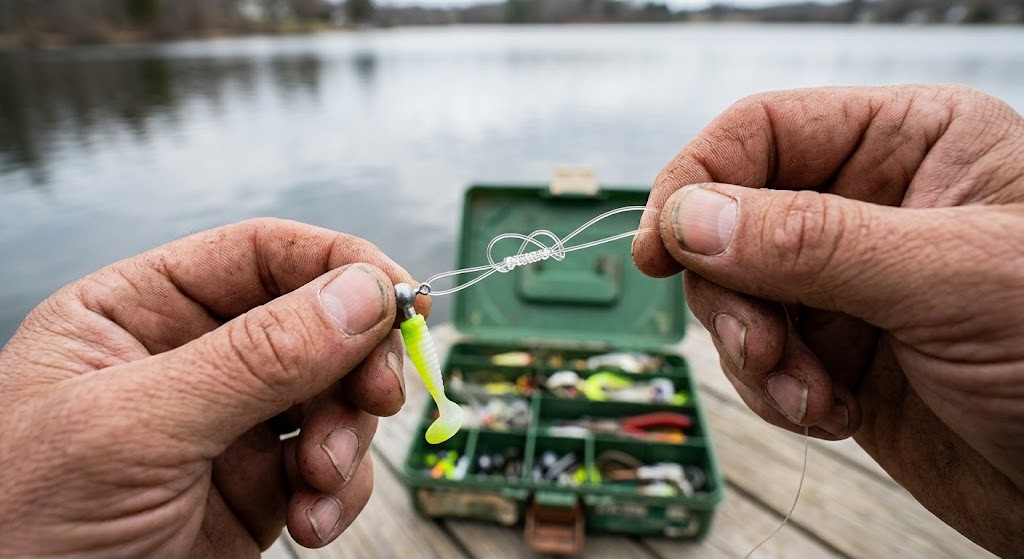
Ditching the Clinch Knot for the Non-Slip Mono Loop
Never tie a tight clinch knot to a micro crappie jig. Tying your line tight to the hook eyelet locks the jig in a rigid horizontal position, completely killing its natural swing.
Instead, always tie a Non-Slip Mono Loop Knot. This creates an open loop that allows a 1/32 oz micro jig to articulate freely. When paired with a pendulum cast—pitching slightly past the target and letting the bait swing back through the water column—the loop knot allows the lure to kick and glide naturally on the drop.
Matching Your Crappie Fishing Setup: Rods, Reels, and Line
You cannot effectively cast a 1/32 oz micro jig on heavy tackle. Building a dedicated finesse system is the only way to detect the subtle “tick” of a suspended slab.
Ultralight Spinning vs. BFS Casting: Which is Right for You?
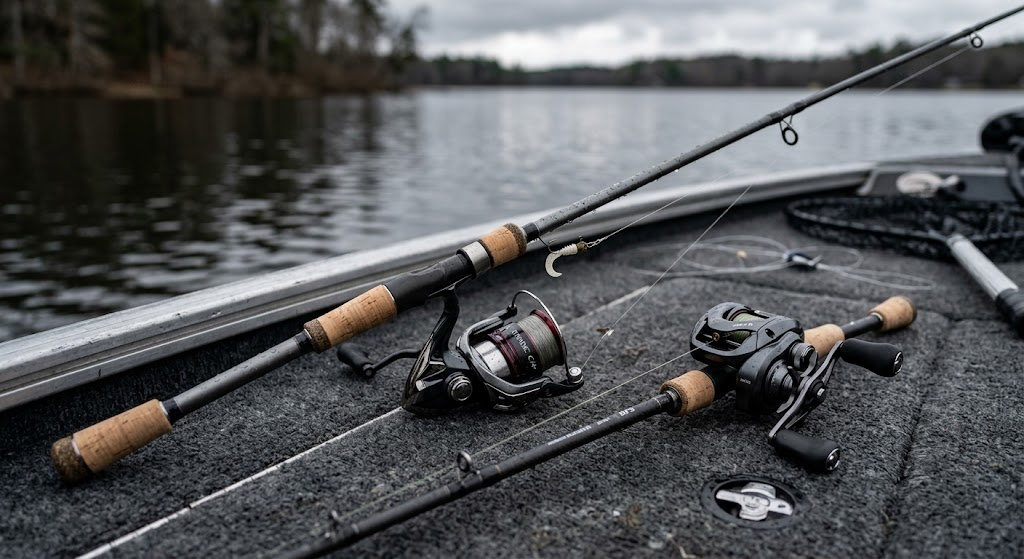
When comparing spinning gear to micro baitcasting setups, both serve clear tactical roles:
BFS Casting Setup: Delivers pinpoint accuracy when pitching directly into heavy standing timber.
Ultralight Spinning Rod: An ultralight fishing rod paired with spinning gear excels at launching 1/16 oz baits long distances without the risk of backlash. A rod built with a sensitive 30-ton solid carbon tip acts as a shock absorber, protecting the crappie’s delicate “papermouth” from tearing during the hookset.
The Ideal Reel Size and Gear Ratio for Finesse Fishing
For anglers still trying to understand spinning reel sizing, downsizing is essential:
Reel Size: A compact 1000 spinning reel balances an ultralight rod without adding fatigue during long sessions.
Gear Ratio: Look for a slower 5.2:1 ratio. This forces a controlled, methodical retrieve to keep the jig suspended in the strike zone.
Spool Design: When long casting distance is required to avoid spooking shallow schools, a metal spinning reel with long-distance casting capabilities for light lures makes a noticeable difference.
Fluorocarbon Line: The Invisible Advantage
When throwing 1/16 oz baits, a 4 lb to 6 lb fluorocarbon line is the gold standard. Fluorocarbon is denser than water, helping light jigs cut through the water column quickly while remaining virtually invisible.
To manage line memory and eliminate frustrating coils, pairing your line with an alternative spinning reel for managing 4 lb to 6 lb fluorocarbon featuring a shallow spool will keep casts smooth. For extra sensitivity around deep timber, many anglers use a 7 to 10 lb braid main line tied to a 4 to 8 lb fluorocarbon leader.
Seasonal Tactics: How to Catch Crappie in the Summer Heat
While spring spawning pushes crappie into shallow banks, high summer temperatures force them into deep water transitions. To master “How to Catch Crappie in the Summer“, you must focus on suspended fish.
Locating Suspended Slabs in Deep Water
To escape rising surface temperatures, summer crappie suspend over deep structure. Scan 15 to 20 feet depth ranges around:
Deep brush piles
Submerged timber
Concrete bridge pilings
Because crappie feed upward, your bait must remain level with or slightly above their school. Never drop your jig below them, as they will rarely swim down to chase a meal.
The Vertical Jigging Technique for Lethargic Fish
When vertical jigging for pressured or heat-stressed fish, less action produces more bites:
Keep It Subtle:
If your jig hops more than 2 inches, it will alert and spook the school.
Rely on Micro-Tremors:
Hold the rod still and let slight wrist vibrations breathe life into the hair or soft plastic tail.
Watch the Line:
Drop the jig to the marked depth and count it down. The bite rarely feels like a hard thud—it almost always registers as a slight slack in the line as the crappie inhales the bait on the descent.
FAQ
What are the best jigs for catching crappie in winter?
Hair jigs and 1/32 oz micro soft plastics are the best choices for winter crappie because their subtle, natural movements trigger strikes from lethargic fish in cold water
Will crappie bite jigs at night?
Yes, crappie actively feed after dark and will readily bite jigs, especially when using high-contrast dark colors or glow patterns near artificial light sources that attract baitfish.